

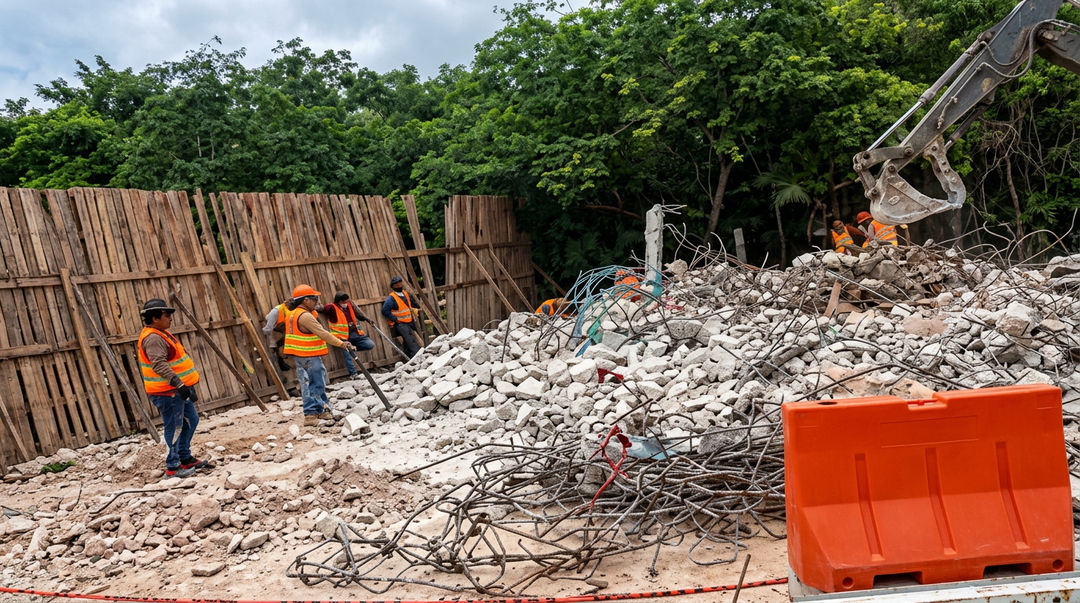
Demolition has started at the Tulum ruins entrance, on the module with bathrooms and drinking fountains that merchants say never worked and that closed the traditional path to the site.
The structure, known in town as the muro de la vergüenza, the wall of shame, went up as part of Parque del Jaguar. It is being removed in full to clear the way for a tourist corridor under the federal Tulum Renace program.
That reaches the shops, artisan stalls, and guides along the commercial strip in front of the site. With the wall standing, visitors reached the ticket area by another route, and for months the people working that corridor tied their falling sales and several closures to the access changes that arrived with the park.
Bathrooms that never opened
On paper, the module carried services. Merchants and visitors described bathrooms and drinking fountains that hardly ever functioned, leaving the structure with one practical effect: the block on the direct path.

It belonged to Parque del Jaguar, the federal park that Sedatu's final reports price at close to 2.7 billion pesos. The Tulum Times has followed Tulum Renace since it first arrived as a package of 128 actions across regulation, environment, promotion and infrastructure.
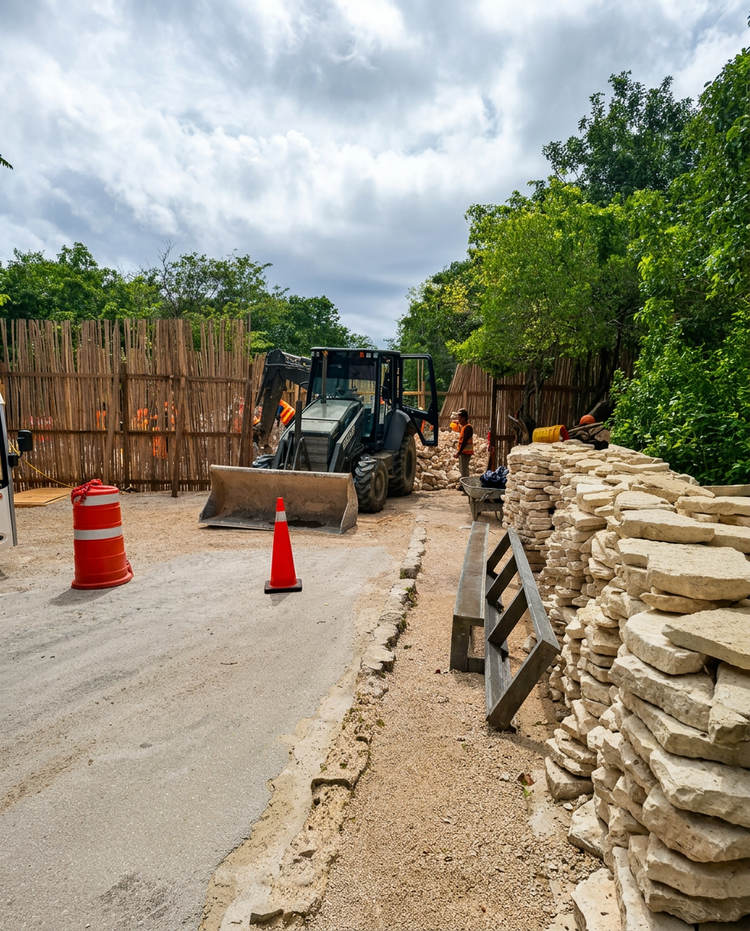
Sheinbaum named the wall from Tulum on July 17
The wall entered the federal plan by name. Speaking from Tulum on July 17, President Claudia Sheinbaum said free beach entry counted for little while the transport cost money and, at the traditional entrance, "there is a wall that prevents direct access." She said the entrance would be modified and a gate opened where the wall stands.
The same announcement, published in the Diario Oficial de la Federación, cut what visitors pay. The combined ticket for the archaeological zone and the protected area went to 80 pesos for Mexican visitors and 265 pesos for foreign visitors, free on Sundays for nationals with photo identification, as our breakdown of the 2026 fees sets out.
Ten public beach accesses opened under the same plan, along with a parking area at the southern access and an electric mobility system inside the park.

Carts return to the Tulum ruins entrance for 20 pesos
The ride from the commercial area to the site is running again. The old trenecito is gone, replaced by electric carts that charge 20 pesos a person for a trip of roughly one kilometer. The federal announcement named Grupo Maya as the operator of the electric transport inside the park.
Entry to the park itself is free for national visitors, so the 20 pesos is the only cost for someone who wants to walk the paths and see the site from a distance.
Pedro Méndez Canul, who administers the Centro Comercial y Artesanal de Tulum, has led the campaign by artisans and residents to restore that access for close to three years.
Shops closed while the corridor emptied out
Merchants spent months warning that the rerouted entrances and the prices charged to enter the archaeological area were directly hitting their income. Some businesses closed. Others reported thinner days as fewer visitors walked the commercial corridor before reaching the ruins.
Prices moved first. Complaints about the cost of entry fed into the fee reduction announced within Tulum Renace, which the federal government presented as a way to bring visitors back and restart spending around the site.
Three weeks after the launch, Tourism Secretary Josefina Rodríguez Zamora said service providers were reporting a near 10 percent rise in arrivals. That is the sector's own count relayed by the ministry, not an official visitor figure.
Méndez Canul said in late July that the recovery was visible and that two things were still pending: the demolition of the wall and the return of the transport from the plazas. Both have now happened.
A Puerta Maya, and a corridor that still has no figure attached
In early August, the demolition had a design and no date. Méndez Canul said then that the executive design was finished and delivered, and that the work was waiting on money. The proposal puts a Puerta Maya where the wall stands, restoring the cart route between the commercial area and the archaeological zone and extending it to the beaches of Parque Nacional Tulum.
Sectur has said the corridor at the main access will be built this year, that the existing booths will be removed, and that the design leaves space for artisans, merchants and service providers. Rodríguez Zamora said the investment amount would be defined once the executive project is complete. In September, the ministry reported around 150 tourism service providers registered and credentialed to work in Parque Nacional Tulum and Parque del Jaguar.
Discontent with the park did not remain confined to the corridor. A petition created in May to separate Parque del Jaguar from the archaeological zone had reached 2,800 signatures by late June, with its promoters blaming the park's charges and administration for the drop in visitors.
Méndez Canul spent August waiting on a budget line for the first phase of the demolition. That phase is now underway. The corridor meant to replace the wall still has no published figure, and the year Sectur set for its start has three months left.
Will an open entrance bring shoppers back to the corridor in front of the Tulum ruins? Join the conversation and share your perspective with us on Instagram and Facebook at @thetulumtimes .

The Tulum Times · Newsletter
The story continues in your inbox.
Essential Tulum news and local insight, a few times a week. Free.
No spam. Unsubscribe anytime.
Tulum Cenotes, Ruins, and Practical Visitor Guides
Guides, access updates, regulations, and practical planning around cenotes and the Tulum archaeological zone.

“The best journalists reporting from paradise, highlighting the heroes that keep Tulum the most beautiful place in the world! THANK YOU!”


