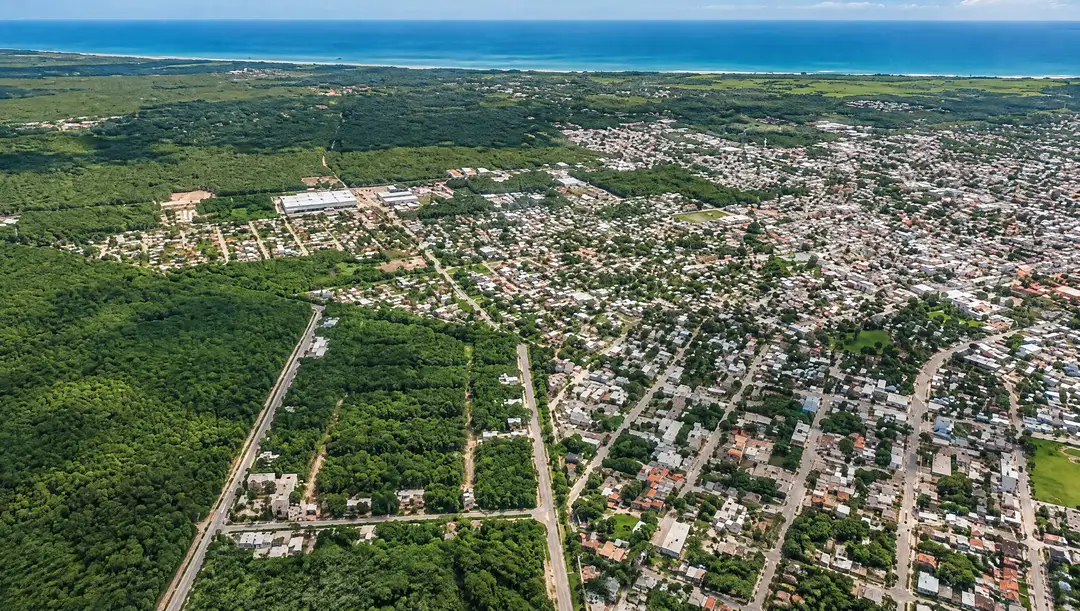
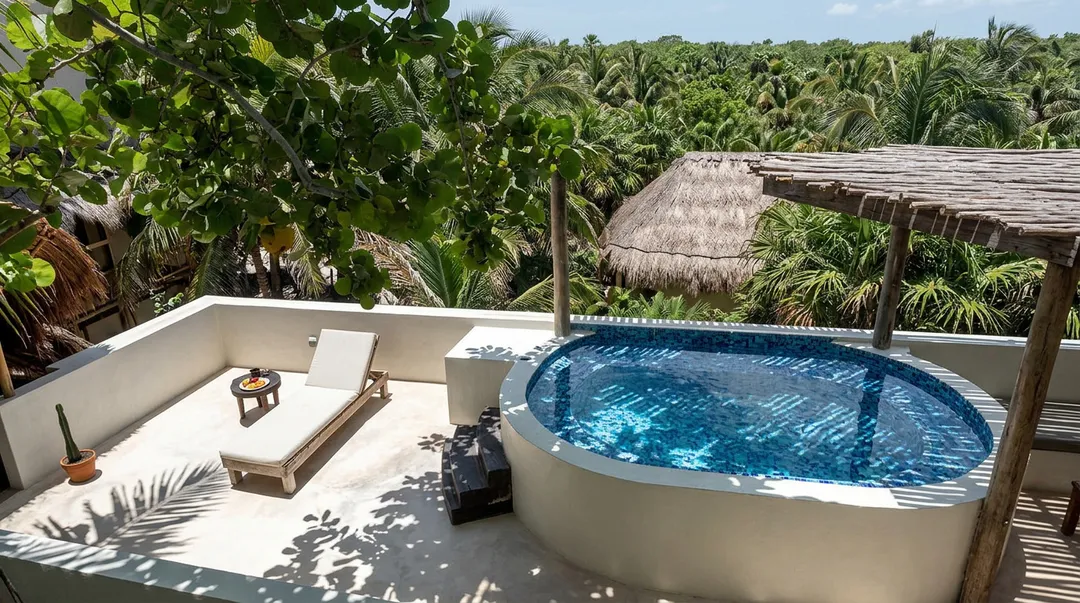
Alberto García has handled home sales and rentals in Tulum for seven years, and he says this low season is the weakest he has seen. The slump that emptied hotel rooms has reached Tulum's real estate market.
García oversees dozens of properties for sale and rent, and he no longer sees the downturn as a problem for hotels alone. "It is an unusual season," he said, calling it the lowest he has seen since he arrived. "A lot of people are leaving because there is no work, no opportunity."
The figures behind his account have been building all year. Hotel occupancy in Tulum fell to 63.69 percent from 72.67 percent over the January to July period, according to Quintana Roo's Tourism Information System, a steeper decline than in Cancún or Playa del Carmen. In October, the Tulum Hotel Association said that close to 1,000 rooms had been closed due to a lack of demand. Fewer visitors means fewer short-term tenants, and fewer jobs for the people who staffed the boom.
Rental income that no longer covers the mortgage
One of the developments where García works is Aldea Tulum, a planned community of thousands of homes. Hundreds of owners there bought on credit, expecting rental income to pay for the unit. Many of those apartments now sit empty, and in a saturated market the rent they do bring in often falls short of the monthly mortgage payment.
García remembers when the math looked different. "Many foreigners, when they arrived here and saw the prices, would say, I want a little house here," he said. "Now, unfortunately, there is more housing than people."
Housing that outpaced the population boom
Tulum had 28,263 residents in 2010 and 46,721 in 2020, according to INEGI census counts. The Maya Train, Tulum International Airport, and a wave of private developments drew tens of thousands more, and local estimates placed the population above 70,000 within five years of the last census.
Construction moved faster still. By the same estimates, the housing stock rose 79 percent, from about 11,500 properties to more than 20,000.
Then demand reversed. The municipality is estimated to have lost close to 10,000 residents in about a year, people who left homes, jobs, and leases behind.
Those later figures are estimates rather than census results, and INEGI has not confirmed them.
Crews with nothing to build
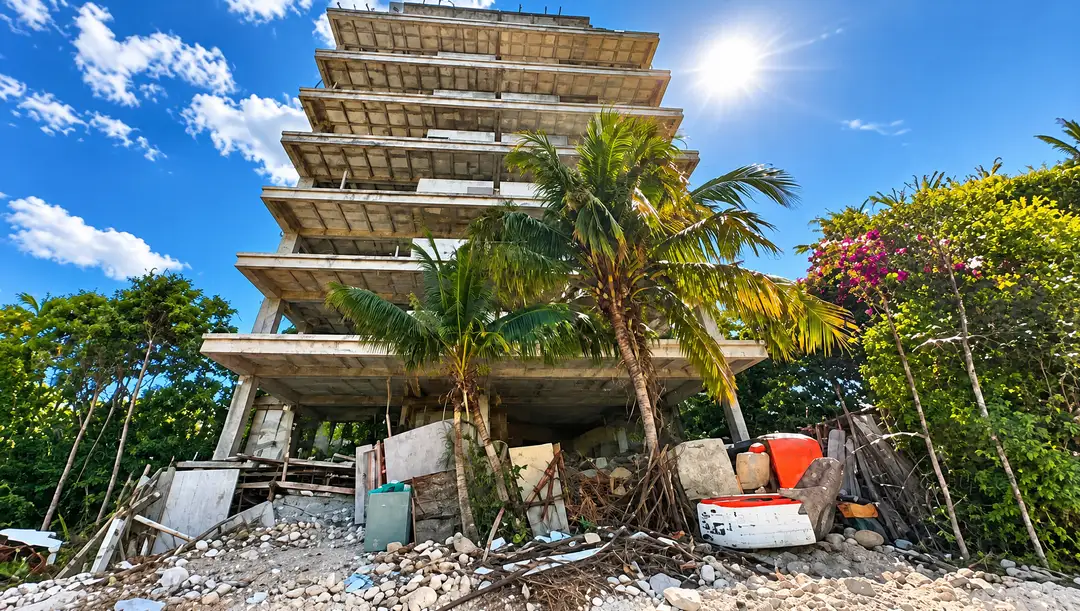
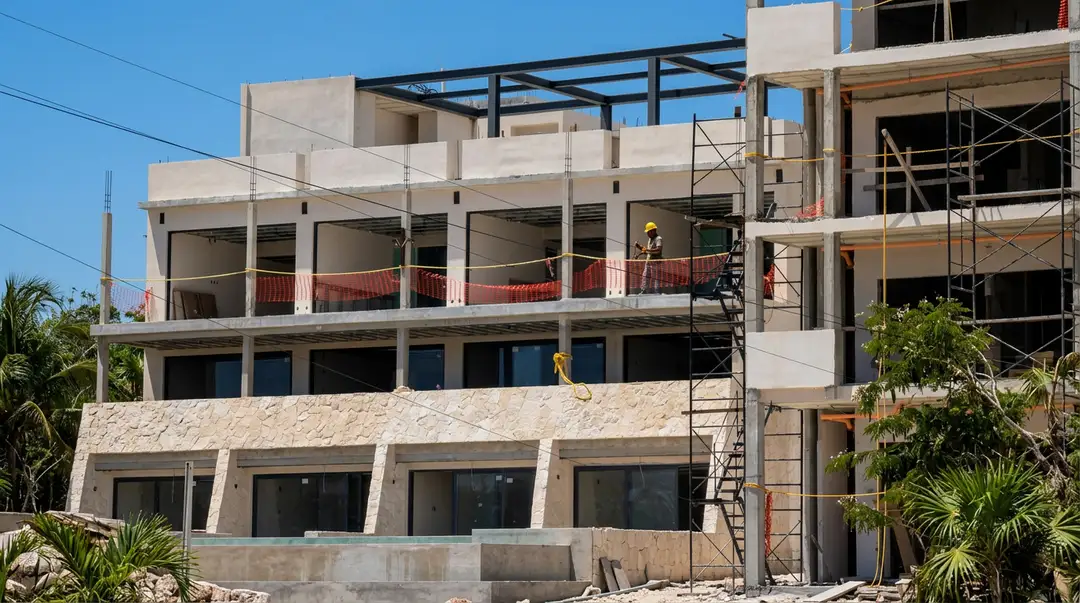
The most visible sign of the slowdown is the number of unfinished buildings across town. Yan Morales, a contractor in Tulum, described one such site. "This is one of the many projects stuck at the shell stage," he said. "We should have bricklayers and carpenters here. We would have roughly 30 people working on each site."
Morales used to run four or more projects a year. Today he has none. Low season once brought maintenance contracts for finished complexes, and that work has dried up as well. "They lose less by leaving it stopped than by keeping it running and paying for maintenance," he said of the owners.
Permits granted with little environmental review
Much of what now sits empty came at an environmental cost. In 2022, The Tulum Times documented that the construction of many of these complexes cleared mangroves, wildlife habitat, reefs, dunes, and cenotes, and questioned the role of local and state authorities in allowing it. Between 2015 and 2021, Quintana Roo issued more than 2,000 construction licenses, and only 2 percent included an environmental impact statement, the reporting found.
Morales sees the vacancies as a bill coming due. "We are going through a situation that we as a society also caused. We created it," he said. "Now we just have to remedy our own actions."
A federal housing plan enters an oversupplied Tulum real estate market
The federal government is pressing ahead with plans to build about 2,500 homes in Tulum under its Vivienda para el Bienestar program, aimed at low-income families and members of Indigenous communities. State officials have put the figure at 2,548 homes for families without social security coverage, according to Riviera Maya News.
Those homes target a different buyer from the investors who filled developments like Aldea Tulum. Developers and hotel industry leaders have warned for years that the town lacks affordable housing for the people who work in it.
Mayor Diego Castañón expects the investment to turn things around. "With this large investment being made, things will change next year," he said. "It is going to be a change, truly, of 160 degrees, for the good of the destination."
The federal homes are meant for families who could never afford a Tulum condo, which leaves the apartments already built waiting on a different kind of recovery. García is counting on the next high season to bring tenants back to the units he has been unable to fill.
Have you seen the slowdown in Tulum's rental or construction market firsthand? Join the conversation and share your perspective with us on Instagram and Facebook at @thetulumtimes.

The Tulum Times · Newsletter
The story continues in your inbox.
Essential Tulum news and local insight, a few times a week. Free.
No spam. Unsubscribe anytime.
Tulum Development, Permits, and Construction Watch
Reporting on permits, construction, regulation, and major development decisions shaping Tulum’s urban growth and investment climate.

“The best journalists reporting from paradise, highlighting the heroes that keep Tulum the most beautiful place in the world! THANK YOU!”