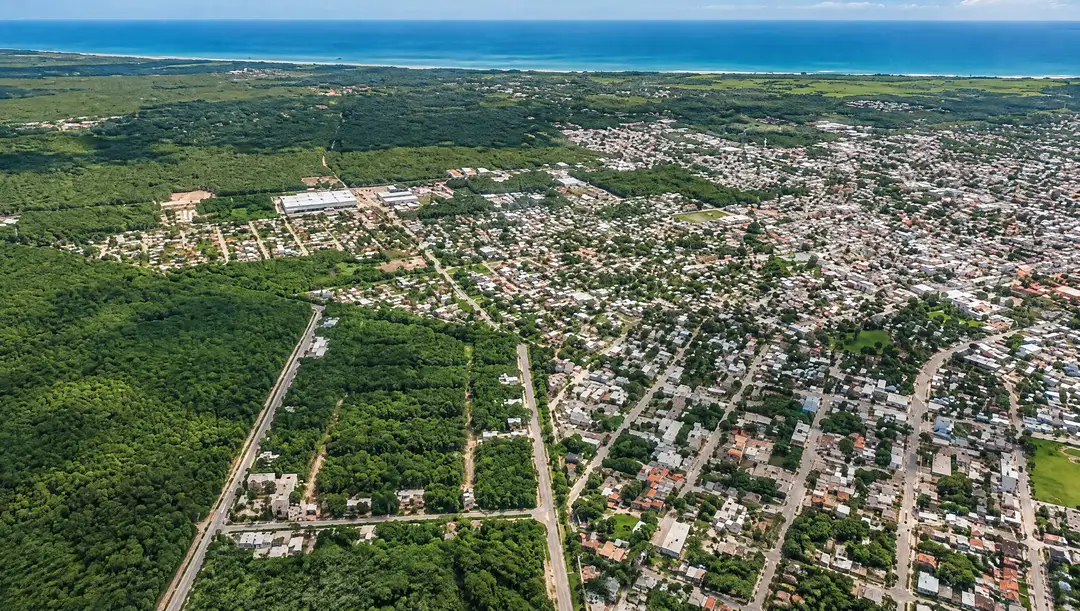
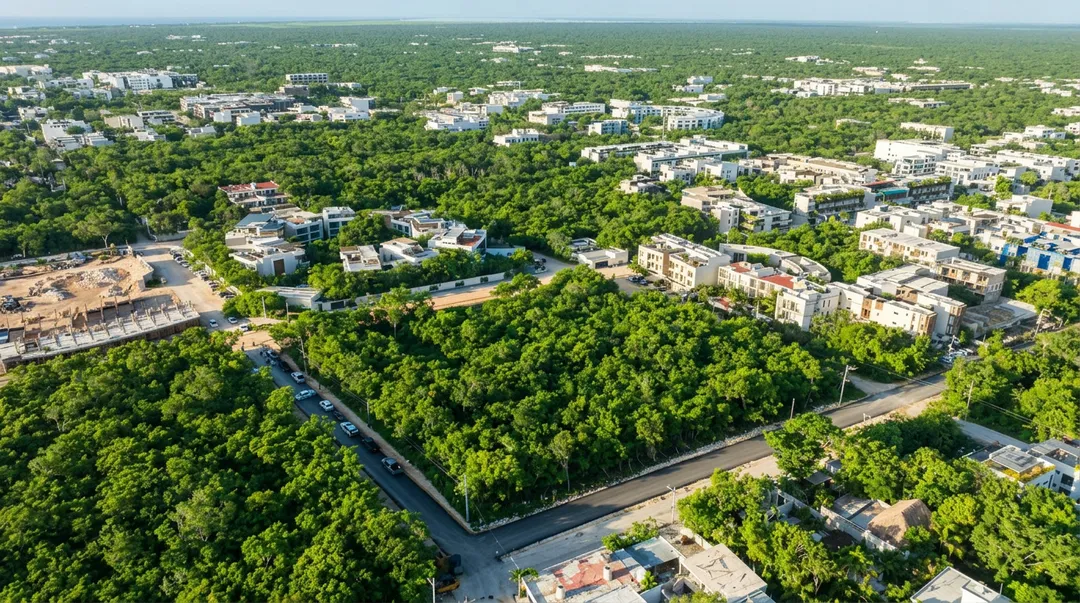
A storefront near Tulum's main avenue has had a for-rent sign up for two years, and in Villas de Tulum, beside that avenue, Tulum rents have fallen close to half within months.
The lower prices have not reached the people who most need them. Workers, street vendors, and residents who spoke to Grupo Animal for a report on the city's rental market said even the reduced rents do not fit the incomes of those who depend on visitors, and visitors are arriving in far smaller numbers than before.
That gap is what makes this more than a seasonal dip. Tulum built thousands of units for short stays and investors, and it now has more homes than tenants. Most of the people who keep its hotels, restaurants, and gas stations running were never the buyers or renters those homes were priced for.
From 16,000 pesos to 7,000 in Villas de Tulum
Villas de Tulum sits where Federal Highway 307, which becomes Tulum's main avenue as it crosses town, meets Avenida Cobá, the road toward the hotel zone. Banks and supermarkets cluster there.
Until a few months ago, one resident told Grupo Animal, houses in the neighborhood rented for as much as 16,000 pesos a month. Two-bedroom houses and furnished apartments with parking and services now go for 7,000 to 9,000.
One landlord, reached by phone, said a two-bedroom house had been cut to 7,000 pesos. "It's completely empty and remodeled, from the light switches and the paint to the waterproofing, and it has parking and a backyard," the landlord said. "I'm asking for a one-year contract. We just lowered it. Because of the situation in Tulum, we're offering it at that price."
A furnished two-bedroom apartment near Avenida Satélite, advertised by a local agency with queen-size beds, a washer, a dryer, and kitchen appliances, is listed at 9,000 pesos. The same unit once rented for up to 15,000.
A search of listing portals, including Listu, propiedades.com, and HomesApp, turned up between 35 and 70 rental properties in the neighborhood, priced from 9,000 to 23,000 pesos per month, according to the report.
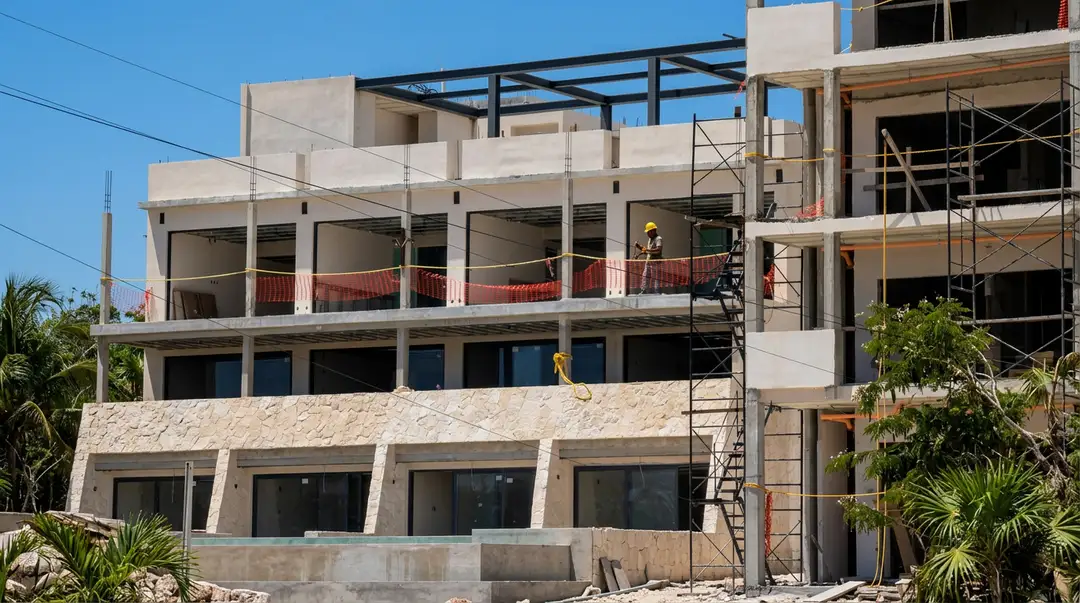
"It's mostly tourist. People come here to rent, but with occupancy down, they leave too," one resident said. "There are expensive rentals, but a lot of people started lowering their prices. Between the sargassum, the insecurity, and all of that, everything hurts us."
Lower Tulum rents have not reached Seferina's budget
Seferina sells saborines and chicharrones in Tulum's central park in the afternoons and evenings. She is a mother of three and rents a single room where she lives with her children.
"It's still not enough, because there isn't enough work. There are no people, and if there are people, they don't buy," she said. On top of the rent, she pays the municipal government 300 pesos a week.
"I had never seen it without people, without tourists," she said.
Lauro Méndez Rodríguez has lived in Tulum since 2010 and has worked at a gas station a short distance from the main avenue for 16 years. The storefront with the two-year-old sign is one he sees every day. Low season arrives at the end of every summer, he said, and he has lived through plenty of them. This one he called too hard.
"In all the time I've been here, this had never happened," he said.
Home sales fell by half in two years
The rental slide follows a sharper break in sales. Data from the consultancy InfoHabitat, published by Obras, of Expansión, on October 30, show home sales in Tulum falling from 3,487 units in 2023 to 1,711 in 2025, a decline of 50.9 percent.
Developers built on the expectation of growth around the Maya Train and Felipe Carrillo Puerto International Airport. Demand for homes and vacation stays did not keep pace with construction.
An investigation by N+, aired on November 3 by reporter Abraham Reza with Daniel Carranza, documented the result at Aldea Tulum, a development of 3,000 homes where many buyers took out loans expecting rental income to cover their mortgages. Some owners no longer collect enough rent to make the monthly payment.
"Unfortunately, now there is more housing than people," real estate agent Alberto García told the network.
García, who has worked in Tulum for seven years, called it the lowest season he has seen. Foreign buyers used to purchase several properties at a time, he said.
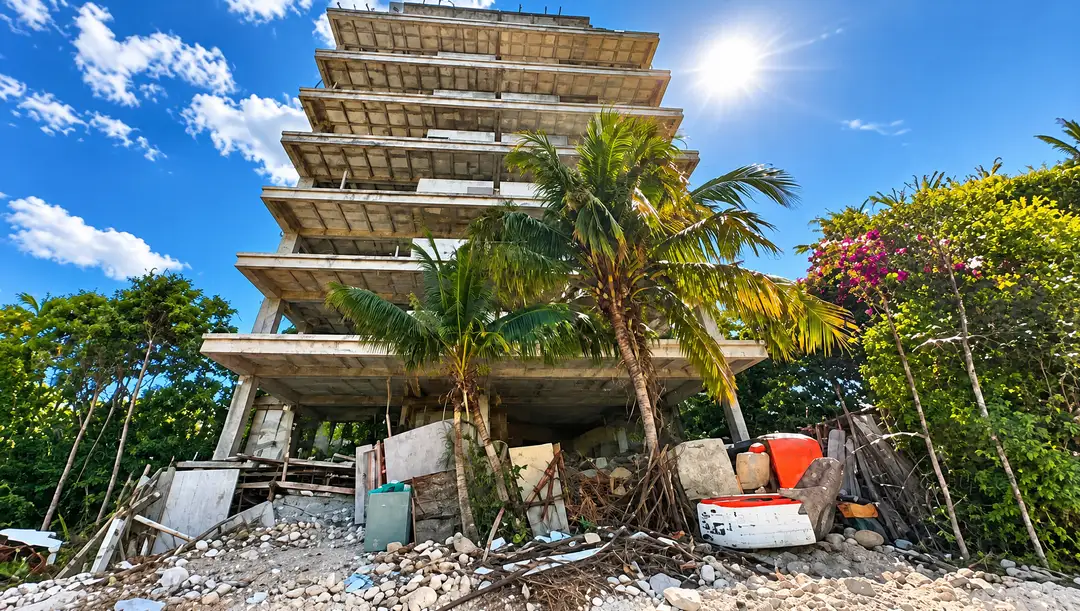
Yan Morales, a contractor, said he once ran more than four projects a year and now has none. A site like the stalled ones he showed reporters would normally employ about 30 people, among them masons and carpenters. Maintenance work, which used to carry him through slow months, has dried up as well. Some owners, he said, prefer to leave construction halted because finishing or maintaining it would cost more. Morales also acknowledged that the disorderly growth involved decisions made by the community itself.
Most of the new housing was built for short stays
The empty units and the workers priced out of them belong to two different markets. Gene Towle, managing partner of the real estate consultancy Softec, told El Universal that about 80 percent of housing in Tulum is aimed at tourists, short-term rental platforms, and vacation buyers. In Cancún and Playa del Carmen, he said, roughly 80 percent is social or middle-income housing.
So a vacant apartment does not automatically become an affordable home. Price, financing terms, and the type of unit decide who can live in it.
About 10,000 residents may have left in a year
Tulum grew from 28,263 residents in 2010 to 46,721 in 2020, according to INEGI census figures, an increase of 65.3 percent. Later estimates put the population above 70,000.
The N+ investigation reported that close to 10,000 people left the municipality over the past year as the tourism slowdown deepened. Residents interviewed cited the loss of jobs tied to tourism, construction, and lodging. No official count has confirmed the figure.
Visits to the Tulum archaeological zone in September 2026 were down by close to 70 percent compared with September 2024, according to figures reported in regional media. Not every business in Tulum faces the same conditions.
2,500 federal homes and a town without an urban plan
The federal government is moving ahead with a 2,500-home project in Tulum, aimed at low-income families and members of Indigenous communities. Unlike the units bought as tourism investments, these are meant to be lived in.
Mayor Diego Castañón Trejo told N+ he expects the investment to transform the destination next year, "a change, truly, of 160 degrees."
The project arrives in a municipality with no current urban plan. The town council approved a Programa de Desarrollo Urbano in September 2024, drafted with advice from Sedatu, the federal agency for agrarian, territorial, and urban development, with the stated goal of reducing housing costs. According to regional press reports, the municipality repealed it about a year later without ever putting it into force. The same reports say Tulum has also delayed its local ecological zoning program, known as POEL, whose issuance is under Supreme Court oversight as part of a constitutional controversy ruling.
Seferina's room costs less than it did a year ago. What she still needs, she said, is enough people in Central Park to buy what she sells.
Have lower rents in your Tulum neighborhood made housing any easier for the people who work there? Join the conversation and share your perspective with us on Instagram and Facebook at @thetulumtimes.

The Tulum Times · Newsletter
The story continues in your inbox.
Essential Tulum news and local insight, a few times a week. Free.
No spam. Unsubscribe anytime.
Tulum Real Estate, Development, and Investment Context
Reporting and analysis on property, permits, development risk, legality, market trends, and investor context in Tulum.

“The best journalists reporting from paradise, highlighting the heroes that keep Tulum the most beautiful place in the world! THANK YOU!”