Quintana Roo is updating the technical studies for a 60-kilometer floating sargassum barrier that would run from the southern tip of Cozumel to Boca Paila in Tulum, with operations targeted for 2028.
The project, called the Gran Barrera Oceánica GBO 60x60, is estimated to cost about $96 million, or roughly $1.6 million per kilometer, according to figures reported Monday by Riviera Maya News. State authorities say it would protect seven municipalities and that Mexican companies would participate in its manufacturing.
The update follows the state's heaviest sargassum year. The Secretariat of Ecology and Environment (SEMA) has counted 156,631 tonnes of seaweed collected along Quintana Roo's coast in 2026, compared with roughly 92,800 tonnes in all of 2025, and its head expects more algae in the Atlantic next year. The offshore barrier is designed to move much of that work out to sea, before the seaweed reaches the sand.
A route that follows the Cozumel channel
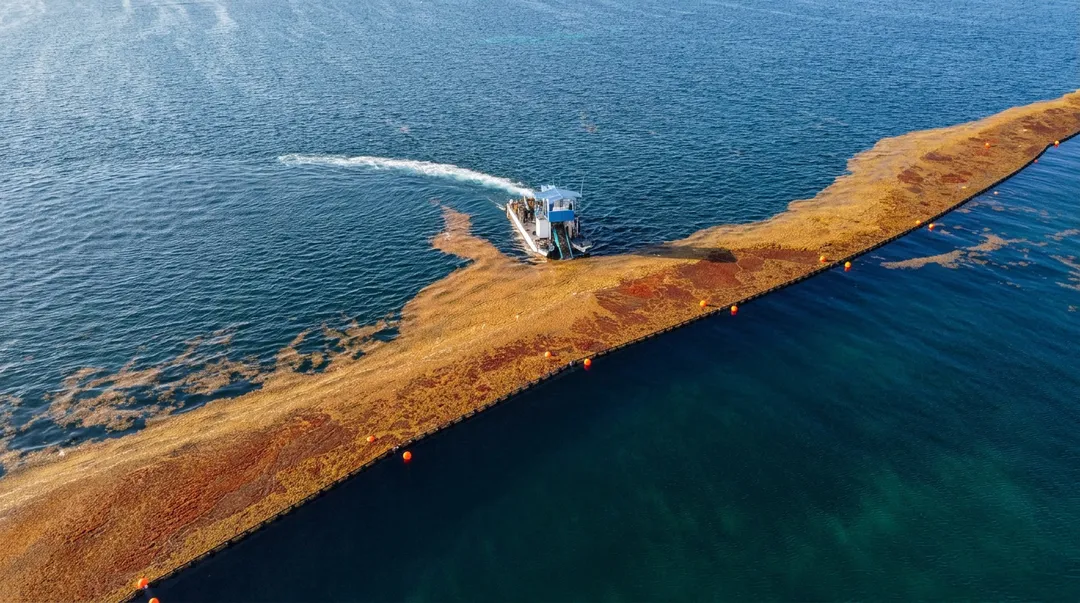
The barrier would sit in open water rather than along the beaches. Its purpose is to intercept floating sargassum mats and steer them toward collection points, where vessels can remove them before currents carry the algae to the coast.
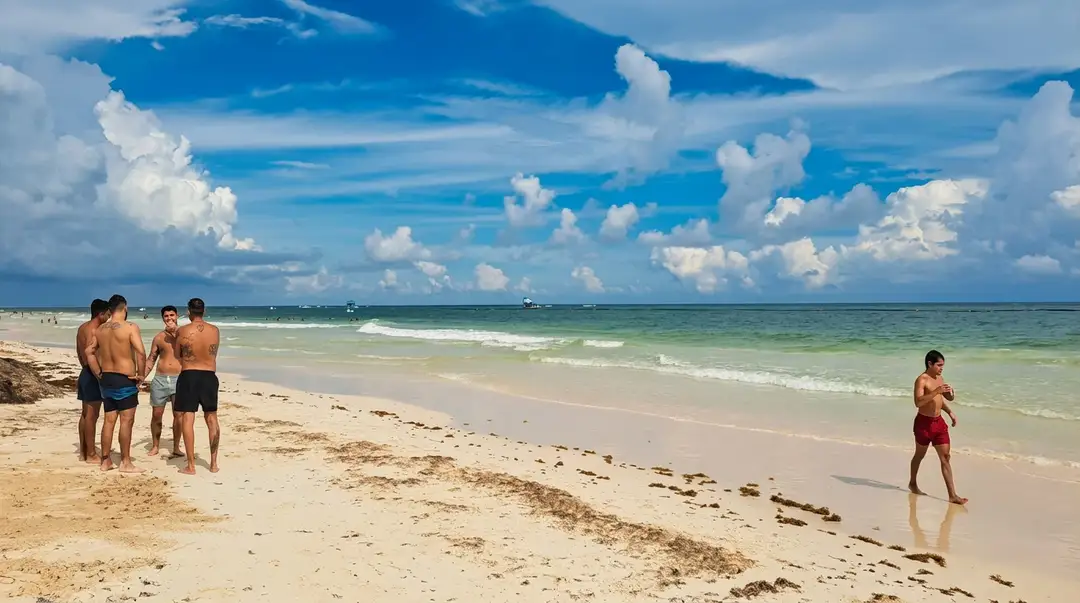
The planned line follows the Cozumel channel, the passage between the island and the mainland that sargassum travels through as it moves north. Its southern end is Boca Paila, the inlet inside the Sian Ka'an Biosphere Reserve south of Tulum's hotel zone. Between those two points lies the stretch of coast that includes the beaches of Akumal and Tulum.
According to Riviera Maya News, the design includes a 60-degree opening, the source of the second "60" in the project's name, along with gaps so boats can pass through.
A sargassum barrier built to rise a meter above the water
Height is the main engineering change. The nearshore barriers in use today rise about 20 centimeters above the waterline. The new design calls for 1-1.5 meters.
Even at that height, some sargassum would still pass underneath, a limitation included in the project's own description.
Why the 2022 studies had to be redone
Quintana Roo first proposed the barrier in 2022, then shelved it amid the pandemic's economic fallout. SEMA now considers the original studies outdated, citing shifts in ocean currents, global warming, and changes in federal strategy.
The current phase covers studies only. They will set the barrier's exact location and technical specifications, define a seabed-safe anchoring system, and estimate operating and maintenance costs. The financing model and the construction timetable follow those results.
Where the 2026 seaweed was removed
The record season showed how much of the cleanup still happens on land. Only 16.4 percent of the sargassum collected in 2026 was removed at sea, according to SEMA. Federal, state, and municipal crews cleared the remaining 83.6 percent of the debris from beaches.
At the peak, as much as 90,538 tonnes of sargassum floated in the Mexican Caribbean in a single day, 27 times the historical average. About 10 percent of that mass reached the coast of Quintana Roo.
Nearshore defenses are close to their target. The state has 13,560 meters of barriers in place out of the 15,465 meters it considers necessary, leaving 1,905 meters to install. In Cancún, 345 meters of barriers were installed at Playa del Niño in Benito Juárez, as reported on October 20, and studies are underway to extend the barriers along the 12 kilometers between Punta Nizuc and Punta Cancún.
Federal funding for ships, barriers, and beach machinery
President Claudia Sheinbaum announced a 2-billion-peso investment in two stages. The first, worth 768.7 million pesos, aims to raise daily collection capacity from 1,227 tonnes to 1,870 tonnes. The second, planned for 2027, targets 4,000 tonnes per day.
Officials also cited 2.6356 billion pesos for equipment, including two ocean-going vessels, six semi-oceanic vessels, six tugboats, 1,500 meters of dynamic barriers, and 35 kilometers of containment and redirection systems.
The National Fund for Tourism Development (Fonatur) will coordinate part of the strategy and allocate about 500 million pesos to mechanize beach collection before the 2027 season.
Rébora's estimate for 2027 points higher
SEMA Secretary Óscar Rébora Aguilera said the volume of sargassum in the Atlantic could grow from about 60 million tonnes in 2026 to around 80 million tonnes in 2027.
"We are talking about 20 million more tonnes of sargassum floating in the Atlantic," Rébora Aguilera said.
Using the roughly 1 percent of Atlantic sargassum that reached the state's shores in 2026 as a reference, he estimated that up to 800,000 tonnes could reach Quintana Roo next year. Actual arrivals, he added, depend on winds, currents, and tides.
Rébora linked the algae's growth to nutrient and wastewater discharges worldwide, noting that more than 66 percent of countries release wastewater directly into the sea. He said the state will seek international financing and multilateral agreements, and argued that developed countries and development agencies should help fund developing nations that bear the brunt of the impact.
Financing for the Cozumel to Tulum line waits on the studies
The 2028 target now depends on what the updated studies find. Once they fix the location, the anchoring method, and the annual cost of maintaining 60 kilometers of barrier in open water, the state can present the two remaining pieces of the plan: how it will be paid for and when construction begins.
Should Quintana Roo focus on stopping sargassum at sea, or keep investing in beach cleanup crews and machinery? Join the conversation and share your perspective with us on Instagram and Facebook at @thetulumtimes.

The Tulum Times · Newsletter
The story continues in your inbox.
Essential Tulum news and local insight, a few times a week. Free.
No spam. Unsubscribe anytime.
Tulum Sargassum Updates and Beach Conditions
Live seaweed conditions, cleanup updates, forecasts, and practical beach planning across Tulum and the Riviera Maya.

“The best journalists reporting from paradise, highlighting the heroes that keep Tulum the most beautiful place in the world! THANK YOU!”