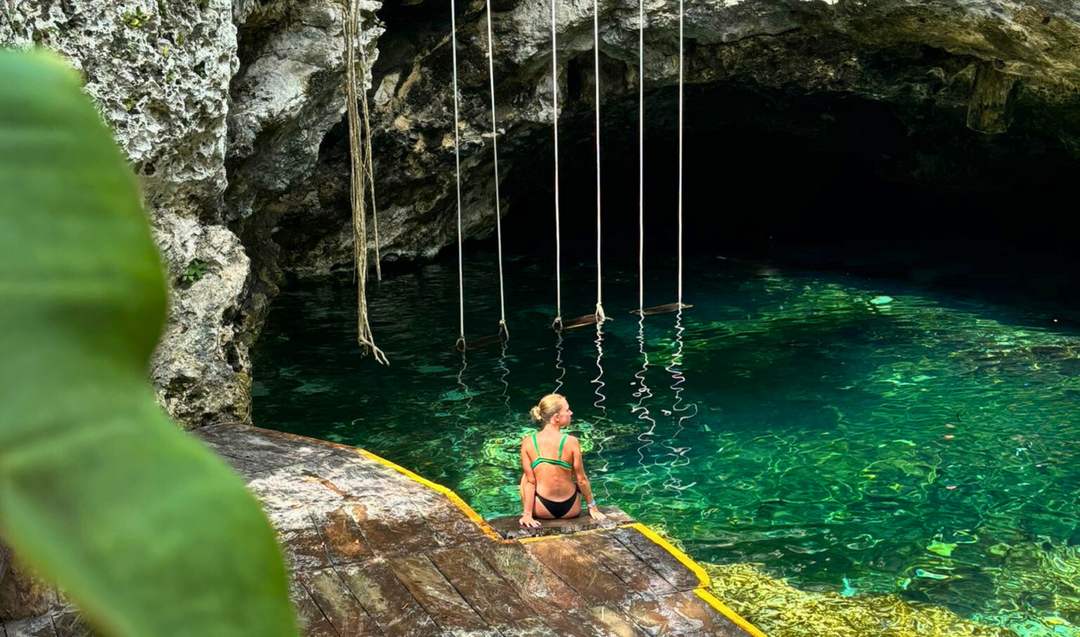

On Sunday morning, the water along the Tulum beaches inside Jaguar Park ran clear enough to see the sand beneath it, and the sargassum that defined the summer had shrunk to a few dry strands.
The Tulum Times walked that shoreline on October 25. The sea was close to transparent and the sand nearly clean. What remained of the macroalgae lay dried above the tide line, residue that breaks apart in the sun or gets cleared by park crews.
For a town that has waited months for this view, the timing is exact. The winter season opens in November, the first international flights of the season are already landing, and the months from November through February have historically been the clearest on the Mexican Caribbean coast. Tulum is ready to welcome travelers from every corner of the world, and the sea is ready to meet them.
A summer that asked a lot of this coast
Few seasons have tested Tulum's shoreline like this one. By mid-October, the Secretaría de Marina had collected 123,000 tons of sargassum across Quintana Roo in 2026, according to UnoTV, already well above the 92,000 tons removed in all of 2025. Tulum's beaches face the open Caribbean, and they carried a large share of that weight.

Through all of it, the cleanup kept going. Hotels raked their own frontage, the navy ran brigades along the coast, and Conanp handled the stretch inside Tulum National Park.
The calendar now turns in Tulum's favor. The state's 2026 sargassum program opened on April 1 and is scheduled to close on October 31, according to Ruptura360, which places the formal end of the season's operations six days after Sunday's walk.
Satellites and scientists point the same way
The view at Jaguar Park fits a wider trend. The University of South Florida's Optical Oceanography Lab, which tracks Atlantic sargassum by satellite, wrote in its August bulletin that amounts across all regions would continue to decline in the months ahead. By early October, USF imagery showed only small scattered patches off Tulum, according to the monitoring site How Is The Sargassum.
A satellite review by Observatorio del Sargazo on October 12 found nine of the 25 Tulum beaches it monitors free of sargassum, more than in its previous pass. Two weeks later, the Jaguar Park shoreline looked better still.
Conditions on this coast move with the wind, and one stretch of sand can differ from the next on the same morning. Checking the day's report before a beach outing remains a good habit for any visitor.
Four free beaches below the ruins
The beaches inside Jaguar Park are the easiest place to see the change for yourself. Playa Santa Fe, Pescadores, Maya, and Mangle have free public access open all year, and the entry is meant for anyone, local, Mexican, or foreign, arriving on foot, running, or by bicycle, according to Ruptura360. Visitors can use the southern entrance on Avenida Cobá or the traditional access, where a signposted gate has been installed.
Above them, on the limestone cliff, stands the walled Maya city that gave Tulum its name. It was one of the few Maya cities built directly on the coast, and on a clear morning the ruins and the water share the same frame.
The coast keeps going in both directions. South of the park, the hotel zone runs along the beach road toward Sian Ka'an. To the north, Tankah and Soliman bays sit behind a reef that slows what drifts toward shore, and Akumal Bay is known for the green sea turtles that feed in its shallows.
The water stays warm into winter. Climate-Data.org gives the Caribbean off Tulum an average of 27.9 degrees Celsius in November, while rainfall drops to 83 millimeters that month and to 60 in December, compared with 188 in October.
Free beach access and a lighter ticket to the ruins
The clearer sea arrives alongside a federal push to bring visitors back. In July, federal Tourism Secretary Josefina Rodríguez Zamora presented Tulum Renace, a 10-point plan that opened 10 free public access points to Tulum's beaches and, by her account, cut the INAH and Conanp entry fee for the Tulum archaeological zone in half.
Sectur has since announced a tourist corridor at the main entrance to the archaeological zone and Jaguar Park, and has issued credentials to 195 tourism service providers who work inside the park, so visitors know the guides and operators they hire are backed by the federal government.
The next milestone is weeks away. Rodríguez Zamora said the new lighting of the archaeological zone would be inaugurated in November, bringing the clifftop site to life after dark and anchoring a craft and cultural corridor around it.
Cenotes, Sian Ka'an, and the jungle behind the beach
The beach is one reason to come. The cenotes scattered through the jungle west of town, among them Gran Cenote and Dos Ojos, draw from the aquifer beneath the peninsula and stay clear in every season, for swimmers, snorkelers, and cave divers alike.
To the south, the Sian Ka'an Biosphere Reserve, a UNESCO World Heritage site since 1987, protects lagoons, mangroves, and a long stretch of coast. At its edge, the archaeological site of Muyil connects to the lagoons through ancient canals, and visitors float the channels with the current. Inland, Cobá rises out of the forest around its tall pyramid, Nohoch Mul, and Laguna Kaan Luum offers a deep blue sinkhole in the middle of shallow green water.
Hanal Pixán opens the season's calendar
The first celebration arrives this week. Hanal Pixán, the Maya Day of the Dead, runs from October 31 to November 2, with altars set first for the souls of children and then for adults. The state tourism calendar lists Janal Pixán Tulum from October 30 to November 3.
At the center of many altars is mucbipollo, a large corn tamal filled with chicken, wrapped in banana leaves, and baked in a pib, an oven dug into the earth. On November 1, Vesica Tulum, a cenote club, holds a candlelit concert of Mexican music with a shared altar, and asks guests to bring a photograph, a flower, or a candle for someone they want to remember.
The rest of the table runs from cochinita pibil, panuchos, and salbutes at taquerías in the town center to the restaurants of the beach road.
Festivals from New Year's Eve into January
The busiest weeks of the year follow. Zamna Tulum runs its season from December 31 to January 10, at a jungle site built around a natural cenote just outside town. Day Zero, Damian Lazarus's sunset-to-sunrise gathering, returns for its 13th edition on Saturday, January 9, according to a season guide by Tulum Land and Property.
Nômade Temple Tulum opens its own festive season with RETURN, a New Year's Eve dinner and dance that runs until sunrise, followed by music nights through January 15, the hotel announced on October 22. UMusic Hotel & Beach Club Tulum, part of a cultural alliance tied to Tulum Renace, is scheduled to open in the first week of December, according to the company.
Before all of that, Mexico's national discount weekend, El Buen Fin, runs from November 13 to 17.
Flights return, and the train runs to town
Getting here is getting easier by the week. Air Canada, WestJet, and Air Transat resumed service to Tulum International Airport on October 24, with operations planned through March 2027, according to the airport operator, Grupo Aeroportuario Mundo Maya. The same operator projects international operations for Delta, United, and American to rise from 552 to 1,064 between November and March.
The Tren Maya serves the area with two stations, one at the airport, about 27 kilometers southwest of town, and one in Tulum itself. Both opened on September 20, 2024, on the line that also reaches Cancún International Airport.
Tulum beaches have a clean window ahead
The weeks between now and the holidays are the quiet beginning of the high season, with warm water, drier days, and room on the sand. The lighting of the ruins is due in November, and the festival calendar fills from the last night of December.
Back at Jaguar Park, the dry strands on the sand were the last of the summer. The next tide or the next crew will take them, and the water behind them is already the color people cross the world to see.
Are you planning a trip to Tulum this winter, or have you already been back to the beaches at Jaguar Park? Join the conversation and share your perspective with us on Instagram and Facebook at @thetulumtimes.

The Tulum Times · Newsletter
The story continues in your inbox.
Essential Tulum news and local insight, a few times a week. Free.
No spam. Unsubscribe anytime.
Tulum Weather, Seasonality, and Best Time to Visit
Weather context, travel timing, seasonal changes, and planning guidance for visitors and residents.

“The best journalists reporting from paradise, highlighting the heroes that keep Tulum the most beautiful place in the world! THANK YOU!”