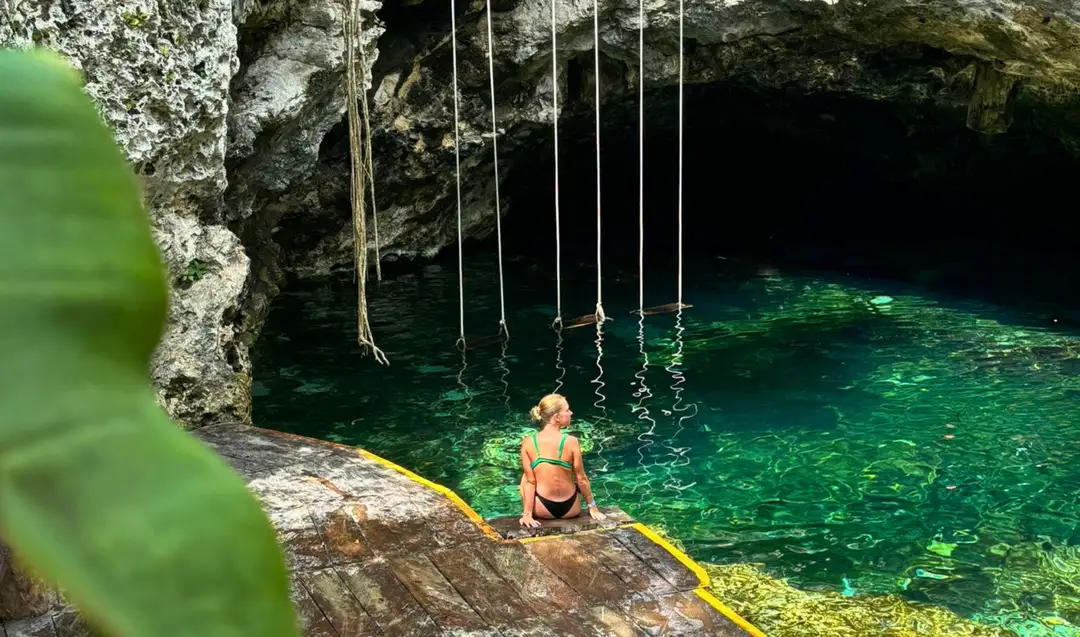
Two of the longest underwater cave systems ever mapped run beneath the town, and a veteran dive instructor says that pollution in Tulum cenotes now makes parts of them too hazardous to survey.
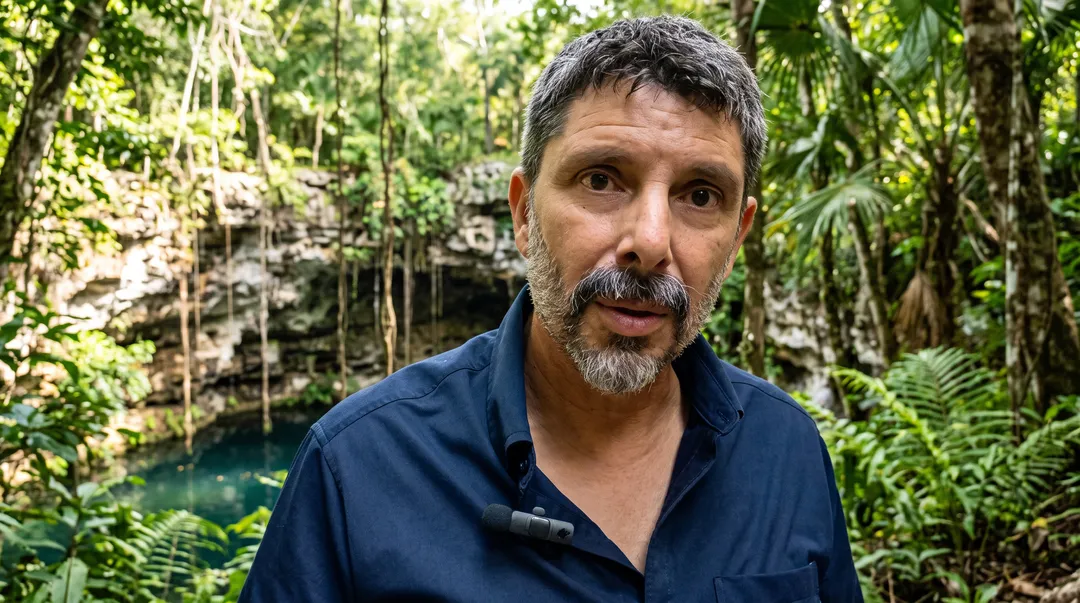
José Urbina, an instructor known in local diving circles as "Pepe Tiburón" and a member of the citizen collectives Cenotes Urbanos and Sélvame MX, told the regional outlet Noticias Pedro Canché that contamination in some cenotes, and in stretches of cave that cross under the urban zone, has reached levels that put divers' health at direct risk.
"In the Tulum area, pollution is so high in some cenotes that they can no longer be explored. Going through them becomes a problem because you get sick," he said in Spanish.
His warning reached the public the same week Quintana Roo presented a new guide built to brand the state as the world capital of cave and cavern diving. It also touches the two things that make Tulum's subsoil irreplaceable: the aquifer that supplies the town's drinking water, and an archaeological record that reaches back to the last Ice Age.
Urbina did not name the cenotes he considers unsafe or cite water-quality tests; his remarks focused on technical cave dives beneath the urban area. He did not address the open swimming cenotes outside town that most visitors use. The Tulum Times found no public response to his comments from state or municipal water authorities as of Saturday.
The missing link between Sac Actun and Ox Bel Ha
Tulum's urban footprint sits between two giant flooded networks. Sistema Ox Bel Ha extends south of town and, according to recent survey counts, contains more than 500 kilometers of mapped passages. Sistema Sac Actun runs to the north and, after divers connected it to the Dos Ojos system in 2018, was certified by Guinness World Records at roughly 372 kilometers.
For years, cave divers have suspected that the two are joined. Members of the team that made the 2018 Dos Ojos connection said at the time they believed Sac Actun was likely linked to other nearby systems, including Ox Bel Ha. Finding that passage is one of the tasks Urbina says pollution is now blocking.
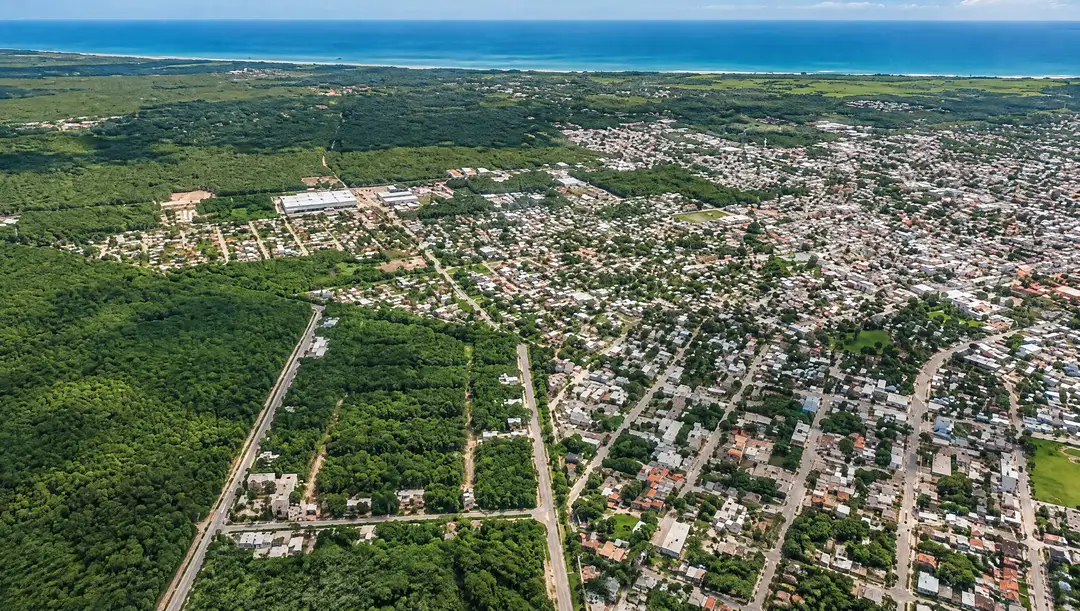
The geography explains why. Any conduit tying the systems together would most likely run beneath the ground Tulum now occupies.
Maya altars, Ice Age bones, and a girl named Naia
Urbina said the same contamination is slowing a second line of work: the search for and documentation of Maya artifacts, ancient human remains, and the bones of prehistoric animals that have made the caves a reference point for archaeologists worldwide.
The scale of that record is documented. The Gran Acuífero Maya project, led by archaeologist Guillermo de Anda of Mexico's National Institute of Anthropology and History (INAH), identified nearly 200 sites with archaeological material within Sac Actun alone, according to a 2018 report in Live Science. Divers found altars and incense burners associated with Ek Chuah, the Maya god of commerce, along with fossils of giant ground sloths and gomphotheres, extinct relatives of elephants. The finds span roughly 15,000 years, from the end of the Ice Age to the colonial period.
In Hoyo Negro, a submerged pit north of Tulum, researchers recovered the skeleton of Naia, a teenage girl who died about 13,000 years ago and is among the oldest human remains found in the Americas. De Anda described Sac Actun to Live Science as "probably the most important submerged site in the world."
Pollution is one threat to that record. Inexperience is another. Urbina said divers who enter the caves without proper training cause accidents and irreversible damage to speleothems, the stalactites and stalagmites that form over millennia, and to fossils resting on the cave floor.
Where Tulum cenote pollution comes from
Urbina tied the problem directly to the town's rapid growth and to construction in areas that lack enough infrastructure to treat wastewater. The Yucatán Peninsula's limestone is porous, and surface water reaches the aquifer quickly, carrying whatever it picks up along the way.
Homes off the sewer line
Census work by Centinelas del Agua, a civil organization that has monitored more than 200 water sites in Quintana Roo, found neighborhoods in Tulum, Playa del Carmen, and Bacalar where more than 60 percent of homes were not connected to the sanitary sewer, its director general, Alejandro López Tamayo, said in August. He cautioned that official coverage figures can run higher because a property counts as covered when a network passes in front of it, whether or not the house is hooked up.
The group also reported that Tulum and Playa del Carmen have the highest concentrations of groundwater contamination in the state, with elevated readings in coastal springs, and warned that new real estate projects without adequate sanitation would add pressure on the aquifer.
State planning documents cited in the same report list work underway on the problem: equipment for a second pretreatment line at Tulum's Bicentenario wastewater treatment plant, rehabilitation of the sewer network in Chemuyil, and efforts to bring treatment plants into compliance with the federal discharge standard NOM-001.
Human waste in the town's well field
Scientific evidence of the problem goes back more than a decade. A 2013 study in the Journal of Environmental Protection, led by Rosa M. Leal-Bautista with researchers from U.S. institutions, sampled groundwater across the Tulum region. It found fecal contamination of human origin throughout the sampling area and detected human-specific Bacteroides bacteria and caffeine in the Tulum well field, which the authors linked to human activity near the town's drinking water supply.
More recent work points in the same direction at a regional scale. A study led by researchers from Mexico's National Autonomous University (UNAM), with German and U.S. universities, tested 10 cenotes and one submarine groundwater outlet on the peninsula. As reported by Por Esto in December 2025, the team found E. coli in five cenotes, 34 antibiotic-resistant E. coli strains across nine water bodies, and the industrial "forever chemicals" PFOS and PFHxA in eight cenotes. The report did not specify which sites were in Tulum.
Muyil and Chemuyil at the edge of the next expansion
Urbina asked authorities to halt urban expansion toward Muyil, the Maya community south of Tulum on the edge of the Sian Ka'an biosphere reserve, and Chemuyil, on the coast to the north near Akumal. Both sit within the municipality, and both lie over the same aquifer.
His argument is preventive. Building in those areas before sewer and treatment capacity exists, he said, would repeat the impacts already visible under the town.
A state guide aimed at the world's cave divers
Quintana Roo's Tourism Secretary, Bernardo Cueto Riestra, presented the Mexican Caribbean Caves and Caverns Guide on Thursday, Oct. 29, in Playa del Carmen. It is the second publication in a series that began with a general diving guide.
The numbers behind it are growing. More than 587,000 tourists went diving in the Mexican Caribbean in 2025, according to the state tourism secretariat, or 2.9 percent of all visitors, up from 2.4 percent the year before. Foreign travelers made up 55.8 percent of that group, and the average stay rose from 7.1 to 7.6 days. Cueto said promotion will begin at a trade fair in New Orleans and that the state will create a committee to promote diving.
The guide highlights the geological, archaeological, and paleontological value of the underground systems and promotes preparation, safety, and good practice. It is tied to the state's tourism provider registry, RETUR-Q, to favor accredited operators. The government's announcement says protecting the caves requires commitment from every sector involved. It does not mention water quality.
Urbina welcomed the guide as a first step toward clear criteria on certifications, experience levels, and safety protocols. The aim, he said, is to set the terms for entering the caves, and closing them is not the goal.
More than 300 cenotes mapped in Playa del Carmen
Cenotes Urbanos, founded in 2018 to protect the underground ecosystems of Playa del Carmen, says it now works with more than 500 volunteers. The collective has identified and mapped more than 300 cenotes in that city alone, data it says can support decisions on conservation, urban planning, and recreational use of the aquifer.
In December 2025, Guillermo D'Cristhy of Cenotes Urbanos described a project to monitor water quality in 100 cenotes and caves around Playa del Carmen, with plans to expand across the peninsula.
The Tulum Times found no comparable public inventory for the passages beneath Tulum's streets. Until someone samples that water and publishes the results, the extent of the damage rests on the word of the divers who turned around.
Should Tulum require new developments to connect to a working sewer system before they are approved over the aquifer? Join the conversation and share your perspective with us on Instagram and Facebook at @thetulumtimes.

The Tulum Times · Newsletter
The story continues in your inbox.
Essential Tulum news and local insight, a few times a week. Free.
No spam. Unsubscribe anytime.
Tulum Cenotes, Ruins, and Practical Visitor Guides
Guides, access updates, regulations, and practical planning around cenotes and the Tulum archaeological zone.

“The best journalists reporting from paradise, highlighting the heroes that keep Tulum the most beautiful place in the world! THANK YOU!”