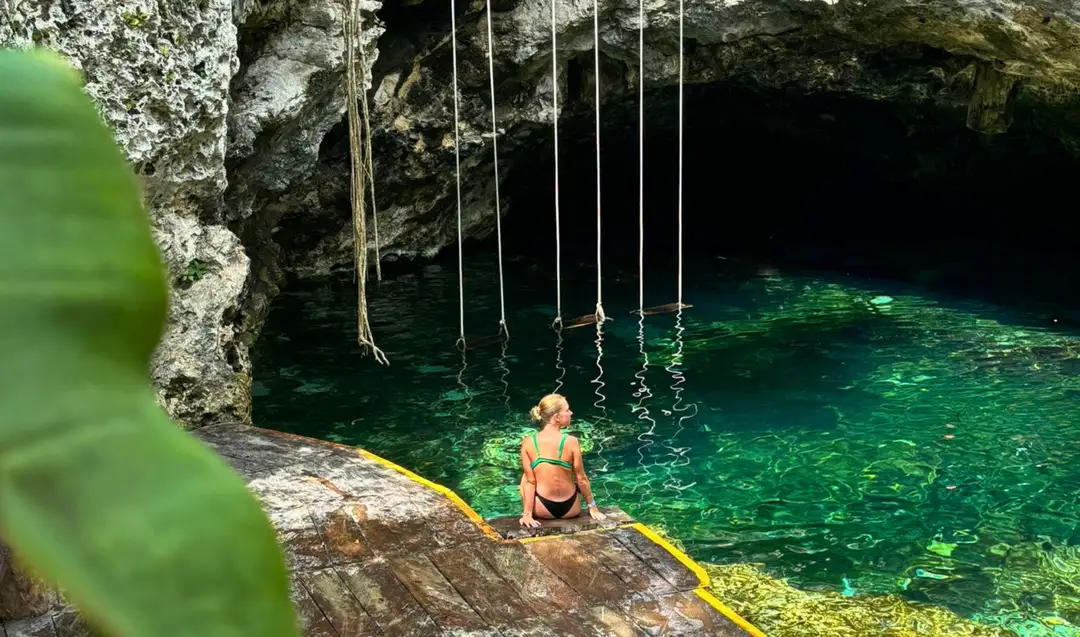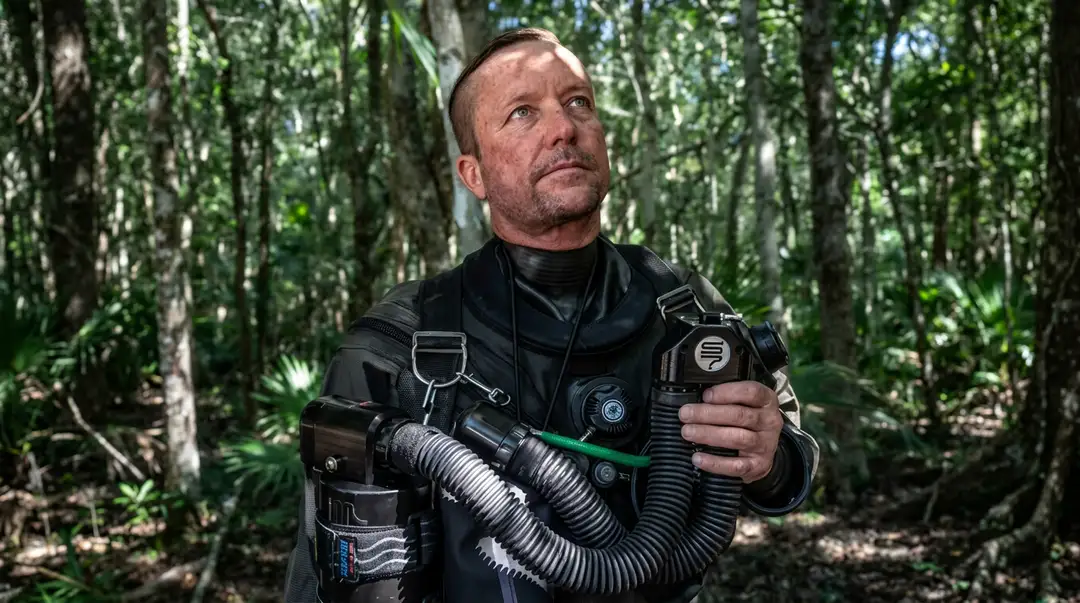
Part of the ceiling of Heaven's Gate, a flooded cavern in the Sac Actun system, broke loose during a dive, and the divers escaped the Tulum cave collapse unhurt, El Heraldo de México reported Wednesday.
Five months earlier, three environmental organizations had warned federal authorities that heavy machinery working on a new road over Sac Actun could cause exactly this kind of failure in the limestone vaults below. No study has linked the road to Heaven's Gate, and no inspection has been announced that could settle the question.
Rock and silt inside Puerta del Cielo
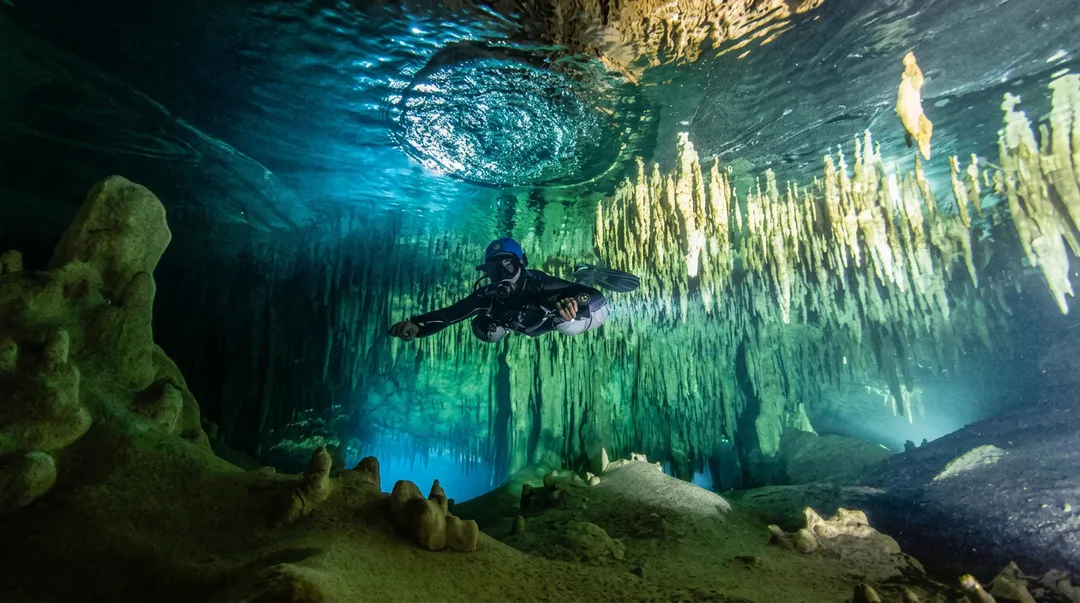
The rockfall happened in the Nohoch Nah Chich zone, in a cavern also known by its Spanish name, Puerta del Cielo. According to the newspaper, the falling rock raised a broad cloud of sediment that cut visibility inside the passage. The divers made it out without injuries.
The material landed in a stretch of the route where they could have been swimming.
The report did not say on which day the dive took place, how many divers were in the group, or how large the fallen section was. It described the event as a risk for anyone who dives these caverns and as an open question about the stability of other sections of the system.
Nohoch Nah Chich is one of the best-known names in Quintana Roo cave diving. Explorers have mapped it since the late 1980s, and in 2007 its passages were connected to Sac Actun, folding it into what is now the longest documented underwater cave network in the world.
Three groups warned of collapses in June
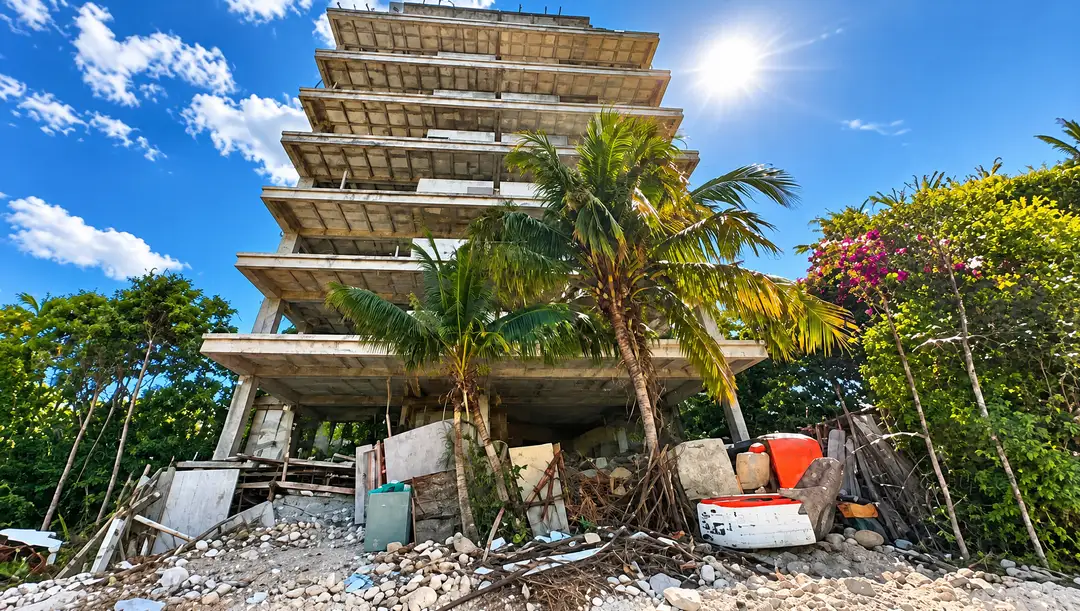
In June 2026, the Mexican Center for Environmental Law (CEMDA), Greenpeace México, and Sélvame MX filed complaints against the construction of the Jacinto Pat road, a 16-kilometer route through standing jungle north of Tulum. El Heraldo de México identifies the builders as two federal agencies, the Defense Ministry (Sedena) and the Secretariat of Infrastructure, Communications and Transportation (SICT).
Among the risks the groups listed were the collapse and sinking of limestone vaults under the weight of heavy machinery and the changes made to the surface. Gustavo Alanís Ortega, CEMDA's executive director, told reporters at the time that collapse was the first of three consequences he called catastrophic and irreversible. The other two were interrupted groundwater flows and contamination of the fresh water that reaches residents and hotels.
The legal fight centers on a permit. The organizations question why the Secretariat of Environment and Natural Resources (Semarnat) exempted the work from an environmental impact statement on the grounds that it was the rehabilitation of a rural road. In their account, it is a new road opened through the jungle. The groups have also pointed to land clearing and possible harm to the aquifer.
The challenge has since moved to the courts with mixed results. Sélvame MX told Grupo Animal in October that judges had denied two amparos, the court injunctions the organizations sought to halt construction. Riviera Maya News has also reported that the group expanded its injunction, arguing that the federal company behind the Maya Train lacks the legal authority to build the road.
No study yet ties the Tulum cave collapse to the road
El Heraldo de México was explicit on this point. There is still no technical study that would establish whether the road works have any direct relationship to the rockfall at Heaven's Gate.
It has not been confirmed either that the collapsed section lies beneath the area where machinery has worked. Answering that would require topographic and geological surveys that match the cave map against the surface.
The science allows for both explanations. The Mexican Institute of Water Technology (IMTA) has explained that cave ceilings in karst terrain can collapse through natural processes or under external loads that exceed the rock's bearing capacity. Building on that kind of ground, the newspaper noted, calls for studies that locate each cavity, along with its depth and dimensions, before any additional weight is placed on top.
Which of those two mechanisms brought down the rock in Puerta del Cielo is a question no agency has publicly addressed.
A 368-kilometer system beneath the Riviera Maya
Sac Actun has roughly 368 kilometers of documented underwater galleries. The International Union of Geological Sciences has recognized it for its natural, paleontological, and archaeological importance, and environmental groups describe it as part of the Great Maya Aquifer, which supplies fresh water to Tulum and the surrounding coast.
The system is made of limestone that water has dissolved and reshaped over thousands of years. That process produced the cenotes, caverns, and long underground conduits that draw cave divers from around the world and that hold much of the region's drinking water. The same porous rock is what makes the vaults vulnerable when the load above them changes.
An inspection that has not been announced
As of the newspaper's report, no authority had announced an official inspection to measure the size of the collapse, assess whether the dive circuit remains safe, or check for additional fractures in the ceiling.
A specialist evaluation could determine whether the rock gave way on its own or whether outside factors weakened the structure. Until someone surveys the fallen section and checks its position against the road above ground, the warning the three organizations issued in June remains a hypothesis that nobody has tested.
Should any road project over Sac Actun be required to map the caves beneath it before heavy machinery moves in? Join the conversation and share your perspective with us on Instagram and Facebook at @thetulumtimes.

The Tulum Times · Newsletter
The story continues in your inbox.
Essential Tulum news and local insight, a few times a week. Free.
No spam. Unsubscribe anytime.
Tulum Development, Permits, and Construction Watch
Reporting on permits, construction, regulation, and major development decisions shaping Tulum’s urban growth and investment climate.

“The best journalists reporting from paradise, highlighting the heroes that keep Tulum the most beautiful place in the world! THANK YOU!”