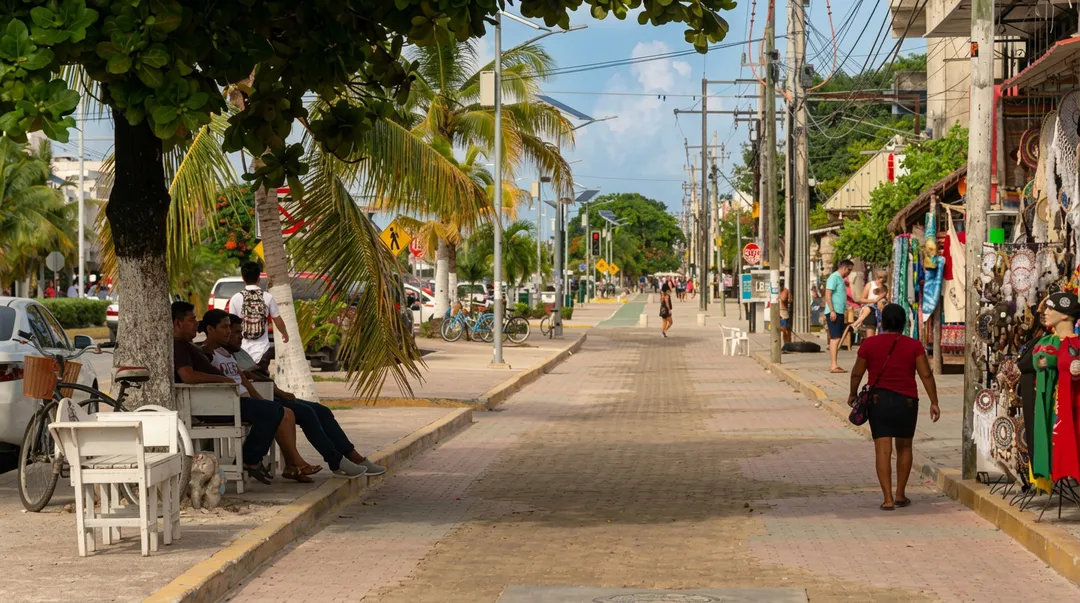
Fonatur, Mexico's National Tourism Development Fund, is preparing a diagnosis of Tulum infrastructure and urban services, Tourism Secretary Josefina Rodríguez Zamora said in a radio interview on the federal plan to win visitors back.
She presented the study as one part of that response, and she was blunt about how long the problem has been building. "Tulum hasn't had fewer tourists for just a few months. It has been years," she said. "It is a destination that has not reinvented itself, where infrastructure is lacking, where there are new mobility plans today, and where Fonatur is carrying out a diagnosis of urban services."
The study puts a federal agency to work on the issue that officials and the tourism industry now cite first when explaining Tulum's slower years. The town added rooms faster than it added roads, transportation, and the public services those rooms depend on. That work is underway as Tulum heads into the winter high season, the months that matter most to hotels, restaurants, and tour operators.
More rooms than Acapulco, without the services to match
Rodríguez Zamora said the lodging supply has outrun demand. Counting hotels together with rentals on platforms such as Airbnb, Tulum already has more rooms than Acapulco, she said, calling it "such a small destination without adequate public services."

Urban services, mobility, and public infrastructure did not grow at the same pace as the lodging supply, she acknowledged.
The comparison stands out because of scale. Acapulco has been one of Mexico's major beach resorts for decades. Tulum became a municipality in 2008.
Record sargassum and steep prices weighed on visitors
The secretary added two more factors: a record-breaking arrival of sargassum and a tourism sector that drove prices up. "It has to be said plainly, it took advantage of tourists, and prices went up enormously," she said.
Higher service costs and sargassum piling up on several beaches hurt both the experience and the perception of travelers, even during high season, according to Rodríguez Zamora.

A vacation club leader points to the missing urban development plan
The private sector's reading is close to the federal one. Miriam Cortés Franco, executive president of the Quintana Roo Vacation Club Association, known as Acluvaq, attributed Tulum's decline to years of disorderly growth, abusive pricing, a marked lack of public infrastructure, and unchecked real estate construction.
She also cited the absence of an updated Urban Development Plan, or PDU, the municipal instrument that sets land use and density rules for the town.
Both she and the secretary describe growth that outpaced planning.
Where Tulum infrastructure fits in the federal plan
The Fonatur study adds to work already announced for the destination. In July, Sectur presented a 10-point plan for Tulum that included a public services and urban order plan for the town, as well as a new public transport system for residents, according to La Razón.
The same plan listed free entry for Mexican visitors to Parque del Jaguar, an electric mobility network within the park, a parking lot at its southern entrance to shorten the walk to the beaches, and a new direct entrance to the archaeological zone built by military engineers.
Fonatur was already part of Tulum's recovery strategy. Its director general, Sebastián Ramírez Mendoza, met with Governor Mara Lezama Espinosa to coordinate federal and state work on the town's public spaces and services.
The Tulum ruins show the gap and an early turn
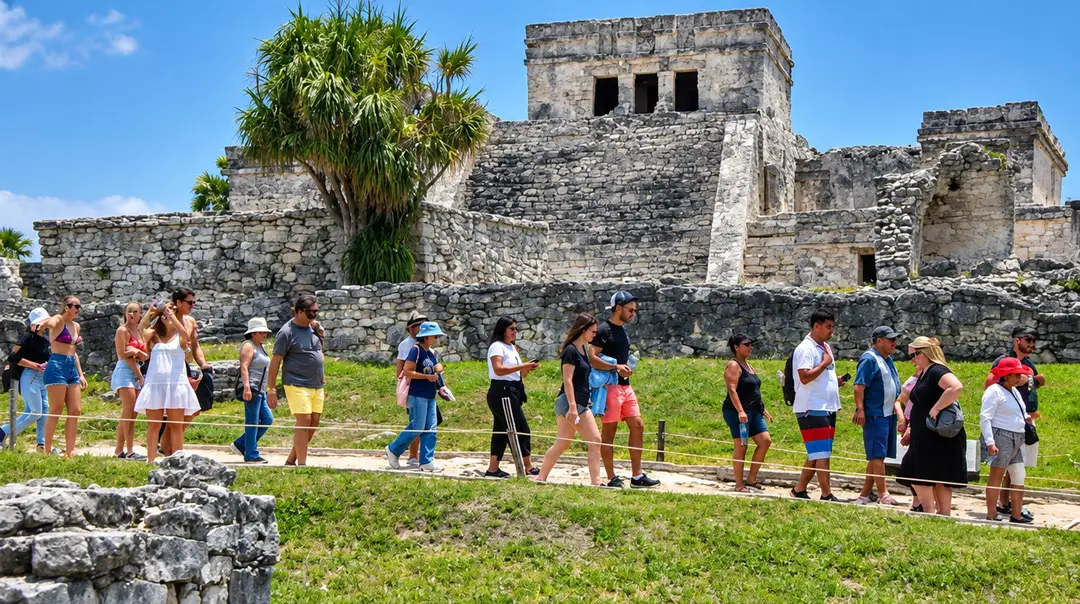
Visitor numbers at the Tulum archaeological zone show how far the destination has fallen from its recent peak. The site received 22,100 visitors in September 2026, compared with 74,385 in September 2024, a drop of about 70%, according to Mexico's National Institute of Anthropology and History, or INAH.
The past year points the other way. September's total was about 19% above the 18,534 visitors recorded in September 2025, and foreign visitors nearly doubled over that period, from 9,066 to 17,388.
From January through September, the ruins counted 521,952 visitors, about 35% fewer than in the same months of 2025.
Rodríguez Zamora did not say when Fonatur expects to finish its diagnosis or whether the findings will be made public. Those answers will determine what the federal government builds in a town that, by its own tourism secretary's count, already has the rooms but not yet the services to back them up.
If you could fix one public service in Tulum before the high season, would it be roads, public transport, beach access, or something else? Join the conversation and share your perspective with us on Instagram and Facebook at @thetulumtimes.

The Tulum Times · Newsletter
The story continues in your inbox.
Essential Tulum news and local insight, a few times a week. Free.
No spam. Unsubscribe anytime.
Tulum Cenotes, Ruins, and Practical Visitor Guides
Guides, access updates, regulations, and practical planning around cenotes and the Tulum archaeological zone.

“The best journalists reporting from paradise, highlighting the heroes that keep Tulum the most beautiful place in the world! THANK YOU!”