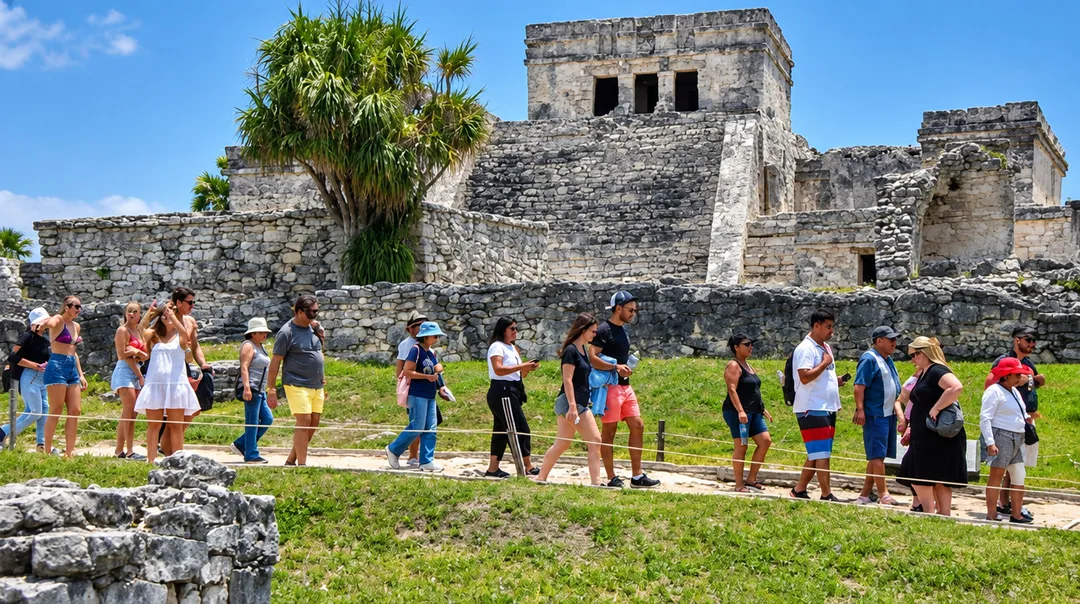
Tulum ruins visitors from abroad nearly doubled in September, rising from 9,066 a year earlier to 17,388, according to visitor statistics from Mexico's National Institute of Anthropology and History, or INAH, published October 30.
Mexican visitors moved the other way that month, falling from 9,468 to 4,712. Even so, the site received 22,100 people in September, about 19% more than the 18,534 it recorded in September 2025, a turn in a year that had been running well below the last one.
The month stands out because of what came before it. From January through September, the archaeological zone of Tulum recorded 521,952 visitors, roughly 35% fewer than the 808,981 recorded during the same period in 2025. It remains the most visited archaeological site in Quintana Roo and the third most visited in Mexico, and its numbers provide an early read on how cultural tourism is moving through the region ahead of the winter high season.
The figures, published on Datatur, the federal tourism statistics platform, are preliminary. INAH notes they may change with corrections or adjustments, so they describe the direction of the year rather than a final count. The full tables are available on Datatur's museums and archaeological zones page.
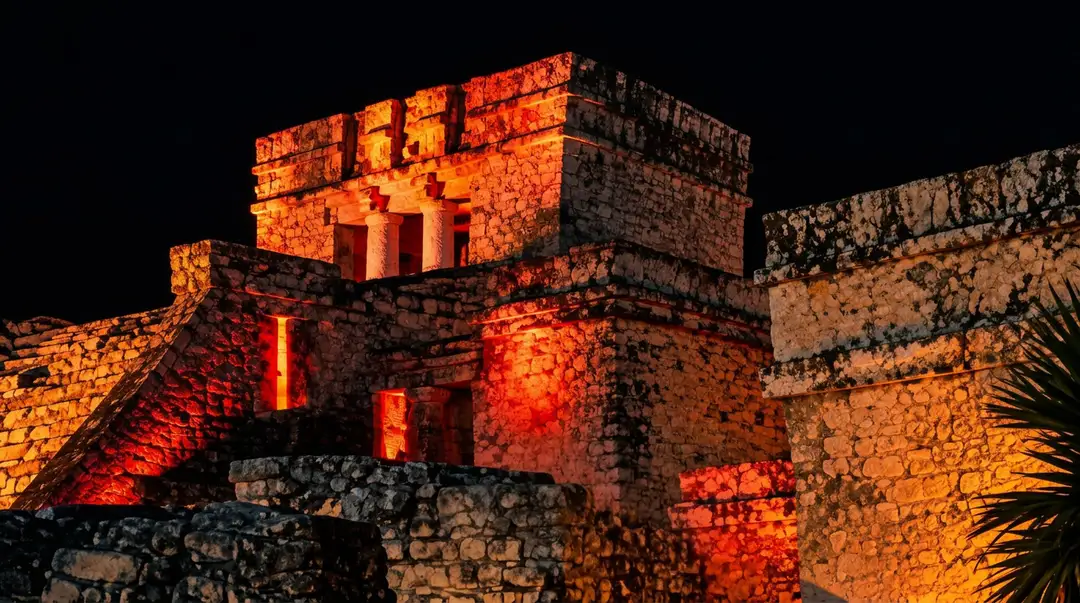
Tulum ruins visitors from Mexico fell by half
Nearly all of the year's decline came from domestic travel. Mexican visitors dropped from 337,150 in the first nine months of 2025 to 166,525 in 2026, a fall of 50.6%. International visitors fell from 471,831 to 355,427, a 24.7% decline.
The result is a site that leans more heavily on travelers from abroad. Foreign visitors made up about 68% of the Tulum ruins' public through September, up from about 58% a year earlier.
INAH's statistics record who came, not why. The tables offer no explanation for the drop in domestic visitors.
The slide did not begin this year. Tulum closed 2025 with 1,031,443 visitors, 17.2% fewer than the 1,245,294 it received in 2024.

Third in Mexico, behind Chichén Itzá and Teotihuacán
Visits fell across the country, though less sharply. The archaeological zones INAH tracks nationwide received 6,672,151 visitors from January through September, 10.1% fewer than the 7,419,476 of the same period in 2025.
Chichén Itzá led the national ranking with 1,435,066 visitors, down 14.4%. Teotihuacán, outside Mexico City, followed with 1,150,202, down 7.6%. Tulum ranked third, but its decline was more than three times the national rate.
Chacchoben grows while Cobá and San Gervasio slip
Among the Quintana Roo sites with a full breakdown in the statistics, only one finished the period ahead of 2025.
- Chacchoben, in the south of the state, received 184,294 visitors, up 2.5% from 179,770.
- Cobá, about 45 kilometers inland from Tulum, received 136,711, down 4.5% from 143,195.
- San Gervasio, on Cozumel, received 82,912, down 19.7% from 103,281.
After Tulum, San Gervasio posted the steepest decline in the state. Tulum still drew nearly three times as many visitors as Chacchoben, the second busiest site on the list.
The statistics also include Ichkabal, near Bacalar, which opened to the public in January 2025.
Mureco and the Museo Maya de Cancún
The Museo Regional de la Costa Oriental, known as Mureco, sits inside Parque del Jaguar, the protected area that also holds the Tulum ruins. It opened in September 2024 and recorded 72,445 visitors from January through September 2026, compared with 98,807 in the same period of 2025, a decline of 26.7%.
The Museo Maya de Cancún, which includes its own archaeological zone, counted 36,873 visitors, down 8.8% from 40,444.
Unlike the ruins, neither museum gained ground in September. Mureco received 5,450 visitors that month, compared with 8,392 a year earlier, and the Museo Maya received 2,251, compared with 2,991 a year earlier.
Whether September marks the start of a recovery at the Tulum ruins depends on the months that follow. The answer will show in the October through December figures, which cover the opening weeks of the winter season and which INAH has not yet published.
Have you visited the Tulum ruins or Mureco this year, and how did the experience compare with earlier trips? Join the conversation and share your perspective with us on Instagram and Facebook at @thetulumtimes.

The Tulum Times · Newsletter
The story continues in your inbox.
Essential Tulum news and local insight, a few times a week. Free.
No spam. Unsubscribe anytime.
Tulum Cenotes, Ruins, and Practical Visitor Guides
Guides, access updates, regulations, and practical planning around cenotes and the Tulum archaeological zone.

“The best journalists reporting from paradise, highlighting the heroes that keep Tulum the most beautiful place in the world! THANK YOU!”