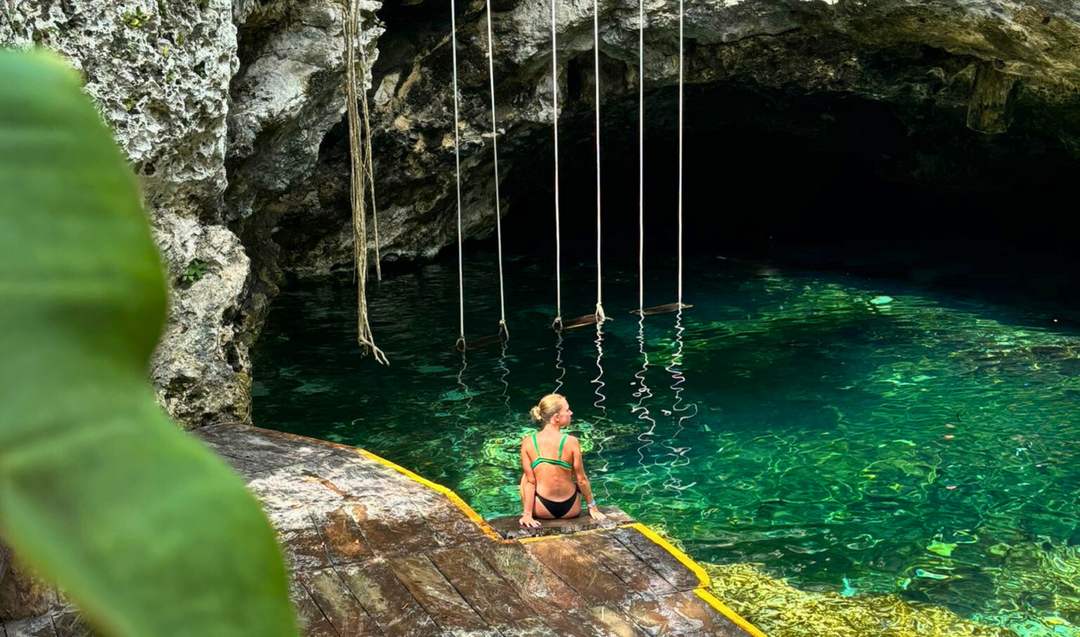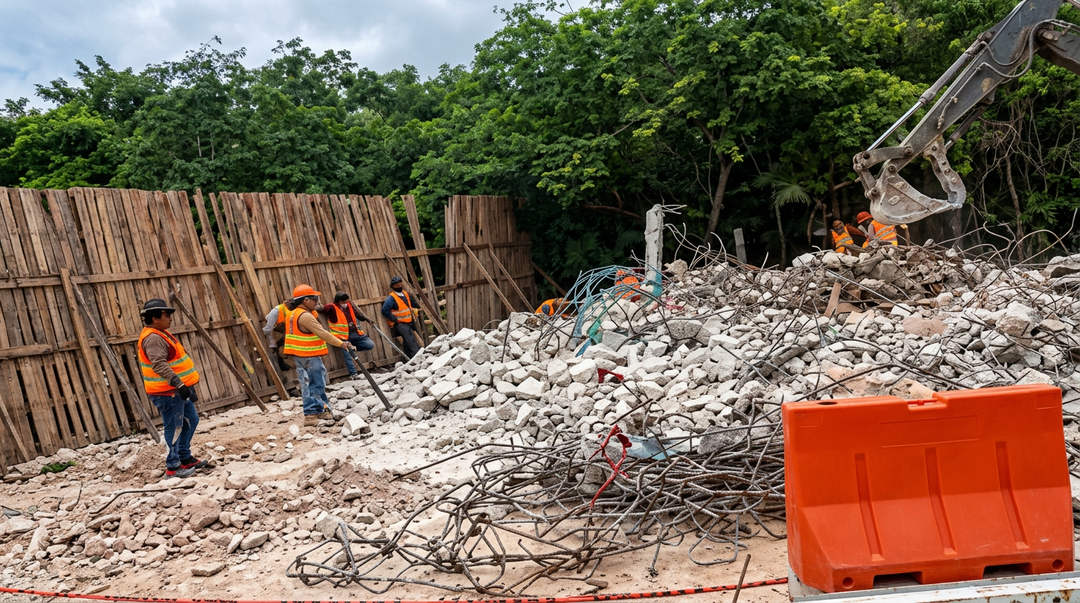
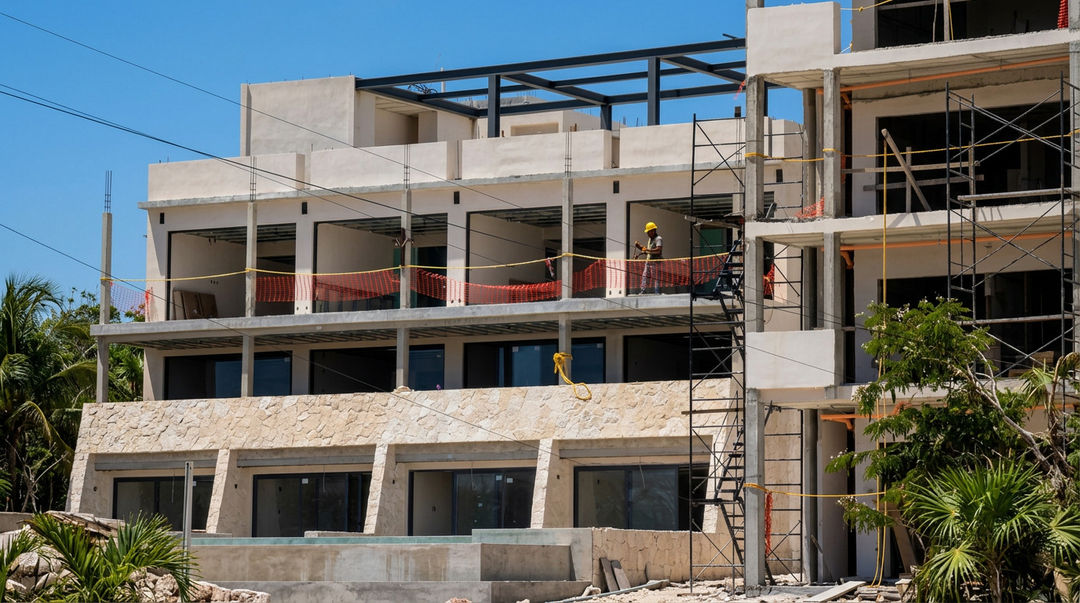
Photographs of Tulum's spreading urban footprint, posted by environmental activists, carry a blunt request: approve no more subdivisions. Sélvame MX argues Tulum real estate development has outpaced drainage and cleared the jungle that draws visitors.
Guillermo D'Christy, president of the environmental organization, made the case in a social media post that accompanied the images. He blamed real estate speculation for part of the destination's deterioration and named two underground river systems he says are being contaminated.
"Part of Tulum's collapse (among other things) has been real estate speculation. It has grown without drainage, destroying jungle and contaminating the Ox Bel Ha and Sac Actun underground river systems," D'Christy wrote.
The groups behind the call want authorities to stop approving new fraccionamientos, the planned housing subdivisions that have spread across the municipality, along with other new real estate projects. Trees are only part of the argument. The water under Tulum feeds its cenotes, runs toward its coast, and supplies its residents, so where the next subdivision goes also shapes what visitors find when they arrive.
"Not one more hectare"
D'Christy closed his post with a four-word demand. "Not one more hectare," he wrote. "We urgently need to protect what makes visitors want to come."

He presents the demand as a defense of the destination rather than a case against tourism. In that reading, the jungle, the cenotes, and the beaches are what travelers pay to see.
Growth that arrived before the drainage
The core of the complaint is sequence. According to D'Christy, Tulum grew first and built sanitation later, or not at all.
That sequence carries particular weight on the Yucatán Peninsula. The ground is porous limestone, there are almost no surface rivers, and rainwater filters straight down into an aquifer that flows underground toward the Caribbean. Where homes and businesses are not connected to a sewer network, wastewater enters septic tanks or absorption wells, and the underlying rock provides little filtration before it reaches the water table.
Each new subdivision built without a connection adds to that load. The activists' photographs, by their own description, are meant to show how far the urban area has spread into what was jungle.

Ox Bel Ha and Sac Actun, the rivers under the town
The two systems D'Christy named are among the longest flooded cave networks ever mapped. Survey work in the Riviera Maya has documented hundreds of kilometers of underwater passages, with Sac Actun and Ox Bel Ha ranked as the two longest in the world.
Sac Actun also carries international recognition. In October 2022, the International Union of Geological Sciences recognized it as one of the world's most significant geological heritage sites.
For Tulum, these are working infrastructure as much as natural wonders. They hold the freshwater the town depends on and the cenotes that anchor a large share of its tourism.
From the aquifer to the reef offshore
D'Christy warned that the damage does not stop at the edge of town. In his account, clearing jungle, contaminating the aquifer, and degrading mangroves all reach the reef.
The chain he described follows the path of the water. The aquifer discharges into the sea through coastal springs and mangrove systems, and the Mesoamerican Reef runs along the Quintana Roo coast just offshore. Conservationists treat these as one connected system, so pressure at one point travels to the next.
A 16-kilometer road already before the courts
The call follows months of disputes over a single road. In remarks published on October 18 by the regional outlet Grupo Animal, D'Christy said a 16-kilometer road built by the Secretaría de la Defensa Nacional, through the company Tren Maya S.A. de C.V., runs over the Sac Actun system and has already attracted at least one development to land alongside it.
Sélvame MX, the Centro Mexicano de Derecho Ambiental, and Greenpeace México began legal proceedings against the road in late June, arguing it puts the region's water supply at risk. According to D'Christy, judges have denied two amparos, the constitutional injunctions the groups sought. Profepa, the federal environmental enforcement agency, had previously closed the works for lacking environmental permits, according to reporting by Agencia Reforma in April.
For the activists, the road is the clearest local case of the pattern they now describe across the municipality, with infrastructure arriving first and land speculation close behind.
Who signs off on Tulum real estate development
Approvals for new housing sit at more than one level of government. The municipality controls land use and construction licenses under its urban development program. Clearing jungle, legally classified in most cases as forest land, requires a federal change-of-use authorization from Semarnat, and many projects also need a federal environmental impact authorization.
The call, as circulated, does not single out one authority or set out what a freeze would look like in practice, whether a pause on new licenses, a review of pending ones, or a revision of the urban plan.
It arrives amid a broader debate over Tulum's direction, in which environmental strain sits alongside concerns about security, the cost of tourist services, and how the town maintains its place as a destination.
As of Saturday, October 24, The Tulum Times had found no public response to the demand from the municipal government, the state government, or Semarnat. Until one of them answers, the request remains where it started, in a set of photographs and four words posted online.
Should Tulum stop approving new subdivisions until its drainage network catches up with its growth? Join the conversation and share your perspective with us on Instagram and Facebook at @thetulumtimes.

The Tulum Times · Newsletter
The story continues in your inbox.
Essential Tulum news and local insight, a few times a week. Free.
No spam. Unsubscribe anytime.
Tulum Development, Permits, and Construction Watch
Reporting on permits, construction, regulation, and major development decisions shaping Tulum’s urban growth and investment climate.

“The best journalists reporting from paradise, highlighting the heroes that keep Tulum the most beautiful place in the world! THANK YOU!”