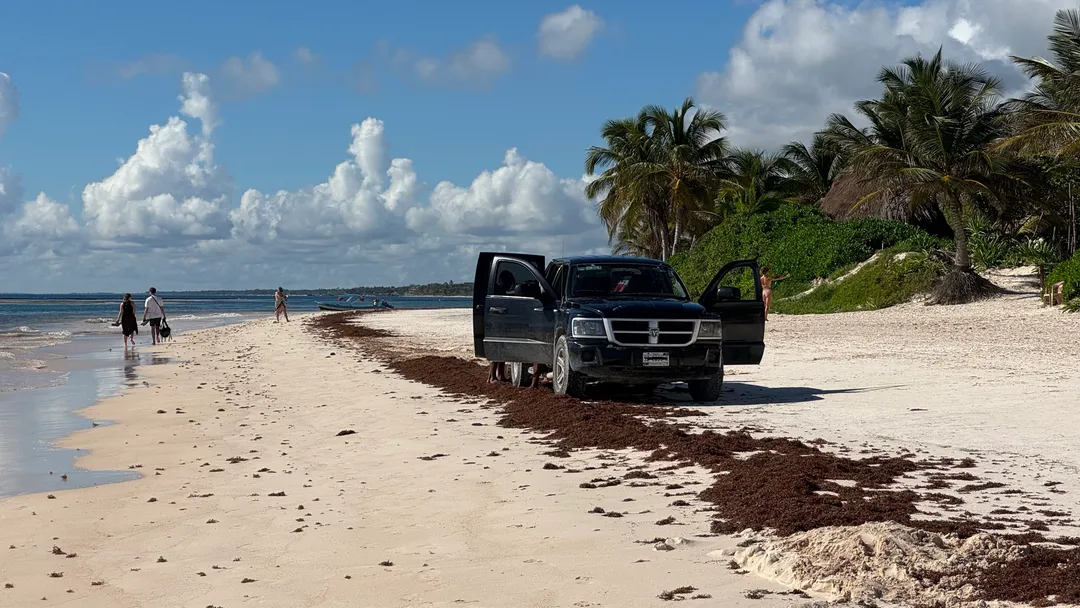
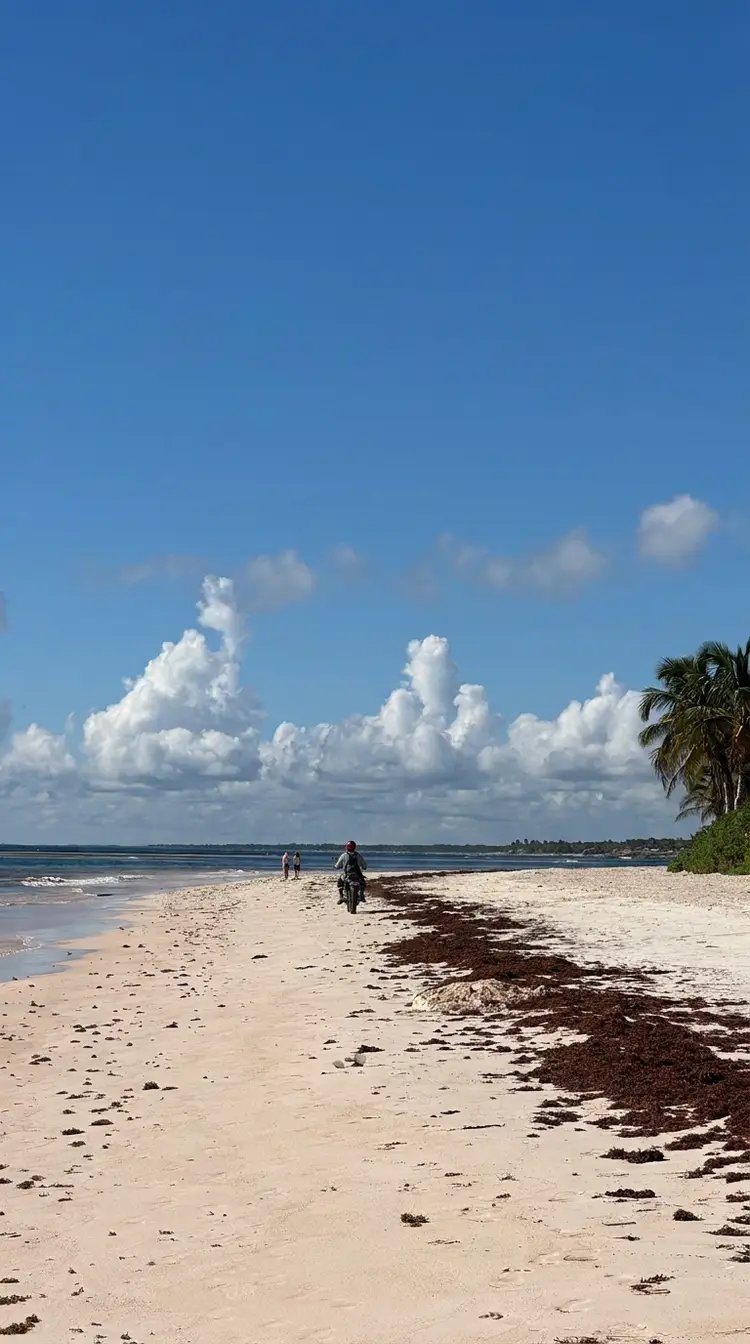
Cars, pickup trucks, and motorcycles drove across the sand of Jaguar Park beaches in Tulum on Sunday, crossing nesting habitat where federal rules allow only turtle-monitoring vehicles, with nest patrols running through November.
The Tulum Times observed and photographed the vehicles on the park's beaches on Nov. 1. Their owners could not be identified. During the visit, this publication saw no park staff, environmental inspectors, or National Guard officers stop or slow the vehicles as they passed people walking along the shore.
The timing is the problem. Tulum's beaches have recorded more than 6,000 sea turtle nests this season, according to volunteers from the Punta Piedra turtle camp quoted by La Revista Peninsular on Oct. 19, and their night patrols along this coast continue until the end of November.
Tire tracks among beachgoers on Sunday
Passenger cars, pickups, and motorcycles moved along the beach itself, over the dry upper sand where sea turtles dig their nests and where visitors and residents walk to the water. Vehicles on the sand have become an increasingly common sight on these beaches, based on this publication's observations, and Sunday's traffic included several at once.
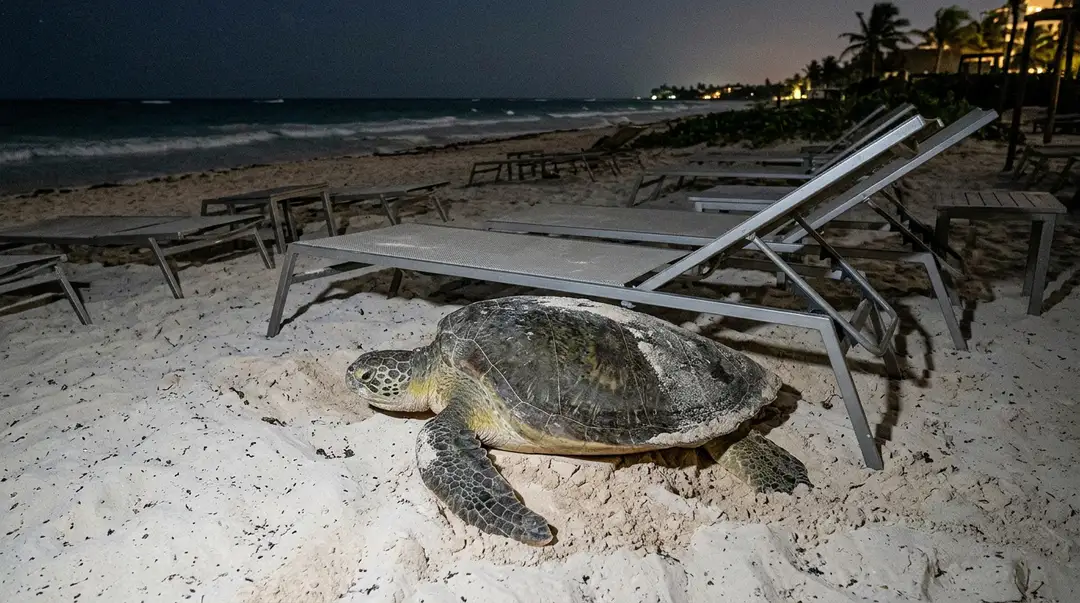
Some moved fast past people on foot.
It was not possible to determine who owned the vehicles. Some may belong to fishermen reaching their boats, doing the same work that families on this coast have done for generations, long before the park existed. Others could belong to day visitors, to businesses operating inside the park, or to someone with authorization to drive on the beach.
A traditional trade still needs rules on a nesting beach. Federal standards make room for one narrow category of vehicles, and The Tulum Times found no published park guidelines setting marked routes, hours, speed limits, or buffer zones around nests for anyone else who needs to reach the water. Rules of that kind would allow fishermen to continue working while protecting the nests and the people walking beside them.
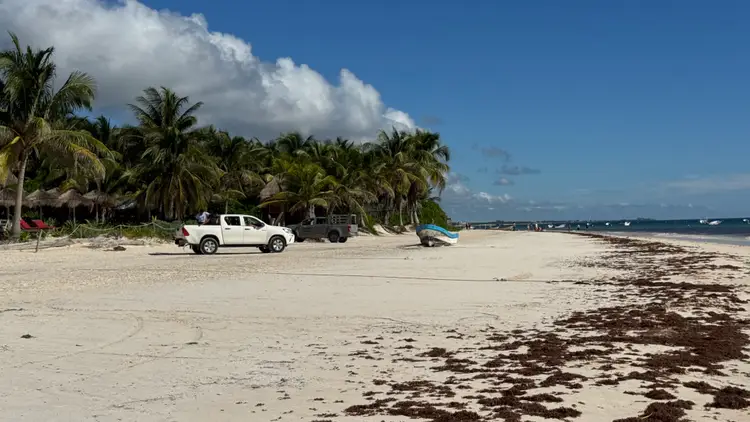
The one kind of vehicle allowed on Jaguar Park beaches
Mexico's NOM-162-SEMARNAT-2012 establishes federal requirements for protecting sea turtles in their nesting habitats. Environmental permits issued by the Tulum municipal government, citing that standard, state that on nesting beaches, the only vehicles permitted are those used for monitoring and for handling and protecting sea turtles, their clutches, and their hatchlings.
The species that nest in Tulum are listed as endangered under NOM-059-SEMARNAT-2010, the federal list of at-risk wildlife.

The concern with tires is physical. A vehicle's weight compacts the sand above buried eggs, and the ruts it leaves can stop hatchlings on their crawl to the sea. In July, Por Esto! reported that sea turtles found dead on the beach at Chuburná Puerto, in Yucatán, showed signs of having been run over by vehicles allegedly driving on the sand. In April, conservationists in Ciudad del Carmen, Campeche, told the same outlet that vehicles on the beach, including off-road vehicles, are strictly prohibited due to the risk to nests.
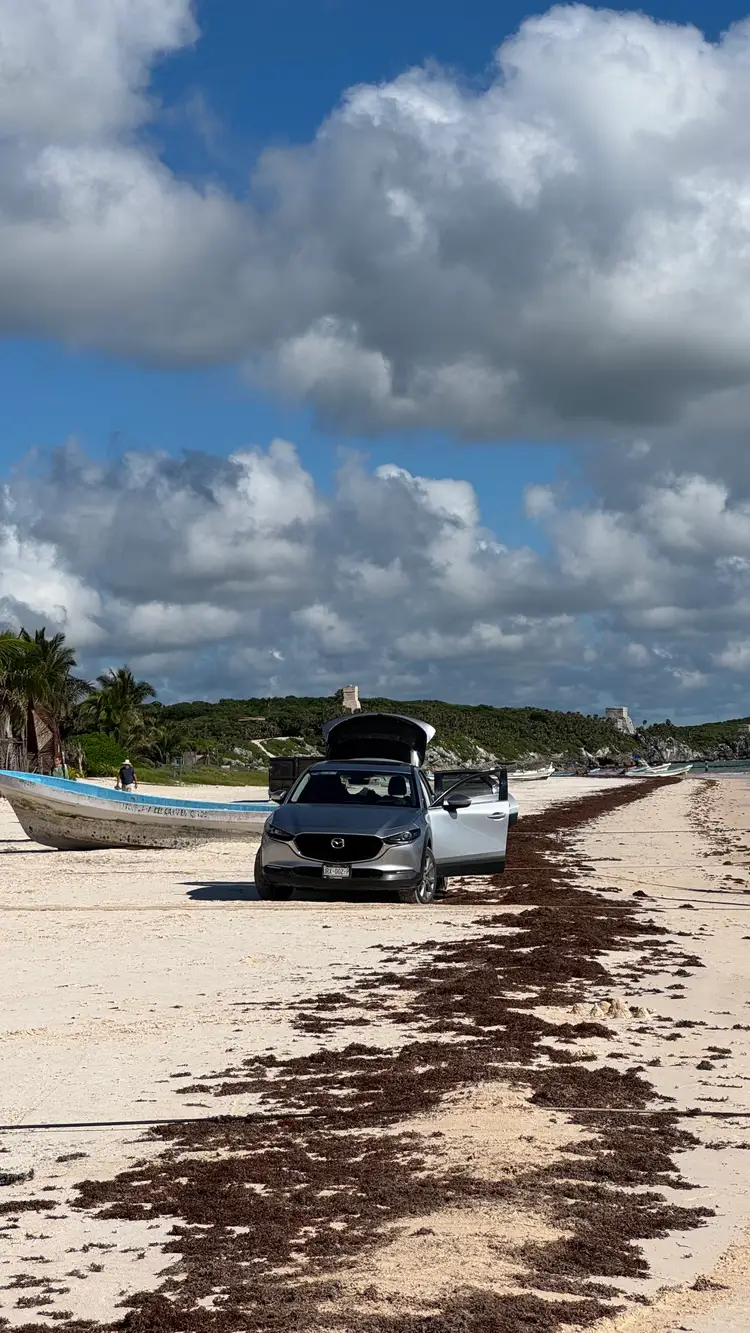
More than 6,000 nests and patrols until the end of November
Green turtles account for the largest share of nests on Tulum's beaches this season, followed by loggerheads, according to the Punta Piedra volunteers. As of their October report, they had not identified any leatherback nests.
Their patrols run from Punta Piedra to Playa Maya, one of the beaches inside Jaguar Park. The volunteers have already asked hotels, beach operators, and visitors to clear loungers and umbrellas from the sand at the end of each day, because the furniture blocks both nesting females and hatchlings.
Sea turtle eggs typically incubate for about two months, so clutches laid in the final weeks of the season stay in the sand into winter.
Loggerheads use the park's shoreline directly. In April, a loggerhead was found tangled in sargassum at Playa Paraíso, inside the park, La Jornada reported.
Federal agencies with offices inside the park
Jaguar Park opened on Sept. 7, 2024, on the site of Tulum's former airfield. At the inauguration, its facilities included offices for the Defense Ministry (Sedena), the federal environmental enforcement agency Profepa, the protected areas commission Conanp, and the INAH, along with a camp for the National Guard, N+ reported.
The agencies responsible for enforcing turtle protections therefore work inside the same perimeter as the beaches where Sunday's vehicles were driving. As of Sunday, The Tulum Times had found no public statement from Profepa, Conanp, or the park's administration addressing vehicle traffic on the park's beaches.
Entry rules that cover the gate but not the beach
Most public discussion of Jaguar Park over the past year has centered on access. Federal and state officials announced free entry to the park's beaches, among them Playa Santa Fe, Playa Pescadores, Playa Maya, and Playa del Mangle. Uno TV reported that visitors arriving by car are still asked to make a reservation at a hotel or beach club because the park has no public parking yet.
Those announcements address who may drive through the gate and where a car can be left. The Tulum Times found none that address driving on the beach itself.
Reporting vehicles on the sand to Profepa
Profepa accepts environmental complaints by email at denuncias@profepa.gob.mx and by phone at 800-PROFEPA, channels the agency promoted in a 2025 public campaign. A useful report includes the beach, the date and time, a description of the vehicle, its license plate if visible, and photos.
The Punta Piedra volunteers will keep walking the coast to Playa Maya until the end of November. Until an agency says who may drive on these beaches, their morning rounds will be the closest record of what the tires leave behind.
Should fishermen and other users of Jaguar Park beaches follow the marked routes and hours during turtle season? Join the conversation and share your perspective with us on Instagram and Facebook at @thetulumtimes.

The Tulum Times · Newsletter
The story continues in your inbox.
Essential Tulum news and local insight, a few times a week. Free.
No spam. Unsubscribe anytime.
Parque del Jaguar Access, Fees, and Rules in Tulum
Coverage and practical guidance around Parque del Jaguar, public access rules, entry fees, closures, and the changing shoreline experience in Tulum.

“The best journalists reporting from paradise, highlighting the heroes that keep Tulum the most beautiful place in the world! THANK YOU!”