
Specialists say the Tulum real estate market's way out of a two-year sales slump runs through a buyer the boom largely overlooked: the full-time resident, as vacation rental income keeps falling.
Home sales dropped from 3,487 units in 2023 to 1,711 in 2025, a 50.9% contraction, according to the real estate analysis firm InfoHabitat. The firm counted 6,340 homes listed for sale in 2023. At the 2025 sales pace, that stock alone represents nearly four years of supply.
The visitors those homes were designed for are arriving in smaller numbers. Tulum received 879,229 tourists between January and July 2026, 8.6% fewer than in the same period of 2025, according to Tourism Ministry figures. Passenger traffic at Tulum International Airport fell 35% over the same months, to 92,283.
How the Tulum real estate market ended up with one resident home in five
Investment poured in on the strength of the Maya Train and the Felipe Carrillo Puerto International Airport. InfoHabitat data show homes under construction in Tulum rising from 1,466 in 2017 to 13,266 in 2023.
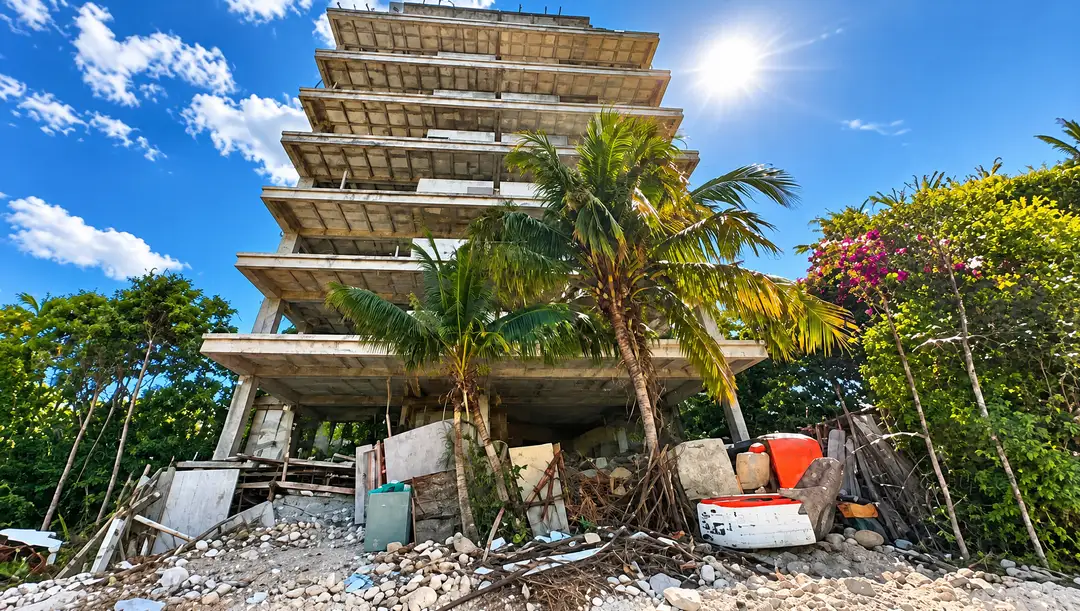
Eduardo Moya Vallejo, managing partner of InfoHabitat, attributes the current slowdown to a combination of real estate speculation, expensive services, excessive permitting, and a lack of urban planning.
Unlike other destinations in the Mexican Caribbean, much of Tulum's housing stock was developed to capture tourists, with little attention to the needs of the people who live in the municipality. Moya said the result leaves the local economy exposed whenever tourism slows.
"In Cancún, 89% of homes are occupied by local residents. That is not the case in Tulum, where an estimated 21% of the housing inventory is occupied by residents. It is a very sharp disparity, and when tourism is lacking, the economy falls," Moya said.
Airbnb revenue down 14% with about 3,600 listings left
The drop in visitors has reached the short-term rentals that thousands of the new apartments were built to supply. Average revenue for Airbnb properties in Tulum fell 14% in 2026 compared with 2025, according to AirDNA, which tracks short-term rental data. Active listings contracted 27%, to roughly 3,600.
Juan Vega, chief executive of the real estate firm Habitaria, said the trouble began when developers and buyers assumed tourism growth would be permanent.
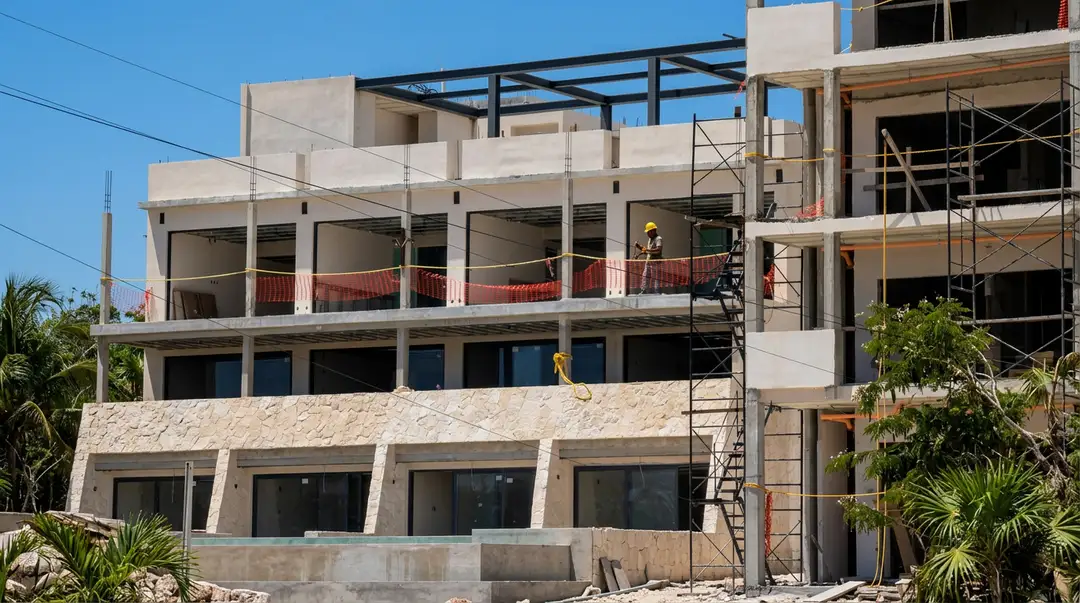
"You have to understand that housing was built to be lived in. Real estate is not a financial vehicle. Expecting an apartment to be a long-term financial instrument is a mistake when real demand has not been validated," Vega said.
A 14% price adjustment that has yet to revive sales
Prices have moved. Habitaria estimates that property prices in Tulum fell about 14% over the past year, a drop that has not been enough to bring sales back.
Moya said the cost of land, labor, materials, and financing leaves developers little room for further discounts. Some companies may turn to flexible payment terms instead, he said, while others have already begun halting projects.
The pipeline is still large. Vega counts roughly 7,000 homes in stages ranging from planning to construction, and cautioned that some announced projects may never be built.
Promised returns of 8% to 14% that were never guaranteed
Investor confidence has also suffered from sales practices that, according to Vega, ranged from unrealistic profit promises to projects that were never delivered.
"Unrealistic returns of between 8% and 14% were promised, which is not the same as a guaranteed net return. There was a lot of speculation around profitability, and Tulum became one of the destinations with the most real estate fraud," Vega said.
Vega did not identify specific developments or cases.
Retirees and remote workers as the next wave of buyers
Both specialists see an opportunity for Tulum to rely less on vacation rentals and to build permanent residential demand.
Vega said interest is coming from retirees, adults between 50 and 70, and professionals who work remotely. Those buyers, he said, could absorb part of the homes now on the market.
Moya puts the weight elsewhere. He considers it essential to restore the conditions that draw tourists to Tulum and to fix the municipality's land-use planning problems.
He described Tulum as an example of a recurring weakness in Mexico, the lack of municipal planning, and said changing course will require a long-term vision for urban growth.
The test for that shift sits in the roughly 7,000 homes still in the pipeline. Each one that reaches the market without a resident buyer adds to an inventory that, at the 2025 pace, already covers nearly four years of sales.
Would you buy or rent a home in Tulum to live in full-time, or is the market still built for visitors? Join the conversation and share your perspective with us on Instagram and Facebook at @thetulumtimes.

The Tulum Times · Newsletter
The story continues in your inbox.
Essential Tulum news and local insight, a few times a week. Free.
No spam. Unsubscribe anytime.
Tulum Real Estate, Development, and Investment Context
Reporting and analysis on property, permits, development risk, legality, market trends, and investor context in Tulum.

“The best journalists reporting from paradise, highlighting the heroes that keep Tulum the most beautiful place in the world! THANK YOU!”