

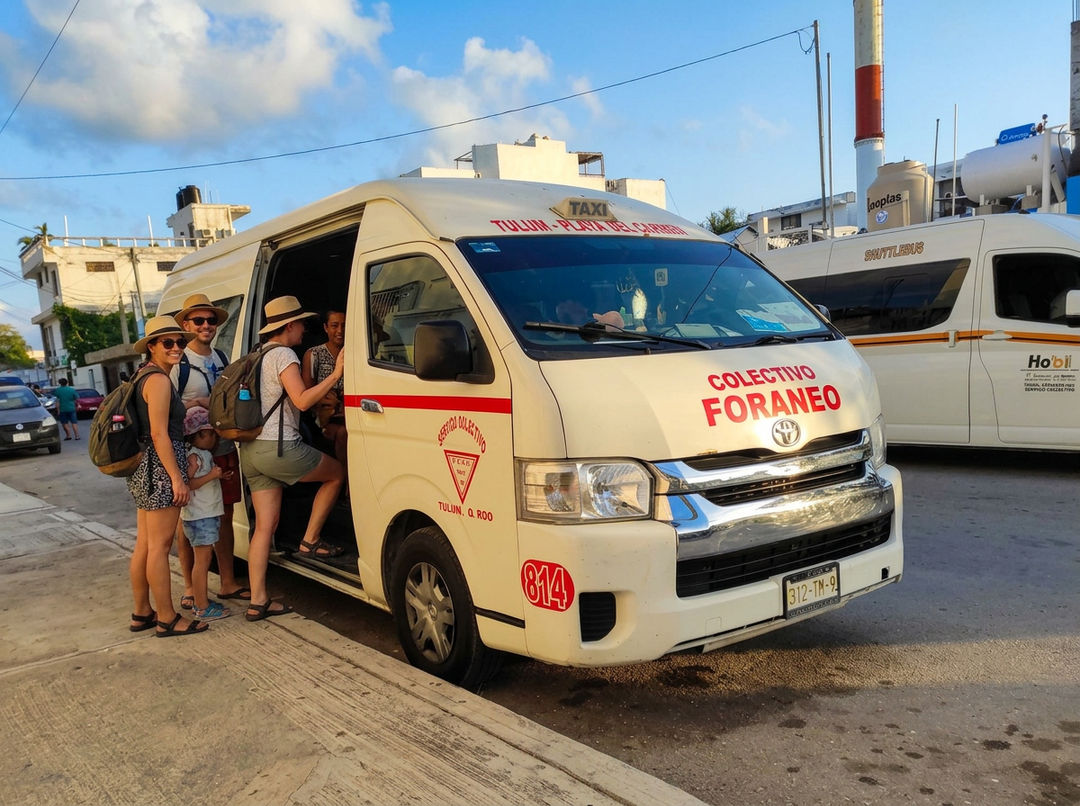
Las camionetas y autobuses foráneos ya no recogen pasajeros sobre la avenida principal de Tulum. El abordaje ocurre únicamente en las terminales autorizadas de autobuses, bajo un esquema que lanzaron las autoridades municipales y los concesionarios a finales de julio.
Los primeros afectados son quienes no tienen auto. Un residente de Aldea Tulum que antes detenía un colectivo a Playa del Carmen en medio de la avenida ahora debe llegar a una terminal antes de que comience el viaje. Para cubrir esa distancia, un servicio alimentador gratuito comenzó el viernes 24 de julio, y permanece sin costo mientras la oficina de movilidad municipal termina de marcar las rutas.
El abordaje se traslada a las terminales de autobuses de Tulum
La norma es estrecha y contundente. Se eliminan las paradas intermedias para el servicio foráneo, las camionetas y autobuses que circulan entre municipios. Los pasajeros suben y bajan únicamente en terminales, en ningún otro lugar.
Manuel Solís, secretario general del Sindicato de Taxistas Tiburones del Caribe, dijo que la medida busca reducir la congestión que generan esas unidades cuando se detienen en una calle de dos carriles sin acotamiento para absorber un vehículo estacionado. En una calle tan estrecha, una camioneta estacionada cierra un carril, y todo lo que viene detrás debe esperar. La avenida principal de Tulum transporta tráfico local, tráfico turístico, camiones de reparto y la flotilla de taxis a través de los mismos dos canales.

Recorridos gratuitos desde Aldea Tulum y Las Palmas
El servicio de conexión comenzó el viernes y vincula Aldea Tulum y la subdivisión Las Palmas con las terminales de autobuses. Por ahora, los usuarios no pagan por él. Se trata de una medida transitoria y no de una política: la Dirección de Movilidad Municipal aún está terminando la señalización de rutas y marcando los puntos oficiales de abordaje y descenso, y el sindicato presentó el periodo gratuito como cobertura para la adaptación.
Nadie ha dicho cuál será la tarifa una vez que se coloquen los señalamientos.
Solís señala a Carrillo Puerto y Playa del Carmen
El modelo no es nuevo en Quintana Roo. Solís dijo que Felipe Carrillo Puerto y Playa del Carmen ya operan el servicio foráneo solo desde terminales, y que la circulación fluye mejor donde esa regla se cumple. Playa del Carmen ha pasado años sacando sus colectivos interurbanos de la malla vial hacia puntos fijos bajo los pasos elevados de la carretera.
El trabajo preparatorio en Tulum es más antiguo que el anuncio. En febrero, la directiva de Imoveqroo se reunió en el municipio con funcionarios de movilidad y tránsito y el sindicato de taxis para revisar una terminal para unidades foráneas, junto con un centro de servicio al usuario para pasajeros de taxi y vigilancia por video dentro de la flotilla. La consolidación de terminales anunciada en julio es el resultado visible de ese expediente.
Un Mundial que llegó al 42.1 por ciento
Solís situó el cambio en un contexto más difícil. Tanto 2025 como 2026 han avanzado lentamente para el sector de transporte, dijo, y el torneo internacional de futbol que la industria esperaba que levantara las llegadas no entregó lo pronosticado.

Las cifras estatales respaldan la decepción. Durante la ventana del torneo, los hoteles de Quintana Roo tuvieron una ocupación promedio del 56 por ciento, según la Secretaría de Turismo estatal, y Tulum quedó más baja entre los principales destinos con el 42.1 por ciento. Las habitaciones vacías se notan en el día de un taxista mucho antes de que aparezcan en un reporte trimestral. Menos huéspedes significa menos viajes al aeropuerto, menos viajes a clubs de playa, menos carreras entre la zona hotelera y la ciudad.
Viajes por aplicación sin concesión
La respuesta del sindicato a la caída es digital. Solís dijo que están moviendo conductores a plataformas como Eiby Taxi e InDrive, donde un pasajero puede ver la identidad del conductor, los detalles del vehículo y la tarifa aplicable antes de que comience el viaje.
La queja asociada a esto es una familiar. Vehículos privados toman viajes por aplicaciones sin concesión, sin identificación oficial y sin el seguro requerido, dijo Solís, lo que deja al Instituto de Movilidad del Estado de Quintana Roo tratando de supervisar un servicio que no deja registro. Un auto sin placa en ninguna lista de concesión es un auto que ningún inspector puede encontrar.
De cinco a diez pesos, y solo desde puntos de alta demanda
Sobre las tarifas, Solís fue inflexible. El único ajuste permitido va de cinco a diez pesos, y solo en viajes que originen en puntos de alta demanda como terminales y centros comerciales. Cualquier cantidad cobrada más allá de eso no está autorizada.
Se instalarán tableros de tarifa visible para que los pasajeros verifiquen la cantidad ellos mismos en lugar de discutirla en la ventanilla. El sindicato también mantiene un programa de capacitación permanente que cubre cómo los conductores atienden a turistas y residentes y cómo cobran de forma transparente.
El transporte gratuito continúa hasta que la oficina de movilidad termine la señalización. Si permanece sin costo después y cuánto termina pagando un pasajero desde Las Palmas para llegar a un autobús que antes paraba más cerca de casa, es la parte a la que nadie le ha puesto cifra.
¿Trasladar cada recogida a las terminales hace tu viaje por Tulum más fácil o simplemente más largo? Únete a la conversación y comparte tu perspectiva con nosotros en Instagram y Facebook en @thetulumtimes.
This image was generated or enhanced using artificial intelligence to improve its quality.

The Tulum Times · Newsletter
La nota sigue en tu correo.
Lo esencial de Tulum y contexto local, un par de veces por semana. Gratis.
Sin spam. Cancelá cuando quieras.
Transportation in Tulum: Taxi, Bus, Transfers, and Mobility
Taxi fares, buses, transfers, road changes, mobility updates, and practical transport guidance for Tulum.

“The best journalists reporting from paradise, highlighting the heroes that keep Tulum the most beautiful place in the world! THANK YOU!”


