


Tulum's municipal tourism office is steering visitors inland, toward 40 cenotes and the Cobá ruins, after a summer that dropped coastal hotel occupancy to 15 percent by the hotel association's count.
Haydee Hernández Pastrana, who has led the municipality's tourism department since April, laid out that strategy in an interview with regional media. She spoke five weeks after President Claudia Sheinbaum came to Tulum to present Plan Tulum Renace, the federal program announced on July 17 to reverse the destination's slide.
The pitch matters because the low season did real damage. Restaurants and small hotels closed throughout the summer, protests over the state of the local economy took to the streets, and the association that represents coastal hoteliers reported occupancy levels it says it has not recorded before. What the department is now selling is a different Tulum from the one that built the boom. Inland, cheaper, and away from the sand.
Free entry to Parque del Jaguar, and 80 pesos for the ruins
Sheinbaum presented the plan in Tulum alongside Tourism Secretary Josefina Rodríguez Zamora, Governor Mara Lezama and Mayor Diego Castañón. Its headline measures were about price and access. Mexican visitors enter Parque del Jaguar free. Admission to the protected area and archaeological zone dropped to 80 pesos for Mexican nationals and 265 pesos for foreign visitors, roughly half of what INAH had charged after doubling the rate in January. Sundays remain free for Mexicans and foreign residents under INAH's standing policy at Tulum and Cobá.
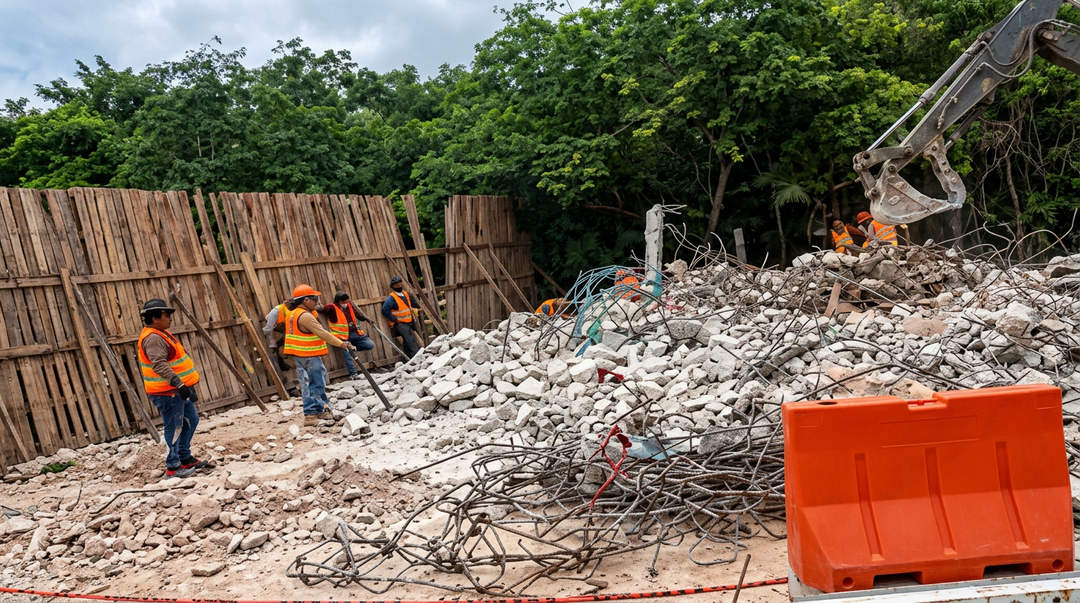
The federal government also announced new public, free-access points to Tulum's beaches, ending years of complaints that the coastal strip had been walled off by hotels and clubs.
Hernández Pastrana called the presidential visit a turning point for the park. It was, she said, what the community had repeatedly asked for, and she credited it with bringing visitors back to the archaeological zone and the beaches beside it.
Occupancy down more than 20 percent since May
The numbers behind the optimism are harsh. David Ortiz Mena, president of the Tulum Hotel Association, said occupancy across May, June and July fell more than 20 percent against the same months of 2025, with the coastal zone touching 15 percent at its worst. He attributed the drop to fewer airline seats to the Mexican Caribbean, the World Cup shifting travel patterns elsewhere, the cost of hauling sargassum off the beaches, complaints about mobility and police extortion, and the absence of a national promotional campaign since 2019.
Asked about the protests over the economic situation, the tourism director did not dispute the slump. She reframed it.

"Let them come and get to know Tulum. Every destination goes through change and finds a way to renew itself. This is not a Tulum that has gone dark, nor one that is going to go dark. It is going to be reborn, like the program the president mentioned."
She added that the work cannot be handled by a single office. "Everyone has to work, because this is work done together with tour operators, business owners, the community and the government. Come, visit us. Tulum is a destination for everyone and for every budget, and today it is a dining destination where you can find the best restaurants, because we have eight in the Michelin Guide," she said.
Sargassum on the sand, a campaign for the cenotes
The most concrete piece of the municipal strategy is a swap. If the seaweed keeps landing, send people to fresh water instead.
Hernández Pastrana said the department, working with Castañón, is running an intensive, continuous campaign focused on the 40 cenotes already included in the municipality's adventure guide. Tulum has roughly 300 freshwater springs. The campaign also covers Laguna Kaan Luum and the two archaeological zones, and it leans on an agreement with Grupo Escapadas, publisher of México Desconocido.
"We have an agreement with Grupo Escapadas, México Desconocido, which works to strengthen and promote destinations, so we are running these campaigns together with social media platforms," she said.
Eight winter routes the Tulum tourism recovery leans on
Air connectivity is the other half of the bet, and it is the half the municipality controls least. Hernández Pastrana said she met with state Tourism Secretary Bernardo Cueto and the administrator of Felipe Carrillo Puerto International Airport to work on recovering carriers that pulled out of Tulum.
Reported plans put eight international routes back on the airport's winter schedule between late October and March 2027, flown by United Airlines, Air Canada, Air Transat and WestJet, serving New York, Toronto, Montreal, Quebec and Calgary. Those are the destination's strongest markets and the ones that fill rooms between December and March.
Beyond North America, the airport group is trying to buy its way back into markets it lost. "Mundo Maya and the airport are working on incentives to attract back the routes that left, like Panama and Colombia, which are emerging markets but are also good ones for the destination," she said.
Cobá artisans, ADO terminals and a Mexico City lounge
The rest of the plan is smaller and closer to the ground. The department is working with the bus operator ADO to promote Tulum inside its terminals, and Hernández Pastrana said a VIP lounge collaboration is being prepared in both Tulum and Mexico City. Training for tourism workers, a program built around service quality and run with Sedetur, is one of the pillars she named for her time in office, along with festivals aimed at drawing visitors from the rest of the Yucatán Peninsula and a promotion push anchored by the Grupo Escapadas agreement and deals with Mexicana de Aviación and ADO.
She also wants the events back. Fashion shows and the Tasty With Me gastronomic gatherings, both of which carried high economic expectations before the downturn, are to be promoted nationally and internationally for Quintana Roo's ninth municipality.
And she pointed inland again, to the Maya Zone communities around Cobá, where residents make crafts and cook the food she wants included in the destination's offering.
Ortiz Mena has said the hoteliers expect recovery to begin in October. The first reactivated routes are scheduled to touch down in Tulum around the same time. That leaves the tourism department roughly ten weeks to prove that a campaign about cenotes and Cobá can move travelers who have stopped booking the beach.
Would a day at a cenote bring you back to Tulum while sargassum covers the sand? Join the conversation and share your perspective with us on Instagram and Facebook at @thetulumtimes.
This image was generated or enhanced using artificial intelligence to improve its quality.

The Tulum Times · Newsletter
The story continues in your inbox.
Essential Tulum news and local insight, a few times a week. Free.
No spam. Unsubscribe anytime.
Tulum Cenotes, Ruins, and Practical Visitor Guides
Guides, access updates, regulations, and practical planning around cenotes and the Tulum archaeological zone.

“The best journalists reporting from paradise, highlighting the heroes that keep Tulum the most beautiful place in the world! THANK YOU!”


