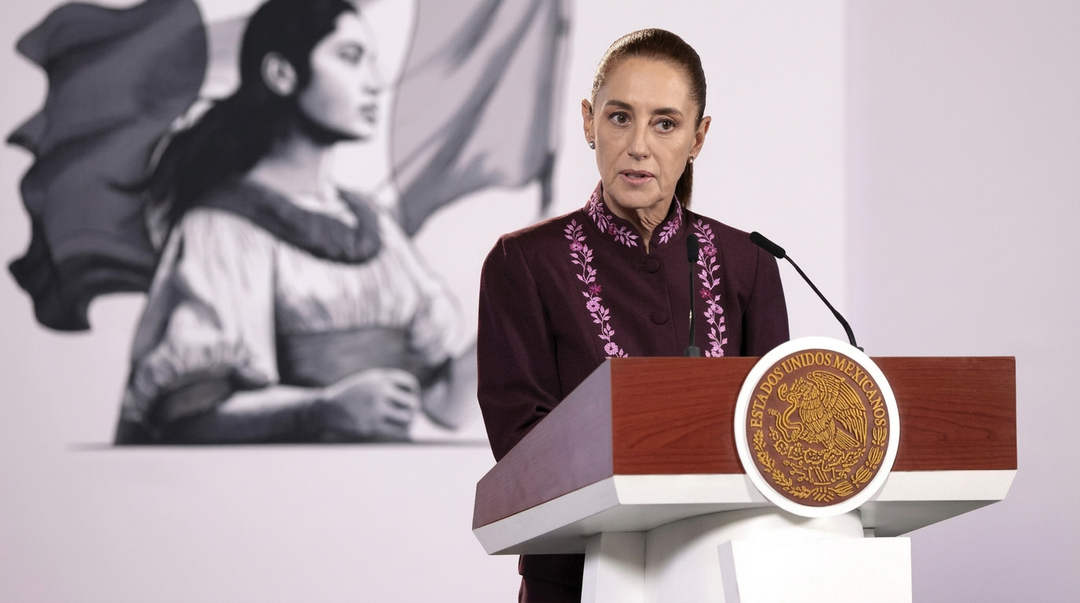

The Tulum government report delivered Thursday counted 83 percent fewer homicides than in 2024 and early 2025. The state's own figures count the steepest hotel occupancy drop of any destination Quintana Roo tracks.
Mayor Diego Castañón Trejo presented the report at a solemn council session attended by Governor Mara Lezama, Heyden Cebada Rivas, who presides over the state judiciary, and state lawmaker Silvia Dzul Sánchez. It was his second report since voters elected him in 2024. He had first taken over in March 2023, after the death of Marciano Dzul Caamal. The motto, Tulum Renace, Transformando Juntos, opens with the name of the federal recovery plan announced in November 2025 and presented in Tulum by President Claudia Sheinbaum on July 17.
Both numbers rest on official data, and they measure different things. The report is an account of what the municipal government did, and on crime the federal figures largely back it. The hotel table measures an economy city hall can influence but cannot command. For residents judging the town's direction, and for visitors deciding on this winter, either number alone misdescribes Tulum in 2026.
What the Tulum government report put on the record
"We are here today with results and transparency, and with the determination that Tulum keep standing, moving toward a better present and future," Castañón said, according to the municipal government's account of the speech.
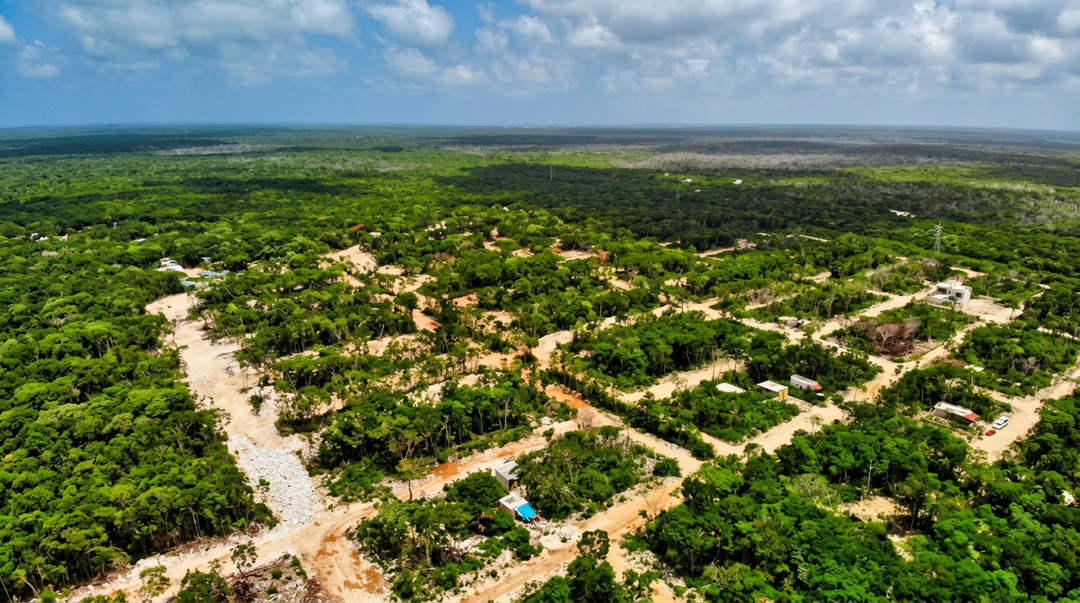
Security led. Beyond the homicide figure, the report said femicides fell to zero in the first quarter of 2026, extortion and robbery of businesses each dropped 75 percent, and vehicle theft 51 percent. Municipal surveillance grew from 40 to 200 cameras, with another 1,287 private cameras linked to the C2 command center, and 15 patrol vehicles were added at a cost of 18.3 million pesos.
The rest was street level. Nearly 100 million pesos went into 25 road and infrastructure projects, from sidewalks and curbs to absorption wells, drainage and pothole repair, with water and sewer lines extended in neighborhoods such as Cristal and Ya'ax Tulum. The municipality reported collecting 34,000 tons of solid waste and spending 18 million pesos to contain and remove more than 5,000 tons of sargassum between August 2025 and May 2026. Health centers attended to more than 9,500 people, the report said, and free medicine was provided to more than 5,500.
On tourism, it cited promotion at international trade fairs and projected direct connections to nine international destinations for the winter season.

Federal data back the homicide claim. August complicates it
The strongest independent support for the report comes from the federal government. At the president's July 17 morning press conference, held in Tulum, Marcela Figueroa Franco, head of the executive secretariat of the national public security system, said the municipality had gone through May and June without a single intentional homicide, and that July stood at zero to that point. She credited the national security strategy. The report credits coordination among all three levels of government.

Two details narrow the claim. The report's other crime percentages are first-quarter figures, and its 83 percent is the number Castañón gave in April for the first quarter. Regional outlets then reported three killings in the municipality during August. The federal secretariat's monthly municipal figures will show whether that month broke the run.
The camera count also shifted inside nine days. On September 1, at the C2, the mayor said the network had grown from 400 cameras to more than 1,850. Thursday's version was 200 municipal cameras, up from 40, plus 1,287 private ones. The two statements may be counting different things. Neither said which.
8.1 points, the steepest occupancy drop in the state
Records examined by this publication, the state tourism information system's January to June occupancy table, put Tulum at 66.2 percent, compared with 74.3 percent in the same months of 2025. The loss of 8.1 points is the largest among the 14 destinations the state tracks. Quintana Roo as a whole lost about 3 points, Cancún 2 and Playa del Carmen 4.5.
The summer was harder. Speaking to reporters before the report began, David Ortiz Mena, president of the Tulum Hotel Association, said many hotels on the coastal strip were at below 20 percent occupancy, and all-inclusive properties were at below 30 percent occupancy. "We have had low occupancy since May," he said, putting the average about 10 points under last year and expecting it to stay there until October. The association expects a favorable winter in occupancy and rates.
In August, Ortiz Mena listed the causes as fewer airline seats to the Mexican Caribbean, travel shifted by the World Cup, the cost of hauling sargassum, complaints about mobility and police extortion, and the absence of national tourism promotion since 2019. Airline capacity, the World Cup calendar, sargassum, and national promotion are largely beyond a municipal government's control. Police conduct is closer to home.
Under Tulum Renace, the federal government has already cut the archaeological zone ticket to 80 pesos for Mexican visitors and 265 for foreigners, and made Parque del Jaguar free for Mexicans. The report's figure of nine international destinations for winter matches the count the state tourism secretary gave on September 3. The federal tourism ministry has spoken of eight routes, a gap no office had explained as of September 8.
'The easy-money boom is over,' developers say
Property is where the critics' case and the market's own explanation part company. Figures from the federal housing registry, the Registro Único de Vivienda, updated through August and presented by the Quintana Roo real estate developers' association, ADIQ, show that zero new housing projects have been registered in Tulum this year. Of the housing on offer, 96 percent is already built, and prices are down 10 to 12 percent, ranging from 1,200 to 9,000 dollars per square meter, depending on the area.
Miguel Ángel Lemus Mateos, the association's president, called it a change of cycle. "The easy-money boom is over, but the era of smart development has begun," he said. In the same figures, Cancún gained 2.1 percent in median home value. A municipal government grants permits and zones land. Interest rates and investor appetite are set elsewhere, and the developers read the stall as a sign the market is turning.

A front page that read 'Tulum went broke'
Castañón closed his speech with a line that anticipated the pushback. "This is everyone's report, which is why unity does not mean thinking alike," he said. "It means understanding that we share something bigger, the love for Tulum and the responsibility to build its future."
Much of Thursday's regional coverage ran the municipality's statement nearly word for word. Sol Quintana Roo, a daily based in Chetumal, went the other way on Friday with a front page headlined "Quebró Tulum," roughly "Tulum went broke." Its analysis set the report beside the hotel figures, the stalled property market and data compiled by Resilmex, a platform that gathers official statistics by municipality, which the paper said place Tulum first in the state from 2023 to 2025 for intentional homicides, femicides, robbery and sexual violence, and first for poor-quality housing, with 33 percent of residents affected.
The paper's case is strongest where its numbers are up to date. The hotel association and property figures check out against their sources. The crime ranking covers 2023 through 2025, most of which were years under Castañón, and it predates the months that federal data now show as zero. The housing figures, according to Resilmex's own methodology note, come from the 2020 census and CONEVAL's 2020 poverty measurement, three years before Castañón took office. They measure an inheritance more than a record. They also describe a deficit the report itself lists among its pending work.
Sol also argued that the date broke state law. Article 90 of Quintana Roo's municipalities law sets the annual report between September 11 and 20, and Tulum, Felipe Carrillo Puerto and Othón P. Blanco all delivered theirs on the 10th.
Pending, by the report's own account
The report closed by naming the challenges still pending, tied to fast population growth, the demand for basic services and weather events. It called for continued coordination among the federal, state and municipal governments and the private sector.
Some of that work reached the council two days earlier. On September 8, councilor Jorge Portilla Mánica, who ran against Castañón for Movimiento Ciudadano in 2024, asked the mayor to expedite responses to residents' petitions, according to Grupo Pirámide. He said land regularization in the irregular settlements of 2 de Octubre and Carlos Joaquín falls outside the municipality's powers, and that residents are asking CFE for meters so they can pay for the power they already use.
The year also tested city hall's own staff. In late June, Castañón dismissed nine municipal employees, two from civil protection and seven from the inspection office, over alleged corruption, after a video involving municipal staff circulated online, and said complaints had been filed with the state prosecutor. The municipality presented it as zero tolerance. A column in Palco Noticias argued it came only under public pressure.
Winter flights land October 25
A government report is a government's account of itself. The critics earn their place by putting the hotel figures in the same frame, and the report earns some credit because its central security claim can be checked and the federal data hold it up.
Both columns get tested this fall. The state's winter schedule opens at Tulum's airport on October 25, and the hotel association expects occupancy to start turning that month. The federal secretariat's monthly figures will indicate whether August was an exception or a turning point.
If the routes fill seats and the federal count keeps Tulum near zero, the report's version of the year will have a winter behind it. If November arrives with coastal hotels still at or below 20 percent, the critics will hold the stronger ledger. Castañón's third and last report of this term is due in September 2027, after the municipal election.
Which count matches the Tulum you know this year, city hall's or the hotel association's? Join the conversation and share your perspective with us on Instagram and Facebook at @thetulumtimes.

The Tulum Times · Newsletter
The story continues in your inbox.
Essential Tulum news and local insight, a few times a week. Free.
No spam. Unsubscribe anytime.
Tulum Development, Permits, and Construction Watch
Reporting on permits, construction, regulation, and major development decisions shaping Tulum’s urban growth and investment climate.

“The best journalists reporting from paradise, highlighting the heroes that keep Tulum the most beautiful place in the world! THANK YOU!”