

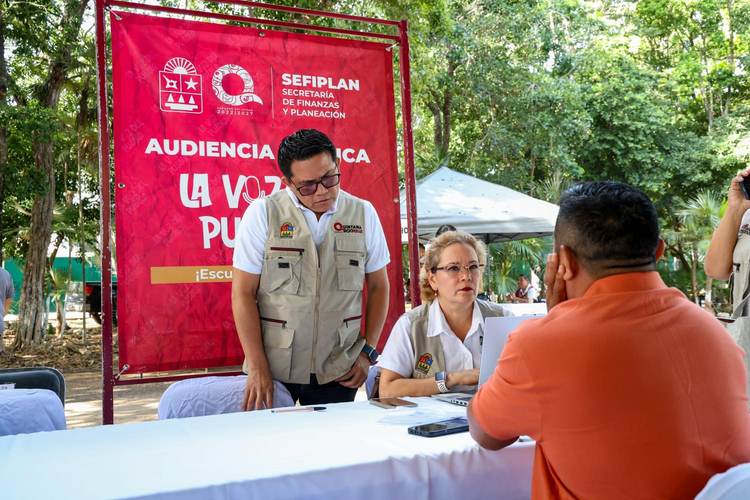
La Sefiplan, secretaría de finanzas y planeación de Quintana Roo, instaló un escritorio de atención ciudadana en Tulum durante la audiencia estatal La Voz del Pueblo, ofreciendo a los residentes ayuda directa para trámites gubernamentales.
El montaje fue simple. Una mesa, personal disponible y una fila de residentes con preguntas sobre papelería que normalmente resolverían en una oficina estatal. Para un municipio que crece más rápido que su infraestructura pública, esa conveniencia tiene peso.
La instalación integra a Tulum en un programa estatal que ha sacado la atención gubernamental de las oficinas de Chetumal y la ha llevado a las plazas municipales, llegando a decenas de miles de residentes que de otra forma viajarían o esperarían para resolver asuntos de rutina. Para Tulum, uno de los municipios de más rápido crecimiento en el estado, el cálculo es directo. Menos viajes, esperas más cortas y una dependencia estatal respondiendo preguntas en persona.
Lo que Sefiplan llevó al escritorio
Durante la sesión, el personal de Sefiplan instaló una mesa de atención para responder preguntas, proporcionar información y orientar a los asistentes sobre los servicios que administra la secretaría. El objetivo declarado era facilitar el acceso a los trámites gubernamentales para personas que frecuentemente tienen dificultades para navegarlos solas.

Sefiplan funciona como la autoridad central de finanzas y planeación del estado. Su trabajo abarca cobro de impuestos, registro y control vehicular, gravámenes de nómina y planeación presupuestal en todo Quintana Roo. Muchas de esas interacciones son las que los residentes describen como confusas o lentas, lo que explica por qué un escritorio en persona marca la diferencia.
La secretaría encuadró el ejercicio como una forma de mantener contacto directo con el público, responder a las necesidades con prontitud y acercar los servicios públicos a las comunidades. En términos prácticos, significa que un residente podría llegar, describir un problema y marcharse con instrucciones en lugar de un número telefónico.

Cómo funciona La Voz del Pueblo en Tulum
La Voz del Pueblo es un programa de audiencia pública encabezado por la gobernadora Mara Lezama, construido alrededor de sesiones itinerantes donde las dependencias estatales se reúnen en un lugar y atienden directamente a los residentes. En lugar de pedirle a los ciudadanos que encuentren la oficina correcta, el modelo lleva finanzas, desarrollo social, uso de suelo y otras dependencias hacia ellos.
El programa se ha movido por todo el estado durante el año pasado. De acuerdo con cifras del gobierno estatal, su recorrido estatal ha llegado a decenas de miles de personas, con sesiones individuales en ciudades como Cancún atrayendo a más de mil residentes en un solo día. Tulum ha participado antes. La cobertura local documentó una audiencia en la comunidad maya de Cobá, dentro del municipio, que atendió a cientos de asistentes.


Por qué la atención directa importa para los residentes de Tulum
Tulum está a horas de Chetumal, la capital estatal donde muchos trámites financieros y administrativos están centralizados. Para residentes sin tiempo o medios para hacer ese viaje, un escritorio estatal instalado localmente elimina una barrera real.
El crecimiento rápido del municipio agudiza el punto. Los residentes nuevos, los asentamientos irregulares y una población flotante de trabajadores generan demanda de documentos, registros y aclaraciones que el sistema formal no siempre satisface a nivel local. Sesiones como esta no reemplazan oficinas permanentes, pero cierran la brecha.
Sefiplan dijo que su participación reafirmó un compromiso con un servicio más cercano y eficiente, posicionando el escritorio como una pieza de un esfuerzo estatal más amplio para atender a los residentes en sus propias comunidades. Si eso se traduce en capacidad local permanente, en lugar de visitas periódicas, es la pregunta que los residentes de Tulum estarán observando mientras el programa continúa sus recorridos.
¿Has tenido que viajar fuera de Tulum para resolver un trámite estatal que un escritorio local pudiera manejar? Únete a la conversación y comparte tu perspectiva con nosotros en Instagram y Facebook en @thetulumtimes.

The Tulum Times · Newsletter
La nota sigue en tu correo.
Lo esencial de Tulum y contexto local, un par de veces por semana. Gratis.
Sin spam. Cancelá cuando quieras.

“The best journalists reporting from paradise, highlighting the heroes that keep Tulum the most beautiful place in the world! THANK YOU!”