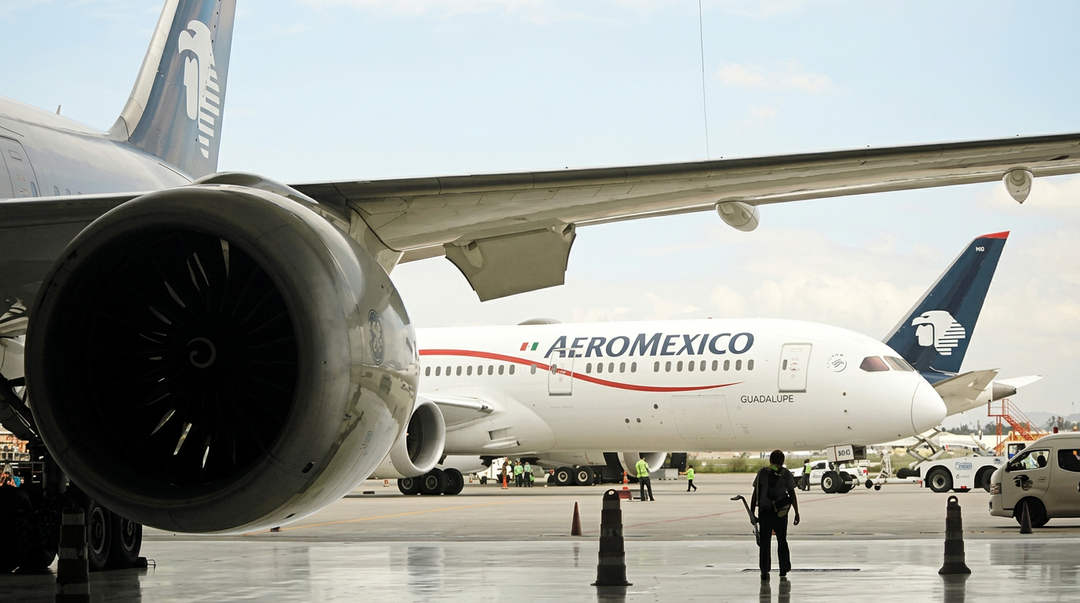

Between 1,000 and 1,200 repatriated Mexicans a month now board ADO buses at Tulum's airport, a passenger flow the company says did not exist before repatriation flights began landing there.
Executives at ADO Mobility Región Caribe told 24 Horas Quintana Roo that the movement settled into a routine around April and May. Arrivals concentrate on Fridays, averaging three to four operations a week, and the buses depart for Mexico City, the State of Mexico, Puebla, Morelos, Guerrero, and the Bajío.
The terminal opened at the end of 2023 to bring visitors into the Riviera Maya. It now doubles as one of nine airports the federal government uses to receive Mexicans returning from the United States, making the country's largest intercity bus operator the last leg of that journey.
Fridays run heaviest at the terminal
"They only started this year. We had not had that phenomenon before," a company executive told the outlet. Most of the arriving passengers travel on regular scheduled services.

When a flight fills the terminal beyond what the timetable allows, ADO adds additional runs so the group can reach its destination the same day.
Iván Cupul, commercial manager at ADO, said the new passenger profile has helped balance the company's passenger movement. He described the same pattern in early August to El Heraldo de México Quintana Roo, saying repatriated travelers who land in Tulum connect with ADO for Puebla and Mexico City, and that many of them are trying to get back north afterward.
Repatriation flights at Tulum airport began on May 1
Two charter aircraft landed that Friday. The first arrived at 11:25 a.m. from Harlingen, Texas, with 155 passengers, and the second touched down at 3 p.m. from Mesa, Arizona, with 153 more. It was the first time the Felipe Carrillo Puerto terminal had received repatriation flights from the United States. The National Guard and the National Migration Institute ran the reception, which included medical checks, food and vaccinations before the group was moved out of the airport.
That protocol is why the buses matter. The migration institute issues each person a repatriation letter upon arrival, and that document grants access to the rest of the federal program, including transfer to their community of origin.

Tulum now sits alongside Tapachula, Villahermosa, Mérida, Morelia, Huatulco, Campeche, San Luis Potosí and the Felipe Ángeles airport as an air reception point for México te Abraza, the federal repatriation strategy coordinated by 34 agencies. Interior Secretary Rosa Icela Rodríguez said on August 14 that 271,193 nationals had returned to the country since January 20, 2025, and that 99,685 of them arrived by air on 816 flights.
How many of those land in Tulum is less settled. Marcrix Noticias reported on Tuesday that the airport takes in up to 600 repatriated Mexicans a week, a rate that would put monthly arrivals well above the 1,000 to 1,200 ADO says it carries. Neither the company nor the federal program has explained the gap.
A 2,300 peso ticket that falls to 1,500
ADO keeps its advance purchase scheme running on long-distance routes, where the company says a fare of 2,300 pesos can come down to 1,500. Students, teachers and children between 5 and 12 years old continue to receive discounts of up to 50 percent.
Those numbers land close to what the returning passengers arrive with. México te Abraza gives each repatriated person a single, non-transferable Bienestar Paisano card loaded with 2,000 pesos for the trip home, and the Interior Ministry counted 180,042 of them delivered by mid-August. Neither ADO nor the federal government has said how many bus tickets are bought with that money.
Sargassum thinned the tourists, not the buses
The company puts the decline in tourism activity at 5 to 10 percent in destinations such as the Riviera Maya, and attributes it to sargassum washing ashore. Its own regional numbers moved the other way. ADO reports an average of 100,000 passengers a month across the region, with 2,500 more this season than in the same period last year, which the company describes as overall growth of 4 to 5 percent.
Cupul gave a narrower figure at the start of August, when he told El Heraldo that summer operations had grown 2 to 3 percent against last year, with roughly 412 extra runs added by the end of July. Demand for Chiapas and Tabasco climbed the most in that stretch, and departures to Mexico City were increased.
What none of the figures answer is where the Friday passengers stop. Cupul said many of the repatriated travelers ADO carries to Puebla and Mexico City are looking to move north again once they arrive. Nobody at the company or within the federal program has published how many stay in the states from which the buses depart.
Should Tulum's airport work as both a tourism gateway and a national reception point? Join the conversation and share your perspective with us on Instagram and Facebook at @thetulumtimes.
This image was generated or enhanced using artificial intelligence to improve its quality.

The Tulum Times · Newsletter
The story continues in your inbox.
Essential Tulum news and local insight, a few times a week. Free.
No spam. Unsubscribe anytime.
Transportation in Tulum: Taxi, Bus, Transfers, and Mobility
Taxi fares, buses, transfers, road changes, mobility updates, and practical transport guidance for Tulum.

“The best journalists reporting from paradise, highlighting the heroes that keep Tulum the most beautiful place in the world! THANK YOU!”