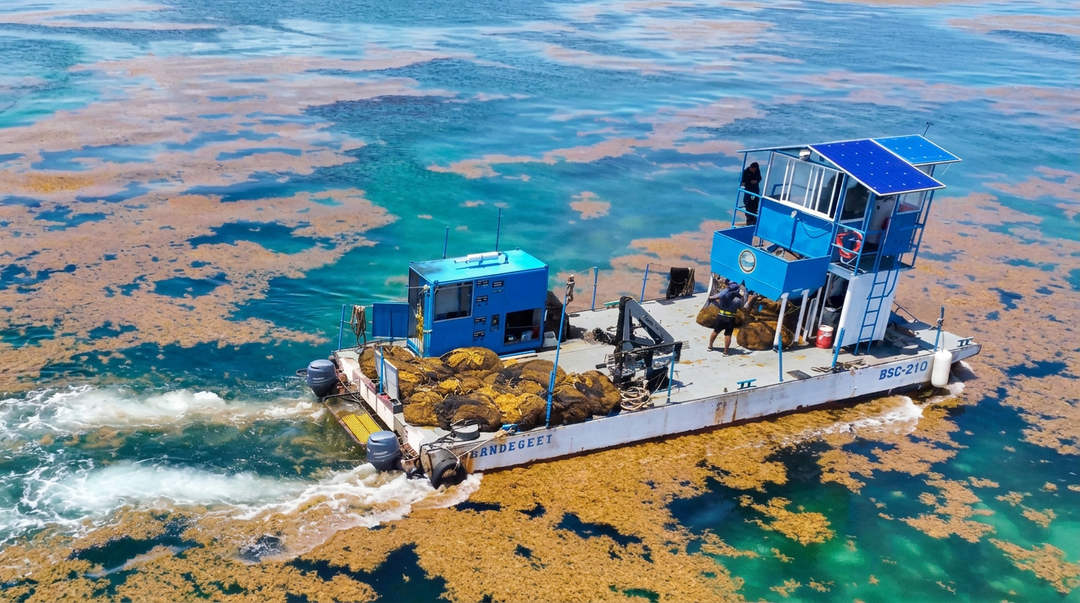

Turquoise water is back at stretches of Tulum's public beaches this month, with sargassum arrivals down sharply since early September and cleanup crews still hauling the tail of a record season off the sand.
The improvement is uneven. Conditions change from one beach to the next and from one morning to the next, driven by currents, wind and whatever comes ashore overnight.
What has not changed is the scale of the year. Zofemat, the municipal office that manages Tulum's federal maritime land zone, has already removed more sargassum from the coast in 2026 than it did in all of 2025, and no authority has declared the season finished.
The count passed 6,500 tons of sargassum in Tulum
The office reported on September 17 that its crews had collected more than 6,500 tons of the macroalga during 2026 and completed more than 1,800 container runs to the disposal site. In the opening days of the month, the figure stood above 5,600 tons, already surpassing the roughly 5,000 tons removed during all of 2025.

Those containers are not filled by the municipality alone. Zofemat, the Secretaría de Marina, the Comisión Nacional de Áreas Naturales Protegidas and hotels along the coast all load material into them, and Zofemat moves it at the end of the chain.
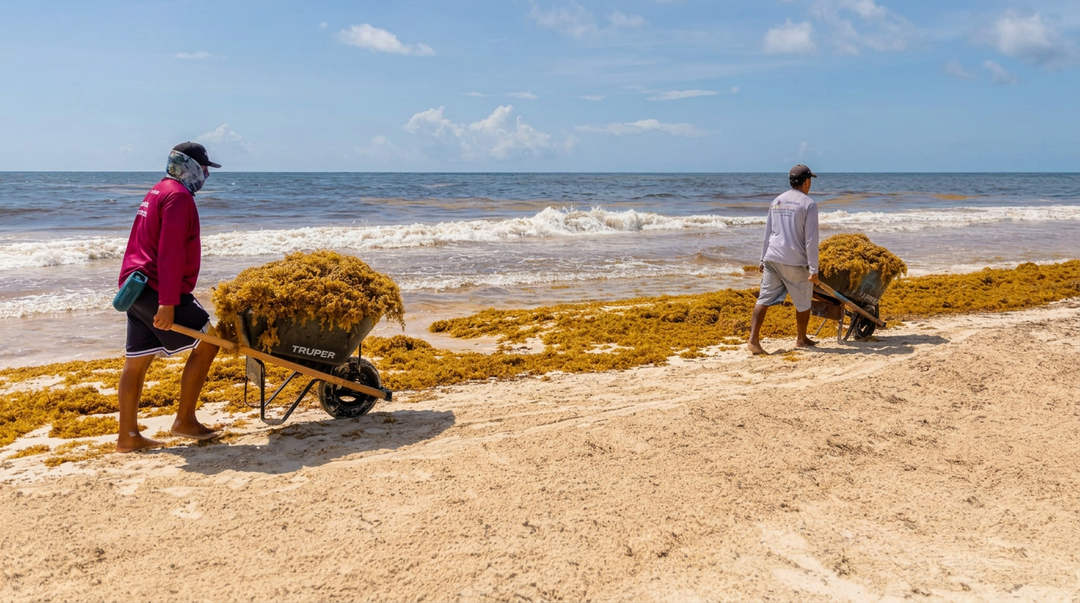
Crews work from first light, with the public beaches at the top of the list: Playa del Pueblo, Parque del Jaguar, Punta Piedra and Conchitas.
David Buchanan, who directs Zofemat in Tulum, has said the deployment is on the instructions of Mayor Diego Castañón Trejo, whatever the intensity of arrivals on a given day. Castañón called it an atypical year, with a high influx of algae when the state delivered new equipment in June.
Arrivals peaked in June and July
Esteban Amaro, who directs the Red de Monitoreo de Sargazo de Quintana Roo, has put the maximum of the landfall in June and July, with the decline beginning after that. Specialists tracking the phenomenon expect the arrival season to close somewhere between September and October.
The state figures show its weight. By mid-August, Quintana Roo had collected around 110,000 tons during 2026, and the monitoring network estimated the year could end near 150,000 tons.
Tulum's season started early. Buchanan said in March that the algae had begun arriving in the first days of January rather than the usual window between late March and early April, and put the municipality's possible total for the year at 10,000 tons. The count then stood at 715.
By mid-June, it had reached 2,458 tons, compared with 1,378 in the same stretch of 2025. That was the week the state government handed the municipality two tractors with mechanical sweepers, three dump trucks and four motorcycles with trailers.
Offshore, the Secretaría de Marina began installing containment barriers on the Tulum coast on April 12, with 200 meters in place four days later and the rest scheduled before the end of the month. State planning at the start of April assigned Tulum 2,300 of the 15,000 meters of barrier projected for Quintana Roo.
Crews left the sand alone
One thing the season did not take is the beach itself.
Buchanan has said the cleanup did not cost a significant amount of sand, and that the hotel zone and the beaches inside Parque Nacional Tulum still run wide. Zofemat, the Marina, and Conanp cut back on heavy machinery for that reason, since dragging algae off with a tractor also drags sand along. Bad cleaning practices, he has said, can speed up erosion.
A sand recovery program for those two areas is planned for the end of the season.
Color came back before the customers did
For the businesses along the coast, the summer is already lost.
In late August, with beaches visibly clearing, Castañón said between 70 and 80 percent of the municipality's shoreline was clean, and the town started using the improvement in its tourism promotion.
Sonia Fraide, of the Sun and Moon rental company, said in early September that arrivals had dropped but the sea still carried the brown of the algae at some points, and that cleaning should be reinforced with boats working offshore. Her business was running at 20 percent. Some hotels in the area, she said, were planning to restart activity in October.
The algae is not the only reason for that number. Coverage through the summer highlighted thinner flight schedules, competition from vacation rentals, mobility problems, and high operating costs, alongside sargassum and temporary hotel closures on the coast, which pulled demand away from the small businesses around them.
Conditions can turn in a few hours
Zofemat framed the improvement carefully from the first announcement. When the office reported the drop in the opening days of September, it said the decrease did not mean the season was over or that cleaning would stop.
That is the part worth keeping for anyone planning a beach day in the coming weeks. A stretch of coast that is clear at eight in the morning can hold a line of algae by the afternoon if the wind turns, which is why the crews are still out at Playa del Pueblo and Punta Piedra on mornings when there is little to collect.
The sand recovery program waits for the end of the season. Nobody at Zofemat has said that end has arrived.
Which Tulum beach have you found clearest this month? Join the conversation and share your perspective with us on Instagram and Facebook at @thetulumtimes.

The Tulum Times · Newsletter
The story continues in your inbox.
Essential Tulum news and local insight, a few times a week. Free.
No spam. Unsubscribe anytime.
Tulum Sargassum Updates and Beach Conditions
Live seaweed conditions, cleanup updates, forecasts, and practical beach planning across Tulum and the Riviera Maya.

“The best journalists reporting from paradise, highlighting the heroes that keep Tulum the most beautiful place in the world! THANK YOU!”