The Cancun tourist tax bill for a foreign visitor is really four charges, and for a seven-night, 21,000-peso hotel zone stay in 2027, they would total about 3,068 pesos.
That figure combines a federal entry fee, a state visitor charge, a municipal environmental fee, and the state lodging tax. Each is set by a different level of government, collected through a different channel, and earmarked for a different purpose. Few travelers ever see all four on a single receipt.
The breakdown matters now because the largest of the four is still moving. Mexico's Senate has until Oct. 31 to finish voting on the federal fee schedule for 2027, which raises the entry charge for foreign visitors by 17.8 percent. The vote lands as hotel occupancy across Quintana Roo remains below last year's levels, and as hotel groups, analysts, and residents ask a sharper question about each of these charges: what visitors receive in return.
Four charges on a seven-night stay in Cancun's hotel zone
For one foreign guest paying 21,000 pesos for seven nights, the charges break down as follows:

- Nonresident fee (DNR), federal: 1,158 pesos under the rate approved by the Chamber of Deputies for 2027, up from 983 pesos in 2026.
- Visitax, state: 285 pesos per person in 2026.
- Environmental Sanitation Fee (DSA), municipal: about 575 pesos, at 82.12 pesos per room per night.
- Lodging tax (ISH), state: 1,050 pesos, or 5 percent of the room rate.
At the current 2026 entry fee, the same stay amounts to about 2,893 pesos across these four charges. Two other costs sit outside the count. The federal value-added tax of 16 percent applies to the room itself, adding 3,360 pesos to a 21,000-peso pre-tax rate, and airfare carries its own airport use charges.
Each charge scales differently. The DNR and Visitax are paid per person, so a family of four pays each one four times. The sanitation fee is charged per occupied room, so a couple sharing a room splits it. The lodging tax is based on the room rate.
Mexico's entry fee for foreign visitors is headed to 1,158 pesos
The Derecho de No Residente, or nonresident fee, applies to foreigners who enter Mexico as visitors without permission to work, which covers most tourists. For air travelers, it is generally built into the ticket price, which is why many never notice it.
The fee was 860.56 pesos in 2025 and 983 pesos in 2026. In its 2027 economic package, the federal government proposed raising it 35.8 percent, to 1,334.80 pesos. After objections from hotel groups and opposition lawmakers, the Chamber of Deputies approved a smaller increase on Oct. 13, setting the fee at 1,158 pesos. The Senate's finance committees endorsed that figure on Oct. 21. The full Senate has approved the broader fee law in general terms, with senators reserving specific articles, including those on the nonresident fee, for separate debate.

President Claudia Sheinbaum has dismissed concerns that the increase will hurt tourism, describing the additional 175 pesos as roughly $ 10 and saying the goal is to strengthen the National Institute of Migration. Federal Tourism Secretary Josefina Rodríguez Zamora said the amount would not decide whether someone takes a trip.
Visitax, the state charge many visitors skip
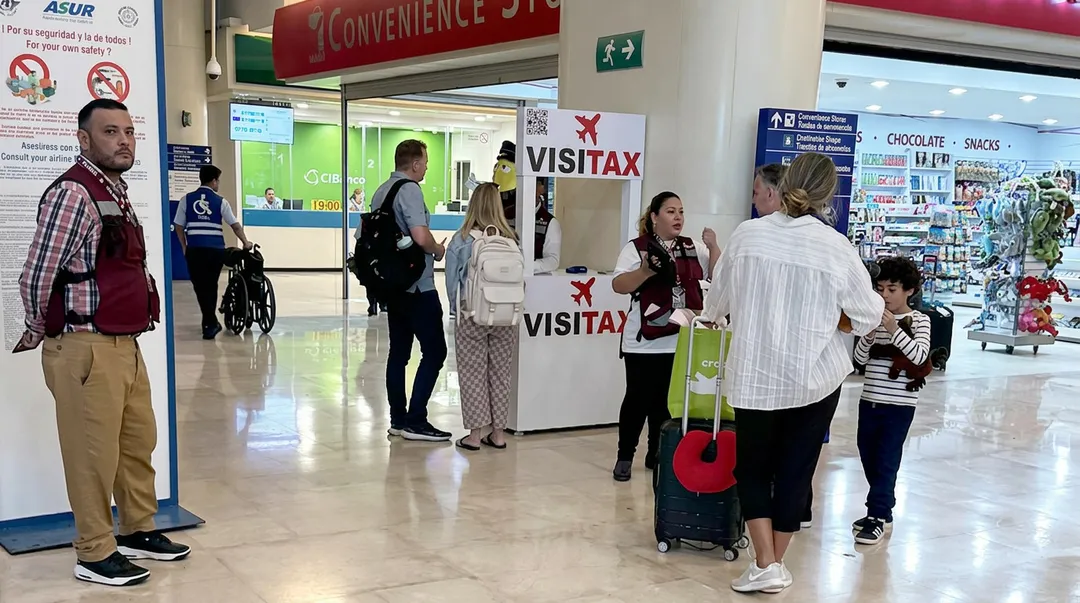
Visitax is a Quintana Roo charge on foreign visitors, created under former Gov. Carlos Joaquín González and in effect since April 2021. It costs 285 pesos per person in 2026, children included, and applies statewide, from Cancun to Tulum, Playa del Carmen, and Cozumel. Travelers pay it through the official state portal, visitax.gob.mx, or at airport payment points.
Collection is the weak point. The state government estimated that 6.58 million foreign tourists arrived through Cancun International Airport from January to August 2025, and that full payment at that year's rate would have produced about 1.86 billion pesos. Local reporting has attributed the gap to low awareness, a pay-it-yourself system, and fake websites that take travelers' money for a charge the state never receives.
The state proposed requiring hotels to collect Visitax starting in 2026, a change projected to increase revenue to about 2.9 billion pesos. Hoteliers refused to become collection agents, Gov. Mara Lezama kept the existing system, and the 2026 revenue target for the charge fell to 368.2 million pesos. The state's 2026 budget came in about 2.5 billion pesos below the original proposal.
A Cancun tourist tax billed per room, every night
The Environmental Sanitation Fee belongs to the municipality. Benito Juárez, which includes Cancun, began charging it in 2019 at 30 percent of the UMA, the federal unit used to index fees, and raised it to 70 percent in 2022. With the UMA set at 117.31 pesos for 2026, the charge comes to 82.12 pesos per occupied room per night.
Many resorts add it to the bill at checkout, separate from all-inclusive rates. The revenue is meant for environmental work such as beach cleaning, waste collection, and water treatment. Solidaridad, Cozumel, Bacalar, Tulum, and other municipalities charge their own versions, at different rates and under different formulas.
Five percent of every room rate goes to the state
The lodging tax is one of the two pillars of Quintana Roo's own tax revenue, alongside the payroll tax. The rate rose from 3 percent to 5 percent on April 1, 2023, and stands at 6 percent for private houses, apartments, and villas. It is calculated on the room price before value-added tax.
The state tourism department reported more than 2.43 billion pesos in lodging tax revenue in the first half of 2025, 17 percent more than a year earlier, and said the money supports investment in tourism infrastructure and promotion.
Defense gets 57 percent of every entry fee collected
The 2027 fee law spells out who receives the nonresident fee. Under the version approved by deputies, 57 percent goes to the Ministry of National Defense, 15 percent to the National Institute of Migration for technology, border security, and migration control, and 28 percent to the federal treasury.
Tourism promotion receives no share, and that is the point hoteliers have pressed hardest. The Consejo Hotelero del Caribe Mexicano, which groups hotel and timeshare associations in Quintana Roo, asked the federal government and Congress to reconsider the increase, allocate promotional funding, and establish a working group with the finance ministry, the tourism ministry, and lawmakers. Analysts at Grupo Financiero Monex flagged the same gap. They noted that Mexico's fee already exceeds those charged by Caribbean competitors such as the Dominican Republic and Jamaica, though they judged it unlikely to suppress demand on its own.
Visitax revenue is directed through a state trust comprising three funds under the 2026 fiscal package. Sanitation fee money varies by town hall, which is why hotel groups in Playa del Carmen, Chetumal, and Tulum have pushed for dedicated trusts or oversight committees to track it.
Tulum's sanitation trust is still waiting on a signature
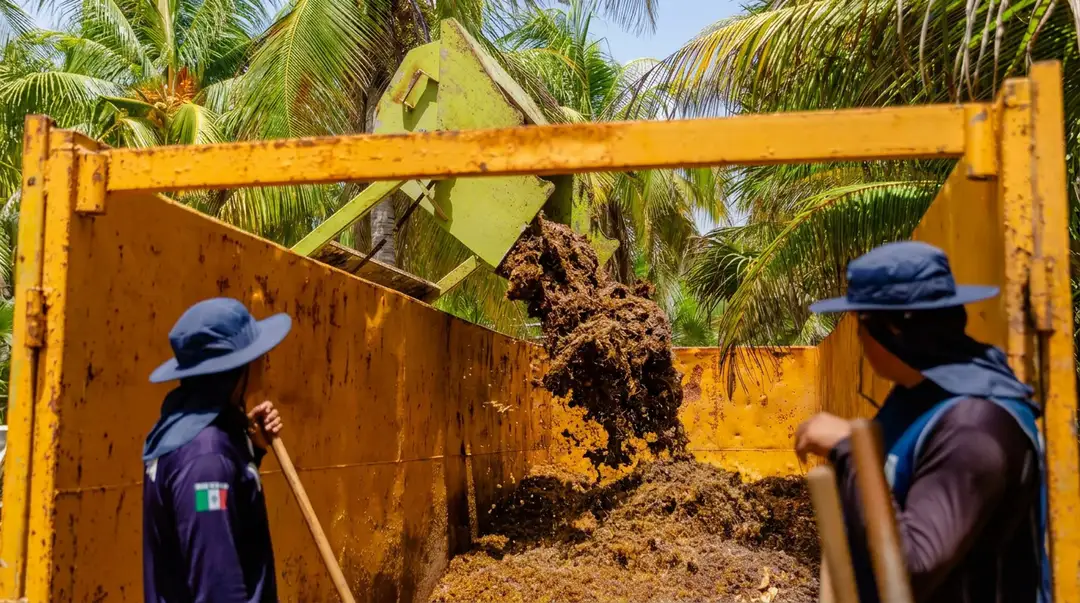
Tulum has charged its own sanitation fee since 2021. That year, the local hotel association proposed a trust to ring-fence the money for sargassum cleanup, arguing that hotels were collecting most of the seaweed themselves. The civic group Tulum Unido has since demanded that Mayor Diego Castañón Trejo sign the trust, citing a commitment municipal officials made in front of Gov. Lezama, as The Tulum Times has reported.
The federal and state charges apply to Tulum visitors exactly as they do to Cancun's. A foreign traveler landing at Tulum International Airport pays the same nonresident fee, owes the same Visitax, and pays the state lodging tax and Tulum's sanitation fee at the hotel.
Tulum is absorbing those charges with fewer visitors than last year. According to the state tourism information system, the town received 879,229 visitors from January through July 2026, down 8.6 percent from 961,562 in the same period of 2025. Hotel occupancy over those months averaged 63.69 percent, compared with 72.67 percent a year earlier, and passenger traffic at Tulum's airport fell 20.6 percent in the first half of the year. Statewide, occupancy reached 48.5 percent in September, 10 points below September 2025.
The industry cites several causes for the slowdown, including reduced flights and promotions, as well as sargassum. Hotel groups describe the fee problem as cumulative. Each charge is modest compared to a vacation budget, but together they add up to airfare, a proposed 10 percent increase in airspace use fees, and a stronger peso, which already makes Mexico more expensive for travelers paying in dollars.
The Senate's Oct. 31 deadline decides the 2027 rate
If the Senate confirms the deputies' version, the 1,158-peso fee takes effect Jan. 1, 2027, for most foreign visitors entering Mexico, and the four charges on a single guest's week in Cancun's hotel zone will pass 3,000 pesos.
The vote settles how much visitors pay. How much of it can be traced is a separate decision, and in Tulum that decision still sits on the mayor's desk, in a trust document that hoteliers first proposed five years ago.
Would you pay these four charges more willingly if every peso were tracked publicly? Join the conversation and share your perspective with us on Instagram and Facebook at @thetulumtimes.

The Tulum Times · Newsletter
The story continues in your inbox.
Essential Tulum news and local insight, a few times a week. Free.
No spam. Unsubscribe anytime.
Transportation in Tulum: Taxi, Bus, Transfers, and Mobility
Taxi fares, buses, transfers, road changes, mobility updates, and practical transport guidance for Tulum.

“The best journalists reporting from paradise, highlighting the heroes that keep Tulum the most beautiful place in the world! THANK YOU!”