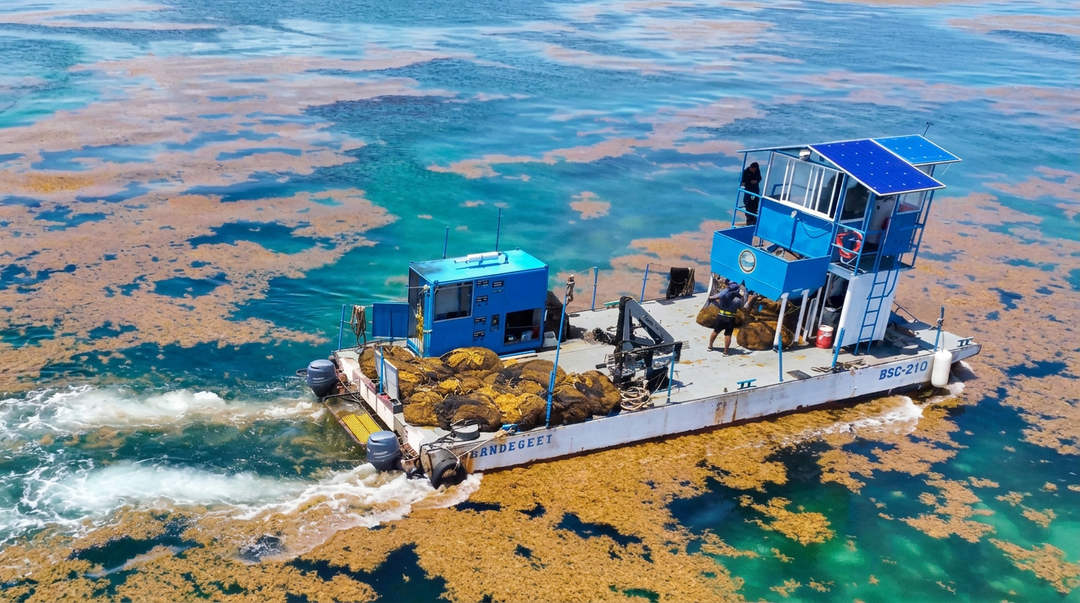

Tulum's coastal zone office has pulled more than 6,500 tons of sargassum off the municipality's beaches since January. Moving it has taken more than 1,800 container trips.
Two months ago the count stood at 2,800.
The arrivals have not stopped. David Buchanan, director of the Zona Federal Marítimo Terrestre office in Tulum, said the weed keeps coming in an uneven rhythm, with quiet weeks and heavy ones, and that the crews go out early whichever kind of week it turns out to be. The total released Thursday is a checkpoint in a season that reached this coast two months ahead of schedule and has not eased since.
The count more than doubled after mid July
Sargassum began washing into Tulum in January. The arrival had been expected toward the end of March, and by mid April the municipal office had logged 1,224 tons, a figure it contrasted with 462 tons at the same point in 2025.
By mid-July, the municipal count had surpassed 2,800 tons, nearly twice what the same crews had removed a year earlier. Thursday's figure means roughly 3,700 tons came off the beaches in the two months that followed. More than half of everything collected in 2026 was collected after mid July.

That is the shape of this season in one line. The heavy weeks did not come at the start.
Where the sargassum in Tulum goes after it leaves the sand
The containers are the second half of the operation, and they are counted separately. More than 1,800 trips have carried the material to the disposal site, and what rides in them comes from more than one payroll. Buchanan said the same containers take sargassum gathered by the Secretaría de Marina, the Comisión Nacional de Áreas Naturales Protegidas, and the hotels, with the municipality handling transport.
The distinction matters when the two numbers are read side by side. The 6,500 tons represent what municipal crews removed from public beaches. The 1,800 trips describe what four different operators loaded into the same containers. Dividing one figure by the other yields a neat average of 3.6 tons per trip, but that average measures nothing because the two counts do not cover the same stretch of sand.
Spread across the 260 days since January 1, the trips work out to about seven a day, including weekends and holidays.
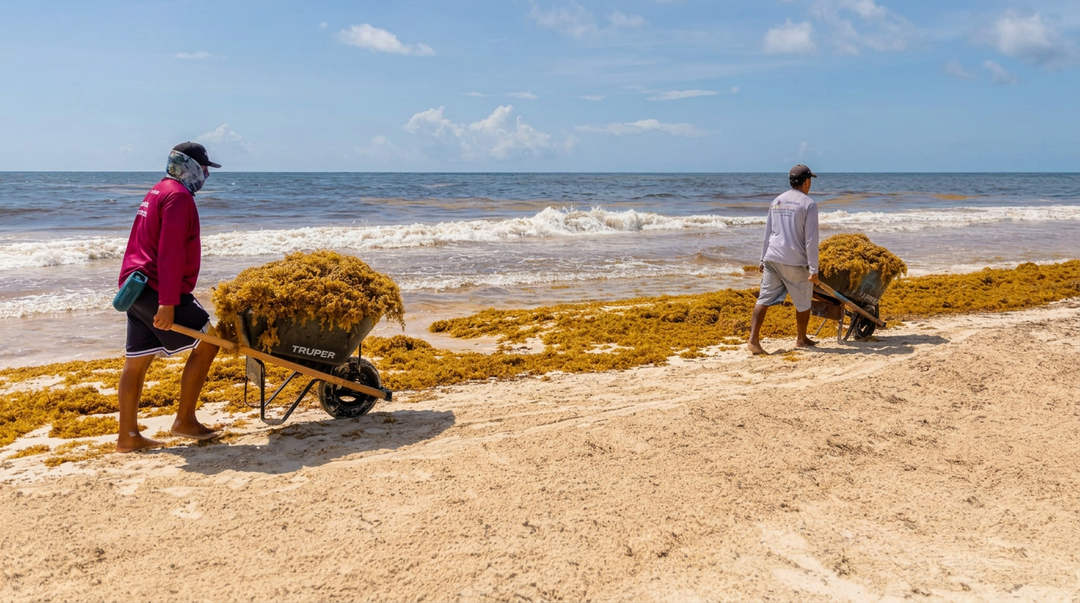
Four beaches, one starting time
The crews concentrate on Playa del Pueblo, Parque del Jaguar, Punta Piedra and Conchitas, the public stretches that absorb most of the daily foot traffic in a town where beach access is otherwise filtered through hotels and clubs. Work begins at first light, before the sand fills. Buchanan said the instruction from Mayor Diego Castañón Trejo is to keep the operation running regardless of how heavy the week is.
We have had calm weeks, others not so much.
Buchanan was speaking in Spanish. The line above is a translation.
Beach hotels clear their own sand and pay for it
The municipal count stops where the public beaches do. Hotels along the coast road handle their own frontage, and what that costs them has already begun to shape how some of them plan their calendars. David Ortiz Mena, president of the Asociación de Hoteles de Tulum, told La Jornada on July 26 that a hotel can end up spending up to three times as much to haul the algae off its beach as it pays for electricity. He set the start of the 2026 season for late January and said Quintana Roo took in five times as much weed last year as in any year on record. By July, hoteliers on the coast were weighing whether to open only in the months when the sargassum stays away.
Earlier this year, ZOFEMAT reports stated that the municipal count excludes what those properties remove, as well as what brigades collect inside Parque del Jaguar. The 6,500 tons are a floor for the municipality, not a total for the coastline, and a combined figure has not been published.
119,000 tons projected statewide, and no end date for the arrivals
Quintana Roo is running its heaviest sargassum year since the mass arrivals of 2015. Coverage in May, citing the Red de Monitoreo del Sargazo, put the statewide collection for 2025 at 96,000 tons and the 2026 expectation at 119,000 tons. Esteban Amaro, who directed the network, said at the time that so much had arrived that removing it all was practically impossible.
By early August, satellite monitoring reported roughly 90,000 tons floating off the state's coast, waiting on currents and wind to decide where it would land.
What the municipality did not release with Thursday's total is the cost of the operation or a month-by-month breakdown of where those 6,500 tons came from. Both would say more about the season than the headline figure does.
Buchanan gave no date for when the arrivals stop. Until they do, the only number in Tulum that moves is the one on the containers, and the crews go back out at first light.
How much sargassum has reached your stretch of the Tulum coast this month? Join the conversation and share your perspective with us on Instagram and Facebook at @thetulumtimes.

The Tulum Times · Newsletter
The story continues in your inbox.
Essential Tulum news and local insight, a few times a week. Free.
No spam. Unsubscribe anytime.
Tulum Sargassum Updates and Beach Conditions
Live seaweed conditions, cleanup updates, forecasts, and practical beach planning across Tulum and the Riviera Maya.

“The best journalists reporting from paradise, highlighting the heroes that keep Tulum the most beautiful place in the world! THANK YOU!”