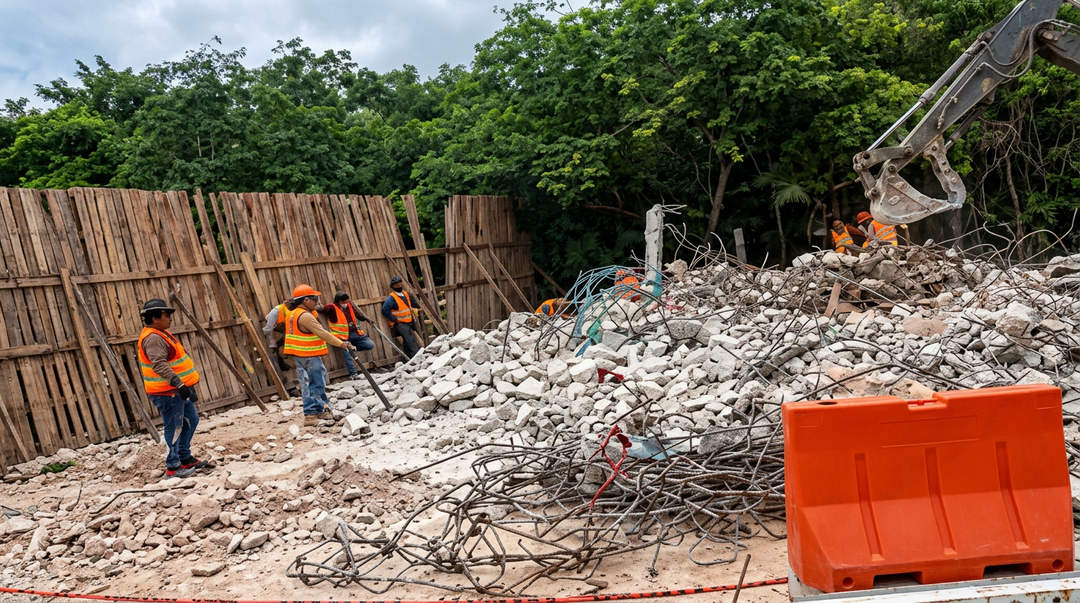

Suspected water contamination in La Veleta, shown in neighbors' videos of cloudy, foul-smelling water, has residents asking Tulum authorities to test the aquifer beneath the neighborhood, a local environmental group said.
Karla Acevedo Polo, a representative of Tulum Sostenible, said the organization has been receiving reports for some time about possible problems with the water in La Veleta and neighboring areas, particularly around the Holística residential development. Some of those contacts sent video.
"We have definitely had word of water contamination in the La Veleta neighborhood for some time, and a bit further out too, around Holística. A couple of contacts have shared videos and evidence with us. The water clearly looks dirty and it smells bad," she said.
The request reaches past one neighborhood because Tulum draws its water from underground. The Yucatán Peninsula has almost no surface rivers, and its porous limestone allows whatever enters the ground to move quickly into the aquifer that supplies wells, cenotes, and the public system. A problem in one district's water can be a reading on the reservoir the whole town shares.
Videos of cloudy water from La Veleta and the Holística area
So far, the evidence is what residents have recorded and passed along. Acevedo Polo described water that is visibly dirty and has a bad odor. Her statements do not say whether the images came from household taps, private wells, cisterns or open water, and they include no laboratory results, no dates for the recordings and no count of affected homes.

She was careful about scale.
"It is important, very, very important, to have a diagnosis," she said. "We can't build on two cases alone, but they may already be warning us of a larger problem that we cannot rule out."
Tulum Sostenible wants samples taken across the aquifer
The group is asking authorities to collect samples at several points in La Veleta and the surrounding area, assess the condition of the water, and use the results to plan a response to whatever source is found. Acevedo Polo said the monitoring should also extend to nearby areas that could be affected, since contamination at one site may indicate effects elsewhere in the aquifer.
"If the problem isn't known, it won't be possible to find solutions and strategies to start changing this situation," she said.
She put the stakes in two terms, possible public health effects and the conservation of the region's ecosystems, and said both require current technical information that can size the problem before anyone chooses preventive measures.

Tulum Sostenible is known locally for its work on waste and recycling. The water request takes it a step beyond that beat.
Cenotes that failed sanitary tests in 2022
Acevedo Polo pointed to earlier monitoring of some cenotes by health authorities, which she said detected contamination levels high enough to deem certain bodies of water unfit for recreation. She did not name the sites.
The best-documented case dates to 2022. That July, local outlets reported that sampling by Quintana Roo's sanitary risk agency had found high levels of E. coli at Cristal, Calavera and Casa Cenote in Tulum municipality, and at Kantun Chi and Cristalino in Puerto Aventuras. The bacterium is associated with severe diarrhea and other gastrointestinal illnesses. According to those reports, the sites stayed open to visitors through the summer.
The sea has tested better. In July, Cofepris rated all 28 beaches it monitors in Quintana Roo fit for recreational use, including five in Tulum: Santa Fe, Pescadores, Maya, Zamas and Xcacel. That program measures enterococci in seawater. It does not sample cenotes or groundwater, which is the gap the La Veleta request points at.
Sewer lines that not every building uses
Acevedo Polo named drainage as one factor any study should weigh. Coverage in the area is limited, she said, and not every business and home is connected to the network that does exist.
The complaint has a history. In March 2023, Gonzalo Merediz Alonso, president of the Yucatán Peninsula basin council and executive director of Amigos de Sian Ka'an, told La Jornada Maya that Tulum had a sizable treatment plant but that population growth had outrun its drainage and treatment infrastructure, and he cited a lag in household connections. An earlier pilot program to hook up homes cost about 6,000 pesos per connection, he said, with CAPA covering the cost outright or splitting it with owners through monthly water bills.
When a property is not connected to a sewer, wastewater generally goes to a septic tank. In porous rock over a shallow water table, the distance between a leaking tank and the aquifer is short.
A request for lab data on La Veleta water contamination
Tulum Sostenible's statements do not say which office received the request. Three would figure in any answer: CAPA, the state commission that runs water and sewer service in Tulum; the state sanitary risk agency behind the 2022 cenote sampling; and the municipal government. A public response from any of them had not been found at the time of publication.
Until someone draws samples, the record of La Veleta's water consists of a handful of videos and a smell. Whether that traces to one bad connection or to something wider underground is the question the group wants answered, and only a lab can settle it.
Have you noticed cloudy or foul-smelling water at home in La Veleta or nearby, and has anyone tested it? Join the conversation and share your perspective with us on Instagram and Facebook at @thetulumtimes.

The Tulum Times · Newsletter
The story continues in your inbox.
Essential Tulum news and local insight, a few times a week. Free.
No spam. Unsubscribe anytime.
Tulum Neighborhoods, Growth Corridors, and Area Guides
Context and practical guidance around Aldea Zama, La Veleta, Region 15, Selva Zama, and the urban geography shaping Tulum.

“The best journalists reporting from paradise, highlighting the heroes that keep Tulum the most beautiful place in the world! THANK YOU!”