

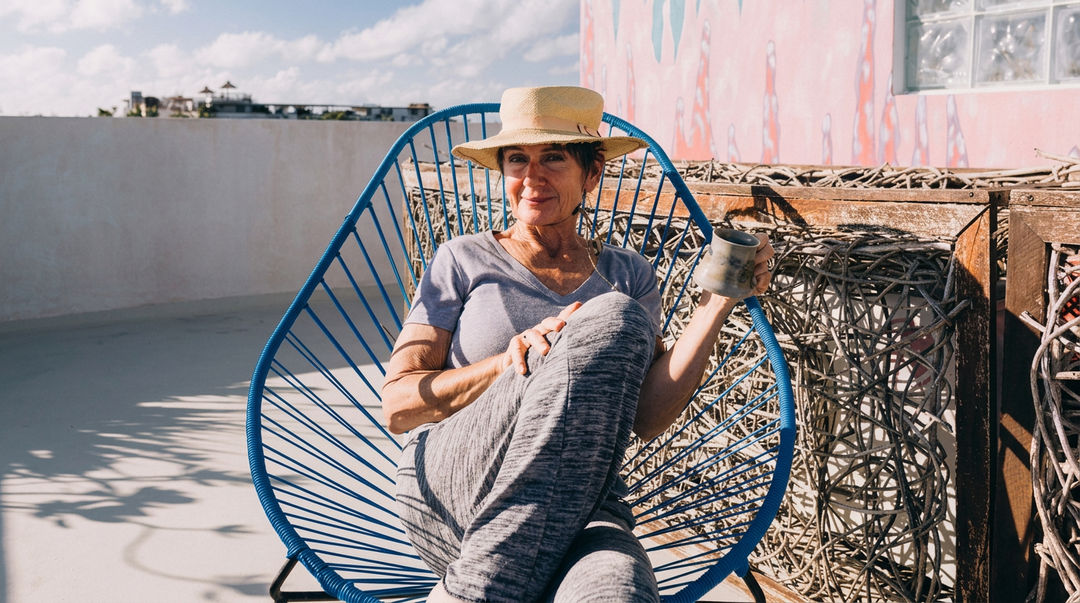
Joanne Fanny Barry first imagined Eco Woman, an environmental engineer with superpowers, while working at a hazardous waste site in New Jersey. This August, from Tulum, she brought the heroine's story to its end.
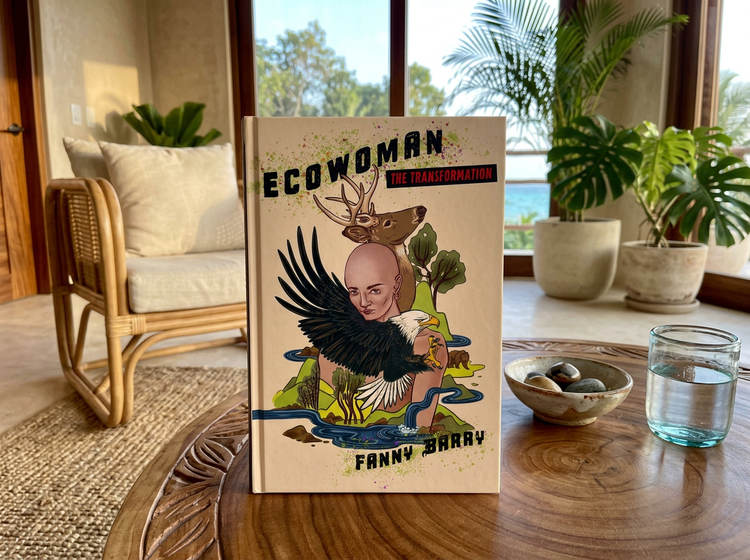
Eco Woman: Resolution, released on August 18 by Blue Heron Book Works of Allentown, Pennsylvania, completes a trilogy that began with The Transformation and continued with Initiation. It is available on Amazon and Bookshop.org.
Around Tulum, most people know the author as Joanne. Fanny is the nickname her family has always used, and the one her publisher preferred for the covers. Barry co-founded Tribal Tulum, the yoga studio on Avenida Coba Sur, and has made her home in the town since 2004. Alongside her classes, she has written a memoir, support booklets for people facing cancer, and a steady stream of essays, and she co-publishes an e-magazine and hosts a podcast. The trilogy's final book gathers many of the ideas that run throughout it.
A heroine born beside a hazardous waste site
Barry brought her own profession to the page. "The Eco Woman series found life while I was working in a hazardous waste rehab site back in New Jersey," she told The Tulum Times. "It takes lots from my heritage in Ireland and my scientific expertise as an environmental engineer."

Her heroine, Maeve, is an environmental engineer too. Her integrity puts her in the path of the Shadows, evil forces in human form who want to restore their dominance on Earth. A staged accident with a truckload of PCBs nearly kills her. She is rescued by the Women of the Well, three witches of the Light who nurse her back to health, and as she recovers, her latent powers wake up. Barry's bio places those healers in the forests of the northeastern United States and describes them as Celtic crones, a nod to her Irish roots.
From there, the mission is simple to state and hard to carry out: save the world, one adventure at a time.
Resolution sends Maeve into her most difficult territory. She is homeless and caught in a human trafficking ring, and with her allies KB, Sarah, and Vincent, she has to face an uncomfortable question about who gets rescued and on whose terms, including the possibility that, for some, a dangerous path looks like the only way out.
Barry calls the series a fun read, light and suited to young adults and older ones alike. According to her publisher, two of the Eco Woman books debuted at No. 1 on Amazon's list of new British and Irish literature, and the trilogy is now finding a young adult audience as a story about personal power, integrity, and resilience.

Joanne Fanny Barry's first home on the road to Sian Ka'an
The road to Tulum began with a diagnosis. Barry learned she had breast cancer in 2003, and she has said it was the moment she stopped doubting whether she was good enough for creative work. She had spent years writing about science and explaining nature to the public. In 2006 she published I Wish I Knew: Notes from a Breast Cancer Survivor, a set of illustrated booklets meant to offer emotional support. The booklets also exist in Spanish and were available in several hospitals in Mexico City.
She came to Tulum from Boston, her hometown, in 2004, after finishing treatment and while still in recovery. She made her home on the beach road heading south toward the Sian Ka'an biosphere reserve and stayed there for a decade.
The first thing she built in Tulum was a retreat center for women with breast cancer who had completed treatment. "They came here and healed in many ways," she said.
Barry is now considered cured, and she has had no recurrence since she arrived.
"Perhaps it's the place," she said.
Her memoir, Map of Life and Beauty, tells the story of rebuilding her life along that stretch of coast, when Tulum was still mostly jungle. In 2014 she sold the beach house and turned to a new project in town.
Diving and yoga under one roof on Avenida Coba Sur
Tribal Tulum opened on December 21, 2015, on the upper floor of a building on Avenida Coba Sur, directly above Acuatic Tulum, the dive center that has operated in town since 1993 and that Barry describes as Tulum's first dive shop.
The location was the idea. Barry and her business partner, Alex Alvarez, wanted to connect diving and yoga, and they still lead dive and yoga retreats that connect people to the breath and to the cenotes and natural areas around Tulum. The two met years earlier at Maya Tulum, where Barry taught yoga, and Alvarez was one of her students.
The building was the first tall one on Avenida Coba, Barry recalls, and the partners secured special permits to achieve the studio's height. The avenue has filled in around it since, with new construction, taller buildings, and many more yoga studios. Tribal Tulum has kept its core of teachers through those changes and continues to welcome locals and visitors alike.
"Our retreaters are transformed by their experiences here," Barry said.
Paradise Found and the art of noticing
Yoga is the thread that ties Barry's work together. "Yoga infuses pretty much all my work, including the Eco Woman series," she said. "It all speaks to the power we hold and human interconnectedness."
That conviction drives Paradise Found, the e-magazine she co-publishes with writer Bathsheba Monk. Its premise is that "we still live in paradise, we've merely forgotten to notice." The publication sets out to help readers share and grow positive attitudes toward the earth, and Tulum runs through its pages, which feature artists from around the world who share a connection to the town. Two recent editions are on Issuu: this issue and the summer issue.
The magazine's companion Substack, also called Paradise Found, publishes a new essay every week and serves as a gathering place for future contributors. A recent artist talk gives a sense of the voices it features.
Then there is Nobody's Nobody, Barry's podcast, in which she talks with people who make a big difference without making a big deal about it. She describes her guests as change makers whose relatively ordinary lives turn out to be extraordinary. Nearly all of them have a connection to Tulum, through Barry herself or through Tribal Tulum.
Between Tulum classes and a Maine writing desk
Barry divides her time between Tulum and Down East Maine, where she says she finds inspiration. The writing fits into the spaces the teaching leaves open. "I find I'm writing when not teaching," she said.
Readers can find her books and blog at fannybarry.com, and her classes at Tribal Tulum. On Instagram, she is @fanny_barry, and the studio is @tribaltulum.
Maeve's story began with a near-fatal accident and three women who nursed her back to strength. Barry's Tulum story began in 2004 with a woman in recovery and a house on the beach road. Twenty-two years later, one of those stories is complete in print. The other continues one floor above a dive shop on Avenida Coba Sur.
Has a class, a retreat, or a book changed the way you see Tulum? Join the conversation and share your perspective with us on Instagram and Facebook at @thetulumtimes .

The Tulum Times · Newsletter
The story continues in your inbox.
Essential Tulum news and local insight, a few times a week. Free.
No spam. Unsubscribe anytime.
Tulum Development, Permits, and Construction Watch
Reporting on permits, construction, regulation, and major development decisions shaping Tulum’s urban growth and investment climate.

“The best journalists reporting from paradise, highlighting the heroes that keep Tulum the most beautiful place in the world! THANK YOU!”


