


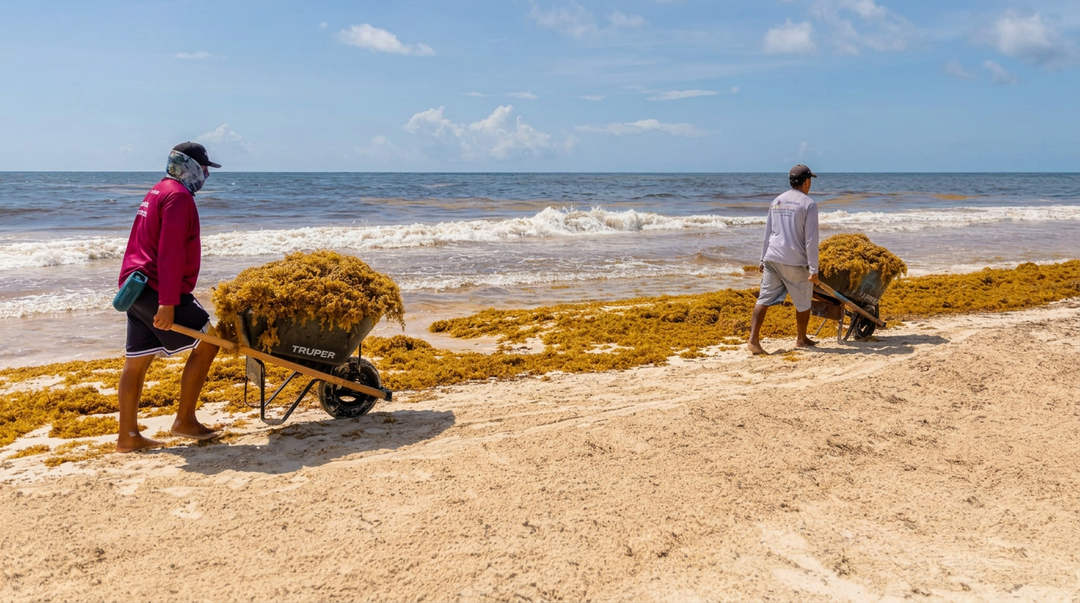
El sargazo en Tulum se retira diariamente de la playa pública de Conchitas, una operación que el gobierno municipal exhibió durante su última visita de supervisión, con nidos de tortuga marina marcados en la misma franja de arena.
El presidente municipal Diego Castañón Trejo recorrió la costa junto con David Buchanan, director general de la oficina municipal de Zona Federal Marítima y Terrestre, conocida como Zofemat. La visita tenía el propósito de verificar que la recolección en Conchitas funciona en su horario diario, de acuerdo con el comunicado municipal.
"Estamos aquí en la playa Conchitas con el equipo de limpieza de playa", dijo Castañón Trejo. "Como sucede todos los días, está siendo limpiada para que tengamos las mejores playas posibles. Estamos trabajando en estrecha coordinación con el gobierno federal y estatal para combatir juntos este fenómeno natural".
La rutina cobra mayor peso este año que en los anteriores. Quintana Roo está experimentando la temporada de sargazo más pesada en sus registros, la recolección en Tulum prácticamente se ha duplicado interanual, y el alga está llegando durante los meses en que las tortugas marinas anidan en las mismas playas.

2.800 toneladas de sargazo en Tulum a mediados de julio
Buchanan reportó en julio que las brigadas habían retirado más de 2.800 toneladas de las playas de Tulum desde el inicio de 2026, casi el doble del volumen registrado en el mismo período de 2025. Las brigadas habían completado más de mil viajes en contenedor hacia puntos de transferencia para esa fecha.
La temporada también comenzó temprano aquí. Los primeros desembarques significativos llegaron a Tulum en enero en lugar de abril, y el sistema de monitoreo Simsar ha identificado al municipio como el destino más afectado del país entre enero de 2022 y julio de 2026, aunque las cifras varían entre los sistemas de rastreo en uso.
Lo que el municipio no ha publicado es un desglose por playa. No hay una cifra pública de cuánto del total de Tulum provino de Conchitas, ni cuánto retiran las brigadas allí en una mañana promedio.

Solo cinco playas en el estado están limpias
El panorama estatal es lo que convierte una limpieza diaria en una playa pública en una noticia en lugar de un aviso rutinario. La secretaría de ambiente de Quintana Roo, Sema, reportó un total acumulado de 106.848 toneladas al 14 de agosto. De las 140 playas que monitorea a lo largo de la costa, 52 registraron sargazo excesivo esa semana. Cinco estaban limpias.
Tulum aparece en la categoría de excesivo junto con Playa del Carmen, Puerto Morelos, la zona norte de Cancún y Mahahual sur.
La secretaria federal de Ambiente, Alicia Bárcena, dijo a principios de agosto que el volumen flotando frente a la entidad, más de 90.000 toneladas en ese momento, es 27 veces superior al promedio histórico. La capacidad de recolección en todo el Caribe mexicano se acerca a 1.200 toneladas diarias, aproximadamente un tercio de lo que llega.

Limpieza coordinada con la Marina
El trabajo en la arena combina recolección manual con equipo mecánico, y el municipio lo ha realizado junto con la Marina mexicana, el gobierno estatal y operadores hoteleros a lo largo de la temporada. La Marina también ha instalado barreras de contención en cuatro puntos a lo largo de la costa, Tulum entre ellos, para retener parte del alga antes de que llegue a la orilla.
La coordinación es lo que moviliza el volumen. El alga retirada de la playa debe ser cargada y transportada tierra adentro hacia puntos de transferencia, de donde provienen los mil viajes en contenedor contados en julio. Tulum agregó equipo a la operación en junio y ha descrito el trabajo como durante todo el año en lugar de estacional.
"Estamos viendo que hay muchos nidos de tortuga"
Durante la misma visita, el presidente municipal pidió a residentes y visitantes que se mantengan alejados de los nidos marcados a lo largo de esa costa.
"Estamos viendo que hay muchos nidos de tortuga", dijo Castañón Trejo. "Invitamos a todos a cuidarlos y respetarlos".
La coincidencia está en el calendario cada año. Cuatro de las siete especies de tortuga marina del mundo anidan en esta costa, y la temporada de anidación en Tulum va del 1 de mayo al 1 de noviembre. Esto coloca las semanas más pesadas de llegada de sargazo sobre los meses en que las hembras salen a tierra para poner huevos, y los crías hacen su camino hacia el agua.

La orientación municipal durante toda la temporada pide a los visitantes de playa que mantengan distancia de los nidos marcados, apaguen las luces dirigidas hacia la arena después de anochecer, y reporten avistamientos de hembras anidando o crías desorientadas al 911. El municipio opera un campamento de protección en Kanan Ak.
El calendario de anidación termina el 1 de noviembre
Los conteos de nidos para la temporada 2026 en Tulum no han sido divulgados públicamente. En 2025, la dependencia de ecología municipal reportó 658 nidos a mediados de julio y proyectó más de 10.000 para el año. Una cifra comparable para esta temporada no ha sido divulgada.
El calendario de anidación tiene una fecha de cierre fija. El sargazo no la tiene, y las brigadas en Conchitas volverán a la arena mañana.
¿Has encontrado nidos de tortuga marcados en la playa de Tulum que usas este verano? Únete a la conversación y comparte tu perspectiva con nosotros en Instagram y Facebook en @thetulumtimes.

The Tulum Times · Newsletter
La nota sigue en tu correo.
Lo esencial de Tulum y contexto local, un par de veces por semana. Gratis.
Sin spam. Cancelá cuando quieras.
Beach Access, Public Shoreline, and Coastal Rules in Tulum
Coverage of public beach access, coastal restrictions, closures, and the balance between tourism and public space.

“The best journalists reporting from paradise, highlighting the heroes that keep Tulum the most beautiful place in the world! THANK YOU!”


