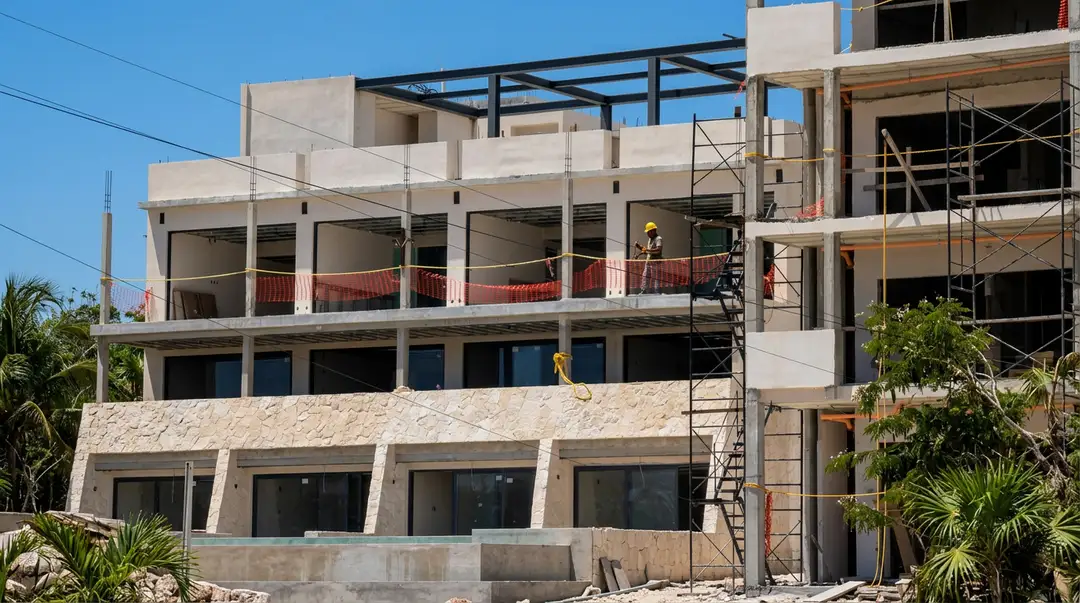
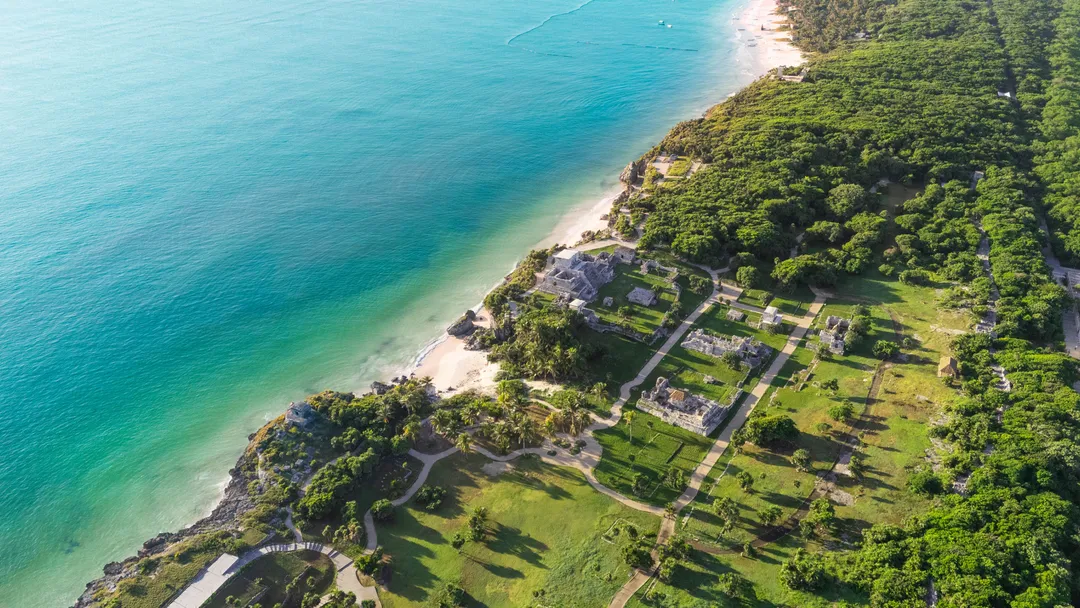
UN Tourism, Universal Music's hospitality arm, and two Mexican developers launched a cultural alliance on Thursday, centered on UMusic Hotel Tulum, a 57-room property opening on the coast in December.
The announcement, made in Tulum, is the first time the federal recovery strategy for the town has been tied to a named private property.
UMusic Hospitality and Lifestyle, Inmobilia, and Thor Urbana joined UN Tourism under Tulum Renace, the strategy the Government of Mexico is advancing to revive the town's economic prospects through sustainable tourism and cultural investment, with the support of the federal Ministry of Tourism. The partners placed UMusic Hotel and Beach Club Tulum at its center, and their argument is that a property built around music production shifts Tulum from hosting culture to producing it. Whether that reaches the businesses on the other side of the beach road is the question the announcement leaves open.
UMusic Hotel Tulum opens with 57 keys and a beach club for 800
The property is scheduled to open in the first week of December 2026, with 57 rooms, a beach club with a capacity of 800 people, and what the partners call an integrated creative hub. Those three pieces together are described as the foundation of the whole initiative.

According to the announcement, the property is designed as a launchpad for concerts and live events, music video and film production, creator collaborations, brand partnerships, and original multimedia content. The partners say it will generate a continuous calendar of programming that reaches beyond its own walls and across Tulum.
That calendar is meant to run year-round and span musical and artistic genres, and the partners say it will use venues across the destination rather than the hotel alone. The stated ambition is to turn Tulum into a cultural and musical epicenter, with the property serving as the base rather than the perimeter.
That is the detail worth watching, because it describes a place where the work gets finished rather than only performed.
Operations run through UMusic Beach Clubs and Lifestyle, the joint venture between UMusic Hospitality and Lifestyle and IMI Group, the hospitality company behind O Beach. The venture combines Universal Music Group's creative ecosystem with IMI Group's experience in lifestyle hospitality and entertainment, and it is responsible for the programming, the operations, and what the partners call destination activation. UMBL is building out a five-star, music-led beach club concept across the Americas, Europe, and the Middle East, on the foundation of the O Beach portfolio.

Maxi Johal, chairman of IMI Group, put the Tulum property first in that line.
"We are hugely excited to be opening in Tulum this December: the first five-star barefoot luxury hotel and beach club in the UMusic portfolio. World class music, design and hospitality, right on the Caribbean. Tulum is roaring back and we are proud to be part of it."
The federal strategy that made culture an economic argument
Tulum Renace is described by the partners as a long-term strategy advanced by President Claudia Sheinbaum's administration, built on infrastructure investment, sustainability, expanded cultural programming, and community development. Its premise is that culture drives tourism and economic growth, and that a year-round supply of experiences brings visitors, creates opportunities for local communities, and maintains Tulum's position among the world's cultural destinations.
The alliance is presented as one of the first major cultural initiatives supporting that vision, and as the mechanism that turns the strategy's goals into a destination-wide program of experiences, creative investment, and collaboration across the region.
The framing matters for anyone who has watched Tulum's coast fill up with enclosed compounds. The stated aim is to make more of Tulum itself the destination, pushing visitors toward the town's music, food, arts, natural surroundings, and creative communities, and to sustain economic activity throughout the year rather than concentrating it in season.
Josefina Rodríguez Zamora, Mexico's tourism secretary, tied the strategy directly to the president.
"Tulum Renace is an initiative of President Claudia Sheinbaum aimed at fostering a more equitable, well-planned and sustainable model of tourism development, one in which the culture, creativity and talent of our communities are a fundamental part of the destination's transformation. We want tourism growth to generate shared prosperity, strengthen the local economy and translate into well-being for those who live and work in Tulum, always with respect for our natural and cultural heritage."
Governor Mara Lezama Espinosa kept her statement shorter. Tulum has built a reputation between jungle, sea, cenotes, and centuries of Maya history that few destinations can match, she said, and "with UMusic Hotel joining that story, music adds one more layer to what makes it special."
The partners say the programming will be built with government rather than alongside it. According to the alliance, the parties will work together on a year-round schedule of activities for the destination, coordinated with the authorities that already handle Tulum's tourism agenda.
Sectur, the federal ministry, works the Tulum file in coordination with the Quintana Roo government and local authorities, focused on infrastructure, connectivity, and international promotion, with the stated goal of establishing the town as a benchmark for cultural and nature-based tourism while safeguarding its environment. Sedetur, the state ministry, runs the parallel brief inside Quintana Roo through marketing strategies, sector training, and support for local tourism operators, working with the hotel, business, and community sectors.

Zamna signs on first
The part of the announcement aimed at people who already work here is the investment in the creative economy. The partners describe it as a long term commitment to the artists, creators, and cultural entrepreneurs who define Tulum's identity.
In practice, that means dedicated recording studios, content production facilities, and collaborative creative spaces inside the property, where musicians, filmmakers, producers, designers, and digital creators can develop, produce, and show new work.
The studio side comes in a later stage, and the partners describe it as built around residencies. The idea is for artists to stay in Tulum for extended periods and record here, instead of arriving for a set and leaving the next morning. That is a different relationship with the town than the one the beach clubs have built over the past decade.
The first strategic collaboration named is Zamna, the music platform founded in Tulum that has grown into one of the world's leading electronic music brands. The partners describe it as one of the destination's most influential cultural exports, now attached to a wider push to raise Tulum's creative profile internationally.
No terms, dates, or scope were given for that collaboration.
Robert Lavia, chief executive of UMusic Hospitality and Lifestyle, laid out the rationale for the entire model.
"The destinations that leave a lasting impression aren't the ones where culture is simply experienced. They're the ones where culture is created. Tulum has always been a place that inspires artists and creators. Our role is to help amplify that spirit by creating opportunities for culture to be produced, shared and celebrated, generating lasting value for the destination and the communities that call it home."
Money the partners say reaches past the hotel gate
The economic case rests on the calendar. A continuous run of concerts, productions, and cultural experiences, the partners argue, drives visitation through the year and encourages longer stays, with the spending reaching hotels, restaurants, retailers, transportation providers, tour operators, and local businesses across the region. They call those benefits measurable.
None of them carries a figure. The announcement includes no investment amount for the property, no employment projection, and no commitment on how much of the programming or the hiring stays local.
The alliance is also the first implementation in Mexico of the memorandum of understanding between UN Tourism, UMusic Hospitality and Lifestyle, and the Center for Music Ecosystems, which the partners say establishes Tulum as an international example of music, culture, and creativity driving sustainable tourism and long term economic development.
Natalia Bayona, executive director of UN Tourism, made the case for music as an employer.
"Music has enormous power to generate employment, strengthen communities and transform destinations. Tulum represents an important example of how culture can become a sustainable driver of tourism and economic development. Moreover, the generation of this type of investment in tourism will not only help strengthen human capital development, but also the broader ecosystem surrounding the creative industries, music and innovation."
UMusic Hotels sits at the core of UMusic Hospitality and Lifestyle, a company developed in partnership with Universal Music Group that also operates in retail, branded residences, and immersive experiences. UN Tourism is the United Nations specialized agency for responsible, sustainable, and universally accessible tourism.

Built by Inmobilia, backed by Thor Urbana
The developer is Inmobilia, headquartered in Mérida, Yucatán, and responsible for more than 7.8 million square meters of master-planned communities across Mexico, Belize, and Spain, spanning residential, mixed-use, commercial, and hospitality projects, including branded residences such as Faena, SLS, MGallery, and Four Seasons. The partners present the Tulum property as another significant investment in Mexico's tourism sector.
Roberto Kelleher Vales, chief executive and founding partner of Inmobilia, framed it as a continuation of how the company has worked for two decades.
"For more than two decades, we've developed communities across southeastern Mexico with the belief that great projects should create lasting value for the places they call home. UMusic Hotel & Beach Club Tulum reflects that philosophy, bringing together thoughtful development, culture and creativity to create something that will benefit the destination long after construction is complete."
Thor Urbana, the other Mexican partner, reports more than 3.7 billion dollars in assets under management and over three million square meters developed across 17 cities, with experience in luxury hospitality, lifestyle, and mixed-use destinations, and an established presence in Mexico's leading tourism markets including Tulum. Jimmy Arakanji, co-founder and co-chief executive, said what has been built "goes beyond hospitality, bringing together culture, entertainment, community and experiences to create a true economic and cultural catalyst for Tulum."
The opening is set for the first week of December 2026. Until then, the alliance exists as a statement of intent, and the specifics that matter locally are still missing. The year-round program with the government has no published calendar; there is no word on the terms under which Tulum musicians and producers gain access to those studios or residencies, and no count of how many jobs go to people who already live here. Those answers arrive with the first season.
Can a hotel built around music production do more for Tulum's economy than one more beach club? Join the conversation and share your perspective with us on Instagram and Facebook at @thetulumtimes.

The Tulum Times · Newsletter
The story continues in your inbox.
Essential Tulum news and local insight, a few times a week. Free.
No spam. Unsubscribe anytime.
Tulum Restaurants, Beach Clubs, and Nightlife Guide
Food, dining, beach clubs, and nightlife coverage for visitors looking for practical choices, current openings, and the mood of Tulum after dark.

“The best journalists reporting from paradise, highlighting the heroes that keep Tulum the most beautiful place in the world! THANK YOU!”