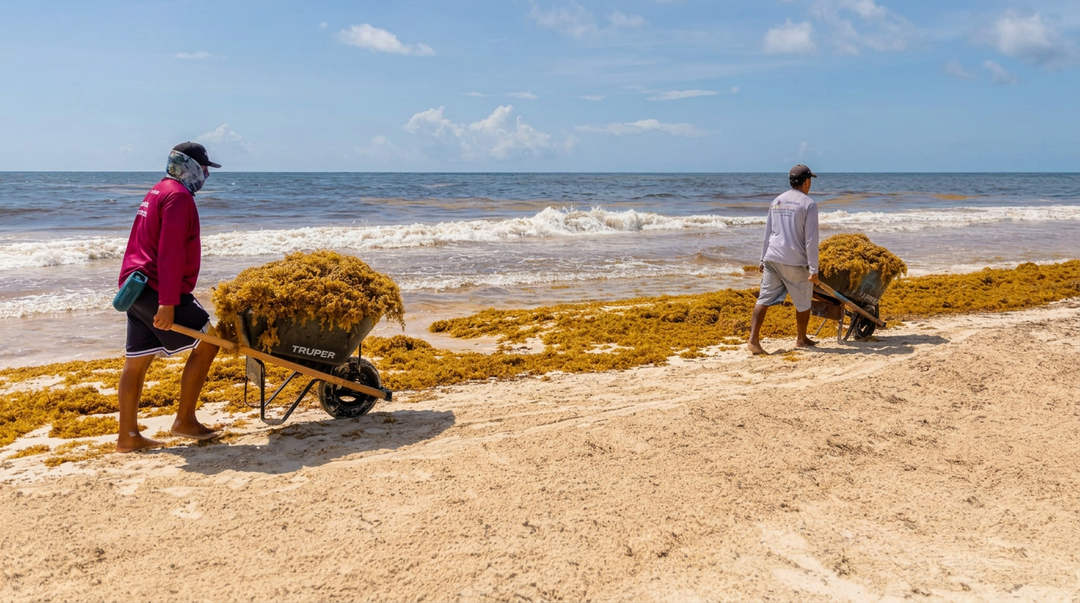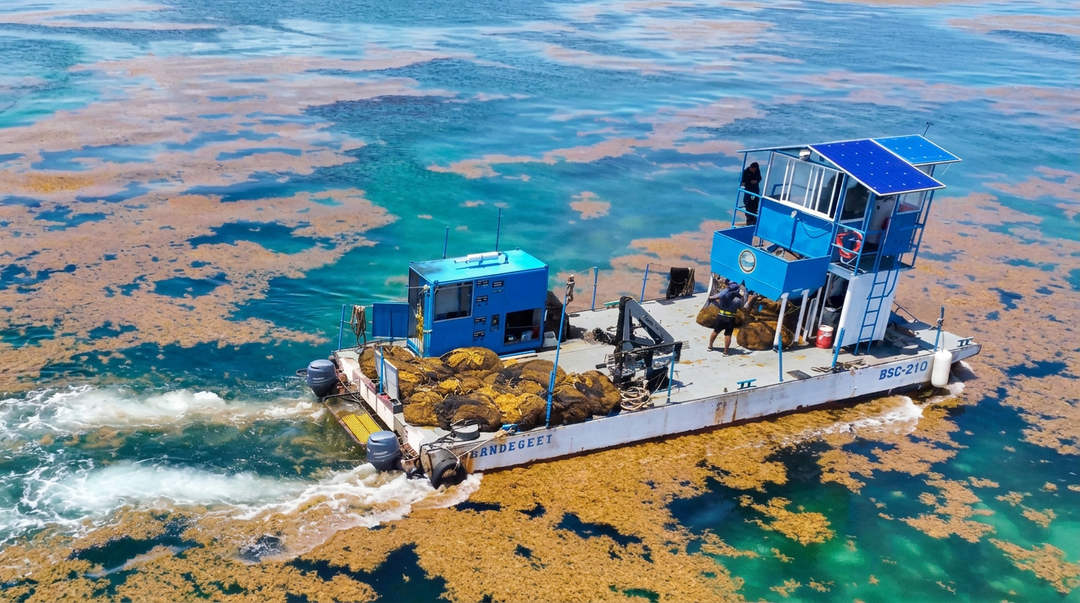

The advance of the Riviera Maya sargassum presents a stark regional contrast compared to the rest of Quintana Roo this late April. While northern destinations report clean beaches, the Riviera Maya and Tulum face abundant accumulations that demand permanent containment.
This disparity underscores the geographic vulnerability of the southern tourist corridor to seasonal ocean currents. The concentration of the algae in areas like Playa del Carmen and Tulum represents an immediate logistical challenge for authorities and service providers seeking to maintain the quality of the tourist experience and protect the ecological environment.
The Natural Shield of the North
Oceanic behavior currently favors the island destinations and the northern zone of the state. Isla Mujeres and Holbox maintain optimal conditions for aquatic recreation. The orientation of their coasts provides a natural barrier against the dominant Caribbean currents that transport the macroalgae from international waters. Similarly, the northern hotel zone of Cancun, which includes beaches like Las Perlas, Linda, and Langosta, registers minimal levels of impact.
In Cozumel, the geographic dynamics offer similar results. The western coast of the island, shielded from direct oceanic flows, keeps high-traffic sites like Playa Mia and Chankanaab free of significant arrivals. This natural protection allows tourist operations, both terrestrial and snorkeling or diving, to operate without the mechanical and visual interruptions associated with the massive arrival of the algae.

Operational Pressure in the Riviera Maya
The scenario changes drastically when descending toward the central and southern strip of the Quintana Roo coastline. Starting from the southern hotel zone of Cancun, open-wave beaches like Delfines and Marlin show moderate levels of arrival. In this demarcation, sanitation brigades maintain extended work shifts to remove the biomass from the fine sand before its decomposition process begins.
In the municipality of Puerto Morelos, accumulations in public areas are categorized as moderate but constant. Mechanical labor with specialized machinery and manual collection do not stop, but the volume of incoming algae exceeds the installed capacity of the collection teams during peak hours.
The environmental and tourism impact intensifies in the municipality of Solidaridad. Playa del Carmen reports considerable arrivals at strategic points for the local economy, such as the Mamitas area, the Playacar complex, and Punta Esmeralda. The massive presence of the algae on the coastline erodes the visual appeal, alters the color of the sea, and generates olfactory emissions that negatively impact the visitor experience and the commercial operations of restaurants and beach clubs.
Tulum Facing Coastal Saturation
The municipality of Tulum concentrates the most severe arrival levels reported in this session. The Playa Paraiso sector and the extensive coastal fronts of the hotel zone face abundant and continuous arrivals. This contingency has forced private developers and environmental authorities to multiply ground crews and reinforce the maintenance of marine containment barriers installed just a few meters from the shore.

The removal logistics in Tulum require accelerated coordination to prevent a collapse in the aesthetics of the destination. The organic material must be extracted swiftly and transported to authorized final disposal sites, an indispensable process to prevent the filtration of leachate into the water table and the subsequent impact on the underground river systems characteristic of the region.
Satellite Monitoring and Projections
The advance of the biomass requires permanent technical surveillance. Environmental authorities cross-reference satellite image data with reports obtained on the ground to project the trajectory and density of the approaching oceanic patches. The behavior of the sargassum maintains a volatile nature, dependent on sudden variations in the direction of the trade winds and the strength of the equatorial ocean currents.
Citizen observer networks and live monitoring platforms have consolidated themselves as top-tier operational tools. These technological resources allow tourists to check the real-time status of the beaches and redirect their itineraries toward algae-free destinations, fostering a more efficient distribution of the visitor flow within the territory.
The immediate forecast suggests that the regional division will remain stable over the next seventy-two hours. The northern zone will maintain its clear profile, while the Riviera Maya corridor will continue under logistical pressure, which demands constant structural adaptation by the state in the face of an environmental phenomenon that redefines the tourist operability of the Caribbean.
How does the arrival of sargassum affect your travel plans to the Mexican Caribbean? Join the conversation in our community.

The Tulum Times · Newsletter
The story continues in your inbox.
Essential Tulum news and local insight, a few times a week. Free.
No spam. Unsubscribe anytime.
Tulum Restaurants, Beach Clubs, and Nightlife Guide
Food, dining, beach clubs, and nightlife coverage for visitors looking for practical choices, current openings, and the mood of Tulum after dark.

“The best journalists reporting from paradise, highlighting the heroes that keep Tulum the most beautiful place in the world! THANK YOU!”