
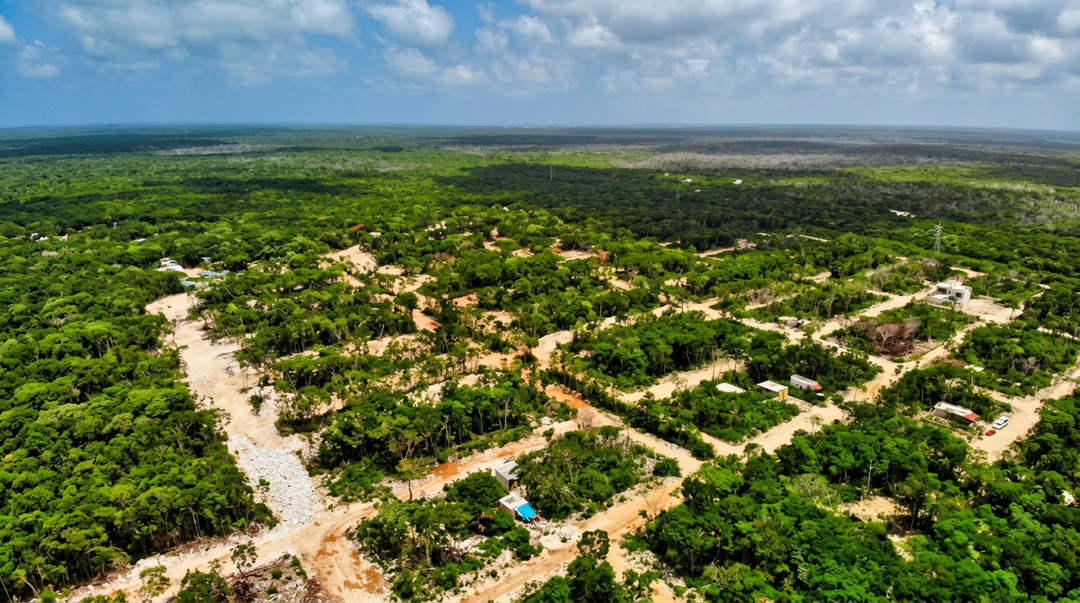
El excedente inmobiliario de Tulum ahora tiene un número. Las viviendas en construcción aumentaron de 1,466 en 2017 a 13,266 en 2023, un incremento de 1,028 por ciento.
Durante el mismo período, el turismo dejó de crecer y nunca regresó a su nivel anterior a la pandemia. Las construcciones continuaron de todas formas.
Esa incongruencia es el tema de un análisis de InfoHabitat, elaborado con datos de Softec y la Secretaría de Turismo federal, publicado esta semana por El Economista. Afecta a cualquiera que tenga un contrato de preventa en Tulum, a quien cuente con ingresos por renta para cubrir un crédito, y a cualquiera que trabaje en el sector de construcción que ha sido el empleador más estable de la ciudad durante una década.
Una promesa de 10 por ciento construyó el excedente inmobiliario de Tulum
El auge respondió a expectativas de rentabilidad ligadas a rentas vacacionales y apreciación de valor en lugar de una necesidad creciente de vivienda, según el análisis firmado por Eduardo Moya, director de InfoHabitat.
La vivienda dejó de medirse por su uso y comenzó a medirse por su rendimiento esperado como activo de inversión.
InfoHabitat enumera qué alimentó esa expectativa. La posición internacional de Tulum como destino, la llegada del Aeropuerto Internacional de Tulum y el Tren Maya, y publicidad que anunciaba rendimientos anuales cercanos a 10 por ciento en algunos proyectos de renta a corto plazo.
Tanto el aeropuerto como el tren ya están en operación. El análisis no sostiene que hayan fracasado. Sostiene que la cartera de construcción fue dimensionada contra lo que se esperaba que entregaran en lugar de dimensionarse contra la demanda que se podía contar.
El rebote rápido después de la pandemia reforzó la creencia de que el número de visitantes seguiría aumentando. Se lanzaron más proyectos, la mayoría de ellos dirigidos a compradores que nunca tuvieron intención de vivir en ellos.

Las ventas se redujeron a la mitad en dos años
El inventario de viviendas a la venta en toda la región alcanzó 6,340 casas en 2023, casi el doble de las 3,243 contabilizadas en 2019.
Las ventas se movieron en la dirección opuesta. Las transacciones anuales cayeron de 3,487 unidades en 2023 a 1,711 en 2025, una caída de aproximadamente 51 por ciento en dos años.
La absorción mensual cuenta la misma historia a nivel de un proyecto individual. Un desarrollo vendió 1.4 casas al mes en promedio en 2022. Para 2025 vendía 0.9. Cada proyecto tarda más en vaciarse, y los lanzados después esperan aún más.
La aritmética es implacable. Al ritmo de 2025, las 6,340 casas ya listadas en 2023 representan casi cuatro años de inventario, antes de que se agregue un solo inmueble aún en construcción.
Los costos de construcción superaron los precios, así que los departamentos se encogieron
Entre 2021 y 2025, los precios de venta subieron 39 por ciento. Los costos de construcción subieron 47 por ciento. Los desarrolladores absorbieron la diferencia reduciendo el metraje cuadrado, manteniendo el precio por metro cuadrado estable mientras el departamento se hacía más pequeño.
Es el ajuste que hace un mercado cuando ya no puede subir el precio de etiqueta. El comprador ve un número familiar y menos piso.
Las unidades más pequeñas también cambian quién es el comprador. Un estudio preciotado según un cálculo de rendimiento no es una casa familiar, y compite por el mismo huésped que todos los demás estudios de la misma cuadra.
Cancún está a 89 por ciento de ocupación, Tulum a 21
La cifra más destacada del reporte no tiene nada que ver con construcción. Del stock de viviendas en Cancún, 89 por ciento está ocupado. En Playa del Carmen la cifra es 82 por ciento. En Tulum es 21 por ciento.
Cuatro de cada cinco casas aquí permanecen vacías, esperando a un huésped o a un comprador en lugar de alojar a un residente.
Una población residente absorbe una recesión, argumenta InfoHabitat. Las personas que viven en algún lugar siguen gastando ahí cuando cae el número de visitantes. Un mercado donde la mayoría de las unidades están vacías la mayor parte del año no tiene esa protección, y sube y baja con las cifras de turismo.
La dependencia funciona en ambas direcciones. Restaurantes, escuelas, clínicas y tiendas necesitan clientes en septiembre tanto como en febrero, y un stock de viviendas construido alrededor de dos temporadas altas no los produce.
InfoHabitat quiere permisos atados a la demanda real
El Economista reportó en junio que Tulum ya se había convertido en punto de referencia para otros mercados verticales de vivienda en México, un caso de estudio sobre qué pasa cuando la oferta se planifica contra un pronóstico en lugar de contra la demanda que se puede contar.
El nuevo reporte cierra con una línea dirigida mucho más allá de este municipio.
La lección aplica a cualquier destino turístico en expansión. Densificar antes de planificar no avanza el desarrollo, avanza el excedente.
Para una recuperación, InfoHabitat enumera certeza legal sobre la tenencia de tierra, infraestructura básica, datos estadísticos específicos del municipio, y coordinación más estrecha entre autoridades y el sector privado. El último punto es el que tiene una palanca. La firma quiere que los nuevos permisos de construcción se verifiquen contra la demanda de vivienda efectiva antes de ser expedidos.
Ninguna autoridad municipal ha dicho si esa verificación será aplicada. Mientras tanto, las 13,266 unidades ya en construcción siguen llegando a un mercado que vendió 1,711 casas el año pasado.
¿Debería Tulum vincular los nuevos permisos de construcción a la demanda de vivienda comprobada? Únete a la conversación y comparte tu perspectiva con nosotros en Instagram y Facebook en @thetulumtimes.
This image was generated or enhanced using artificial intelligence to improve its quality.

The Tulum Times · Newsletter
La nota sigue en tu correo.
Lo esencial de Tulum y contexto local, un par de veces por semana. Gratis.
Sin spam. Cancelá cuando quieras.
Tulum Development, Permits, and Construction Watch
Reporting on permits, construction, regulation, and major development decisions shaping Tulum’s urban growth and investment climate.

“The best journalists reporting from paradise, highlighting the heroes that keep Tulum the most beautiful place in the world! THANK YOU!”