
El gobierno federal invertirá 768.7 millones de pesos este año para interceptar el sargazo en el mar antes de que llegue a Tulum y otros cuatro tramos de la costa de Quintana Roo.
La presidenta Claudia Sheinbaum anunció los recursos el jueves en su conferencia matutina en la Ciudad de México, como etapa inicial de un programa que la Marina presupuesta en 2 mil 635 millones de pesos durante 2026 y 2027. Sheinbaum describió el gasto como protección ambiental y no como rescate del turismo. El alga, dijo, no daña solamente la economía de los visitantes.
Para Tulum, la cifra relevante es 10 mil 943 toneladas, el volumen que las cuadrillas ya han retirado de las playas municipales este año de acuerdo con datos de monitoreo estatal publicados esta semana, aproximadamente 11.7 por ciento de todo lo recolectado en Quintana Roo. Lo que decidirá el plan federal es si esas cuadrillas siguen recibiendo ese volumen en la arena, o si parte del mismo nunca llega.
Dos etapas, 768.7 millones de pesos en la primera
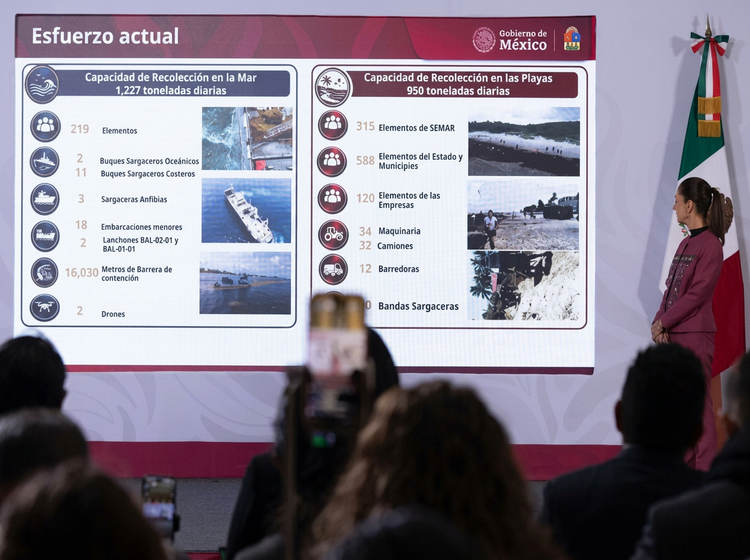
El secretario de Marina Raymundo Pedro Morales explicó la mecánica. La capacidad de recolección en el mar ha aumentado de 627 a 1 mil 227 toneladas diarias a lo largo de este año, con otras 950 toneladas diarias manejadas en las playas mismas. La etapa uno eleva la cifra de mar adentro a 1 mil 870 toneladas diarias.

La lista de compras para 2026 incluye:
- Dos remolcadores especializados
- Seis embarcaciones costeras para sargazo
- 1.5 kilómetros de barreras dinámicas
- Aproximadamente 50 kilómetros de barrera de contención costera
La etapa dos, programada para 2027, eleva el objetivo a 4 mil toneladas diarias utilizando embarcaciones de aguas abiertas, más barreras y sistemas de confinamiento. La flota actual cuenta con dos barcos para sargazo y 11 embarcaciones costeras, apoyados por equipo anfibio y personal de los tres niveles de gobierno más operadores privados.
"La intención es revertir la tendencia y recolectar principalmente en el mar", dijo Morales.
El sargazo en Tulum ha superado 10 mil 900 toneladas
El plan se concentra en cinco corredores: Cancún, Playa del Carmen, Puerto Morelos, Tulum y Mahahual. En conjunto cubren entre 40 y 50 kilómetros de línea costera, una franja angosta de la costa estatal que absorbe la mayoría de sus visitantes y la mayoría de su presupuesto de limpieza.
Tulum ocupa el quinto lugar entre los municipios de Quintana Roo por volumen recolectado. Playa del Carmen encabeza con 33 mil 511 toneladas, seguida de Cancún con 21 mil 669, Puerto Morelos con 11 mil 574, y Othón P. Blanco con 10 mil 945, una diferencia de dos toneladas respecto a Tulum. La clasificación se ha mantenido constante durante la temporada.
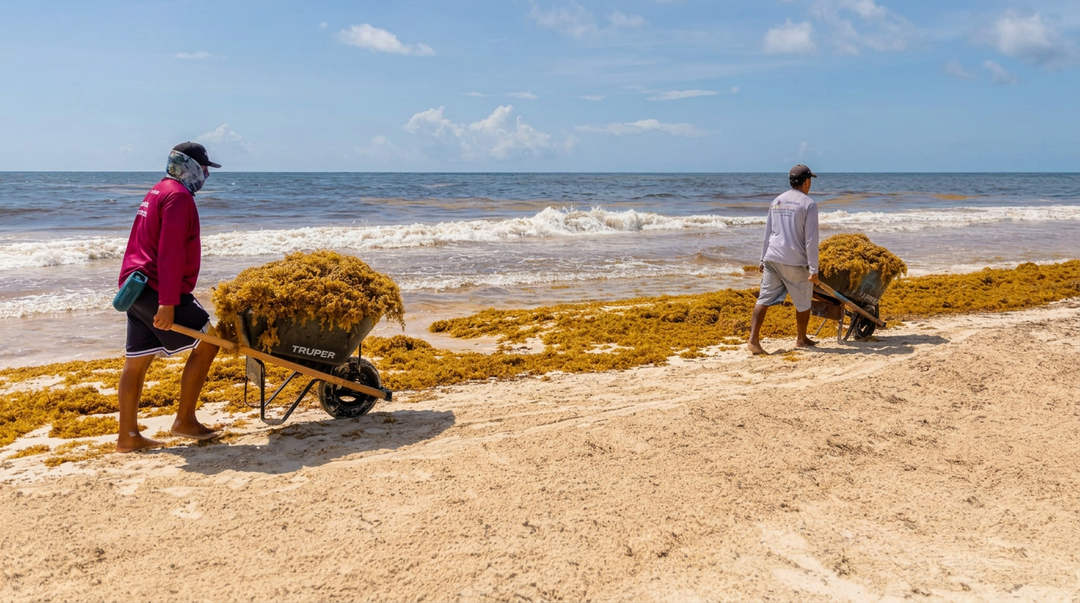
La cobertura de barreras cuenta una historia más pequeña de la que sugiere el anuncio federal. Las cifras estatales ponen las barreras anti-sargazo instaladas en 9 mil 800 metros, aproximadamente 61 por ciento de los 16 mil 030 metros que Quintana Roo planeó para este año. Los 50 kilómetros que la Semar tiene intención de comprar serían infraestructura de otro orden, desplegada en cinco municipios en lugar de concentrarse en una sola playa.
Una ruptura en 2011 y 27 veces el promedio histórico
La secretaria de Medio Ambiente Alicia Bárcena atribuyó el aumento a la desintegración del Mar de los Sargazos en 2011, que empujó la macroalga hacia el Atlántico tropical. Las corrientes y el viento la llevan al Caribe desde ahí, y México es uno de los muchos receptores.
Sus cifras para este año son las más agudas en el registro. Hasta 90 mil 538 toneladas de sargazo han estado flotando frente al Caribe mexicano en un solo día, contra un promedio más cercano a 40 mil en otros años. Alrededor del 10 por ciento de esa masa llega a la costa de Quintana Roo, lo que equivale aproximadamente a 9 mil 054 toneladas diarias en máxima intensidad.
"En 2026 fue cuatro veces más que 2025 y 27 veces el promedio histórico", dijo Bárcena, calificando el año como genuinamente difícil y atípico.
Semarnat registró 92 mil 782 toneladas recolectadas en 2025. El conteo de 2026 ya alcanza 96 mil 151, con los meses más intensos de la temporada aún no cerrados.
De alga mojada a biocarbón y fertilizante de exportación
El sargazo extraído del agua debe secarse antes de poder ser manejado, un paso que elimina los compuestos que lo hacen tóxico al descomponerse. La arena se separa entonces y se devuelve, y lo que queda se convierte en un polvo orgánico con usos industriales. Las empresas en Quintana Roo ya reciclan el material mojado en composta, parte de la cual se exporta para uso agrícola.
El director de Fonatur Sebastián Ramírez dijo que su dependencia se enfocará en la disposición final y aplicaciones de economía circular, señalando a empresas que producen biofertilizantes, biocarbón y biogás a partir de la cosecha.
También nombró el problema del que más se quejan los operadores hoteleros. Levantar sargazo de una playa tiende a levantar la playa con él. Sheinbaum ha pedido a Fonatur que documente prácticas de remoción que preserven la arena y que coordine esos métodos con los hoteleros.
Un grupo de aproximadamente 150 científicos, trabajando con Semarnat y la secretaría de ciencia, estudia las causas del aumento y los usos que podría soportar la biomasa.
Diez satélites vigilando 140 playas
La gobernadora Mara Lezama dijo que el estado opera un centro de monitoreo ambiental que obtiene imágenes de 10 satélites de la Agencia Espacial Europea para seguir más de 140 playas, emitir pronósticos diarios y predecir dónde caerá el alga. Su administración ha gastado más de 770 millones de pesos en este fenómeno desde que tomó cargo.
La intercepción antes de la llegada a tierra, dijo, ha probado ser el enfoque más efectivo disponible.
Sheinbaum dijo que otra embarcación para sargazo se unirá a la flota pronto. Nadie en el podio dio una fecha para ello, ni para los dos remolcadores y seis embarcaciones costeras que la etapa uno se supone que debe comprar. El próximo punto fijo en el calendario es octubre 1, cuando Cancún será anfitrión de una conferencia internacional de dos días sobre sargazo. Para entonces el total de 2026 habrá avanzado bien más allá del récord que rompió en julio.
¿Preferirías ver este dinero invertido en embarcaciones en el mar o en las cuadrillas que limpian las playas de Tulum cada mañana? Únete a la conversación y comparte tu perspectiva con nosotros en Instagram y Facebook en @thetulumtimes.
This image was generated or enhanced using artificial intelligence to improve its quality.

The Tulum Times · Newsletter
La nota sigue en tu correo.
Lo esencial de Tulum y contexto local, un par de veces por semana. Gratis.
Sin spam. Cancelá cuando quieras.
Tulum Sargassum Updates and Beach Conditions
Live seaweed conditions, cleanup updates, forecasts, and practical beach planning across Tulum and the Riviera Maya.

“The best journalists reporting from paradise, highlighting the heroes that keep Tulum the most beautiful place in the world! THANK YOU!”