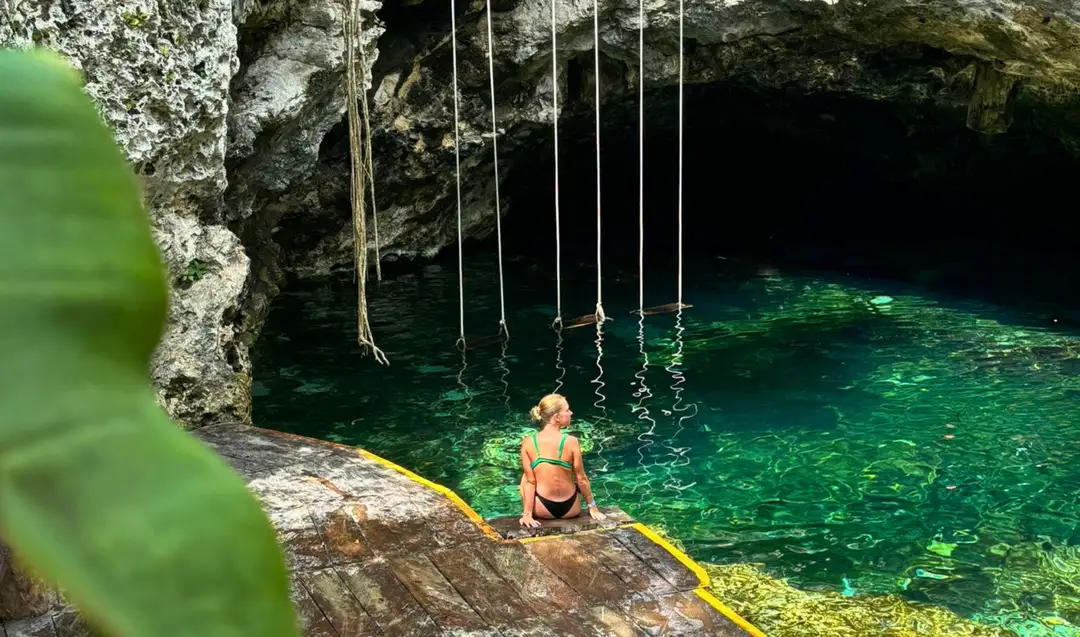
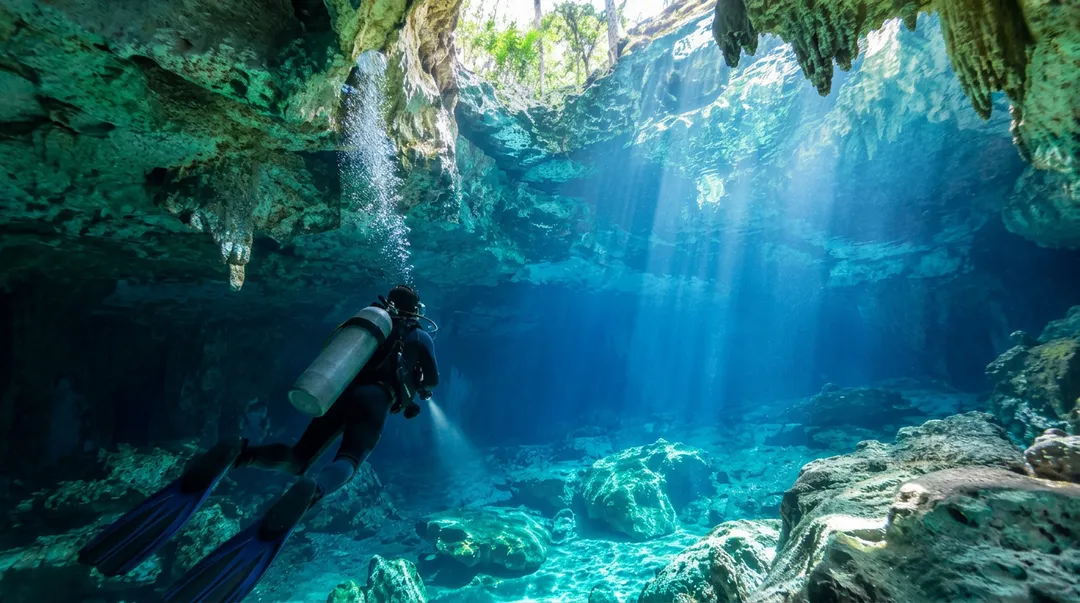
Tulum cave diving draws on at least 50 cenotes suited for diving and many more that are closed off on private land, says a veteran diver who wants the sector united in protecting them.
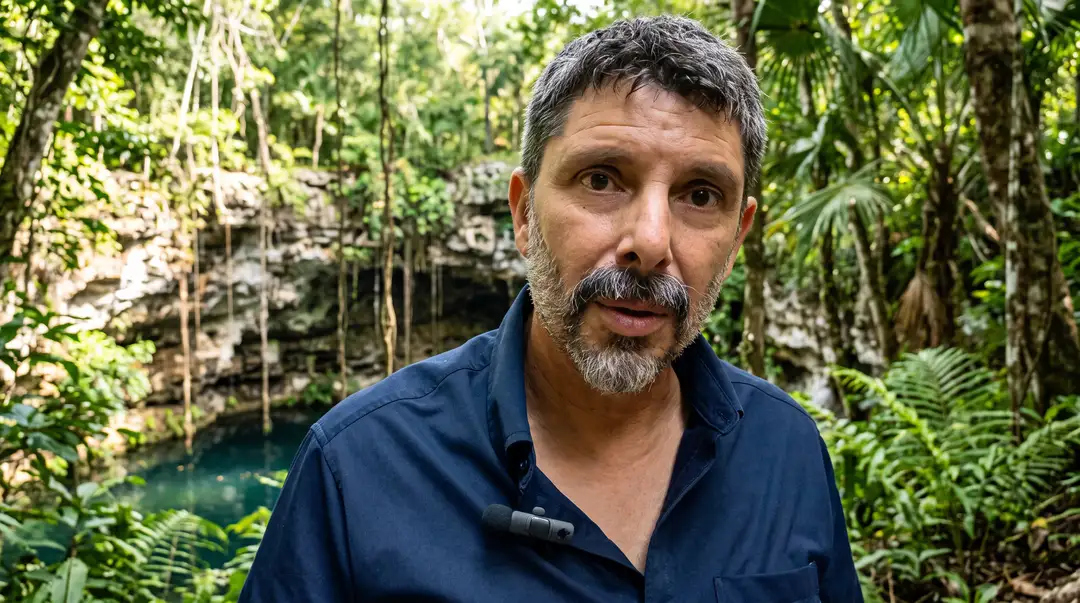
Manuel Rodríguez Lavadores, a former member of the divers' association Buzos de Cenotes y Mar, known as Bucema, laid out his proposal in an interview published November 19 by La Jornada Maya. He said he personally knows about 100 sites in the area.
The plan has three parts. Rebuild the cooperation the association once provided. Give overdue credit to the divers who mapped Tulum's flooded caves. And sit down with authorities, ejidos, cenote owners, and divers to write clear rules on how those sites are used and protected. It lands as the dry season opens, the months when visibility peaks and the largest number of visiting divers arrive, and every one of those cenotes is a window into the aquifer that supplies the peninsula's fresh water.
Bucema's collective spirit as the model
Rodríguez described Bucema as the organization that once gave Tulum's diving sector structure and a shared voice for promotion. He wants that collective approach back.
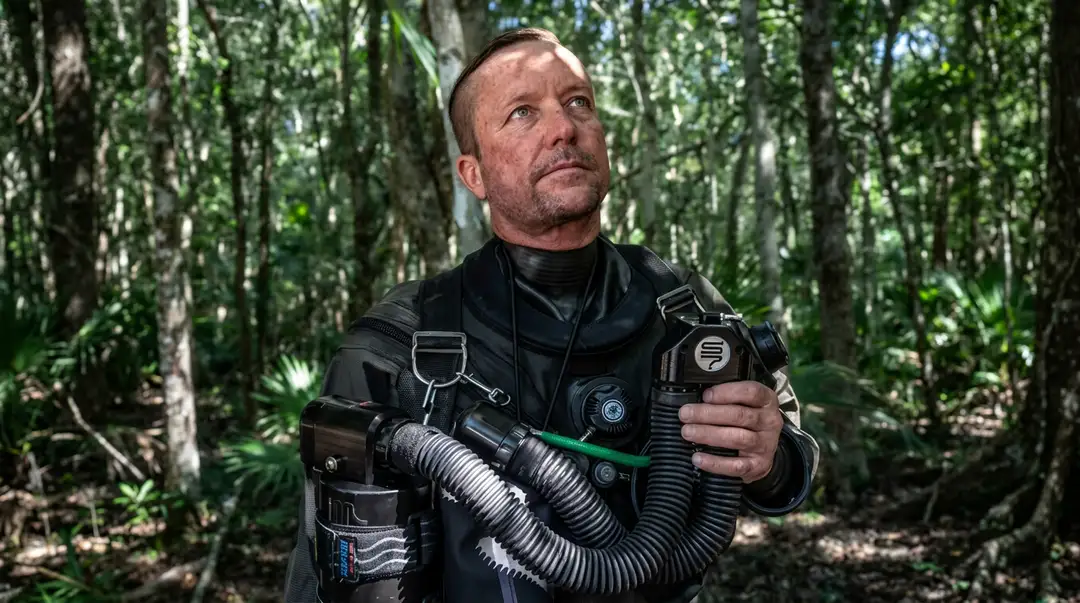
In his view, cooperation has frayed over personal differences and because many newer divers entering the trade have stayed outside common efforts. One result, he said, is that book presentations and cenote-themed events are often staged in Cancún or Playa del Carmen, and those destinations capture much of the spending generated by Tulum's caves.
He said he is now working through Tulum's tourism promotion council, the Consejo de Promoción Turística, to organize events and meetings that bring in visitors, sponsors, and specialists, and that put local divers in front of them.
Four cave divers he says deserve more credit
Rodríguez named Alejandro Álvarez, Fernando Dávila, Robbie Schmittner, and Kim Davidsson as Tulum-based divers of international standing. Their contributions to mapping the caves and to the history of cave diving, he said, have never been properly recognized.
Schmittner is the best known outside the region. He directed the underwater survey work for the Gran Acuífero Maya project, which, in January 2018, confirmed a passage linking Sac Actun with the Dos Ojos system and revealed a continuous flooded cave of about 347 kilometers. By then he had spent 14 years on Sac Actun alone.
Davidsson, a Tulum-based cave instructor, worked alongside Schmittner in 2004 to connect sections of the cave around Cenote Abejas, a few kilometers north of town, to Sac Actun, according to published accounts of the survey.
Rodríguez did not detail the work of Álvarez or Dávila in the interview.
El Pit and Angelita as stages for Tulum cave diving events
Among the sites he highlighted, Sac Actun leads. The system, part of the Gran Acuífero Maya, runs for hundreds of kilometers of underground rivers, lies entirely within the municipality of Tulum, and has roughly 226 known cenote entrances, according to Guinness World Records. The nearby Ox Bel Ha system has held the title of longest known underwater cave since 2023, with Sac Actun in second place.
He also pointed to El Pit and Angelita, which he said suit both scuba diving and freediving and could host specialized events that widen what Tulum offers visitors.
Angelita, about 17 kilometers south of town, reaches a depth of roughly 60 meters. Near 30 meters, where freshwater rests atop saltwater, a layer of hydrogen sulfide forms a milky cloud that divers descend through, with the trunks of submerged trees rising from it. The site is reserved for advanced divers.
A cenote law that never took hold
Survey work in the caves has produced important scientific and historical finds, Rodríguez said, while regulation, supervision, and conservation remain unfinished business.
The best-known example came from the same underground network. In 2007, Gran Acuífero Maya researchers working in Sac Actun found the skeleton of a teenage girl who lived about 13,000 years ago, one of the oldest human remains recorded in the Americas.
Rodríguez recalled that an earlier initiative to legislate specifically on cenotes never gained traction. He wants the subject back on the table, this time with enforceable protection mechanisms.
Ejidos, owners, and divers at one table
His proposal calls for agreements among government authorities, ejidos, private cenote owners, and the diving community. Those agreements would set rules to protect the sites and spell out the conditions under which they can be used.
Ownership is central to that framework. Many of the sites he knows sit on private property and remain closed to the public, so any rulebook for cave diving in Tulum depends on the people who hold the land around the entrances.
He did not say which authority should lead the talks or when they could begin.
What he did say is that Tulum already has the natural conditions, the technical knowledge, and the people to regain its international standing as a cave-diving capital. The obstacle, in his account, is whether the sector can set its differences aside and agree on a common agenda. "We are sitting on a gold mine," he said.
What would it take for Tulum's divers, ejidos, and cenote owners to agree on shared rules for the caves? Join the conversation and share your perspective with us on Instagram and Facebook at @thetulumtimes.

The Tulum Times · Newsletter
The story continues in your inbox.
Essential Tulum news and local insight, a few times a week. Free.
No spam. Unsubscribe anytime.
Tulum Cenotes, Ruins, and Practical Visitor Guides
Guides, access updates, regulations, and practical planning around cenotes and the Tulum archaeological zone.

“The best journalists reporting from paradise, highlighting the heroes that keep Tulum the most beautiful place in the world! THANK YOU!”