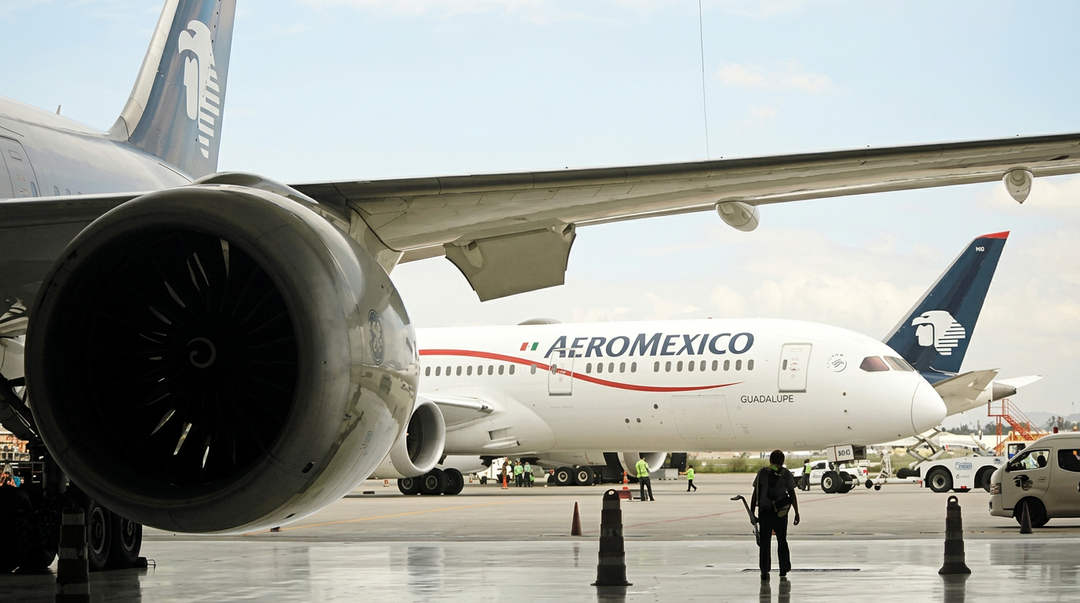

Airlines are leaving the Felipe Carrillo Puerto terminal because of the Tulum airport's military management and not because of the low season, the national president of Mexico's incoming tourism agencies said this week.
Sergio E. González Rubiera, who leads the Mexican Association of Incoming Tourism Agencies (AMATUR) and serves as Norway's honorary consul for Quintana Roo and Yucatán, made the argument in remarks published on October 8 by Grupo Animal, in a report by Verónica Fajardo. His case rests on competence rather than intent. The airport is run by an institution organized around security, he said, with no experience in the commercial end of receptive tourism.
The quarrel comes with dates attached. Aeroméxico stopped flying to Tulum on September 30, Volaris stops on January 7, and the terminal that local hotels, transport operators and agencies were told would carry the town's next decade is entering high season with its domestic schedule stripped back. The people who sell Tulum for a living are now arguing publicly about who should run the place.
An institution built for security, selling sun and sand
González Rubiera called the suspension of frequencies and flights lamentable, then went past the schedule. He questioned whether the armed forces belong at the head of commercial infrastructure in a region whose income comes from hotels and tourism services.

What are the military going to know about tourist airports and international promotion?
He put that question to Grupo Animal, and followed it with a complaint about access. The administration shows no willingness to seek advice from Quintana Roo's own tourism specialists, he said, and its institutional secrecy has become a persistent obstacle to decisions made jointly with the industry. In his reading, the airport opened with momentum and then lost it, because the people running it never tied the terminal to how the global tourism business actually moves travelers.
The ride into town runs about 1,500 pesos
The complaint does not stop at route maps. González Rubiera pointed at the ground as well, naming the physical distance from the center of Tulum, the cost of local transport, and the gradual retreat of car rental companies as steady passenger traffic failed to appear. Measured against Cancún and Cozumel, he argued, those conditions erode whatever advantage the terminal's position was supposed to give it.
Our own reporting lines up with that part. There is no official ground transport tariff published for the terminal. The fare list in circulation, compiled by Azteca Quintana Roo from figures users shared on social media and described by that outlet as approximate, puts a taxi from the airport to the town center at about 1,500 pesos. The ADO bus covers the same short hop for 290 pesos per person, with two departures a day, at 9:00 and 14:00.
That is the gap local business owners want a seat to address. They are asking for a consultative council seating the private sector, travel agencies, and local authorities alongside the administration, so the destination can be promoted with professional marketing tools rather than on sovereignty and public administration criteria alone.

Why the Tulum airport military management rejects the crisis reading
The administration answered the week's reporting with numbers. In a statement issued on October 6 and carried by UnoTV, among other outlets, the terminal said it is operating normally and that Aeroméxico's pause is an ordinary commercial adjustment tied to the low season in civil aviation, rather than evidence of structural failure.
Delta Air Lines, United Airlines and American Airlines are keeping their itineraries, according to that statement. For the winter cycle running from November 2026 to March 2027, the operator projects its cross-border operations rising 93 percent, from 552 to 1,064 scheduled flights. Air Canada, WestJet and Air Transat resume from October 24, with more than 710 additional international operations forecast for the period.
The operator is Grupo Mundo Maya, the state company controlled by the Secretaría de la Defensa Nacional. It was created as Grupo Aeroportuario, Ferroviario, de Servicios Auxiliares y Conexos Olmeca-Maya-Mexica and took its current commercial name in May 2025. Its institutional program for 2025 to 2030 lists 12 airports under its administration, as well as hotels, museums, and fuel operations.
One name on the reassuring list is contested. Two days after the statement, the Diario de Yucatán reported, citing Airline Geeks, that American Airlines will leave Tulum in January 2027 and cancel five routes, including Miami. Press counts of carriers that have announced a withdrawal include Aeroméxico, Volaris, JetBlue, Avianca, Copa Airlines and Discover Airlines, with American taking the total to eight.
Mexico City has offered a third explanation. At her October 5 press conference, President Claudia Sheinbaum attributed the cancellations to fuel costs, saying jet fuel had risen 116.5 percent in a year to an average of $ 194.90 per barrel, citing Platts. She said the government is in permanent contact with Aeroméxico, Volaris and Viva over airport fee increases, and announced that the heads of the Sedena-run companies, Grupo Mundo Maya among them, would present a diagnosis of the terminal on October 8. Volaris, when it confirmed its exit, cited low load factors, along with the airport use fee, fuel prices, and air navigation charges.
107,751 passengers in January, 47,353 in June
The numbers underneath the argument are not themselves in dispute. Monthly air passenger flow at Tulum fell from 107,751 passengers in January to 47,353 in June, a 56 percent drop over six months, according to the state tourism information system.
Grupo Mundo Maya reported the airport closed 2025 with 1,244,661 passengers, 0.9 percent above the 1,233,459 of 2024. International traffic in the first quarter of 2026 totaled 178,000 passengers, down 34 percent from the same quarter a year earlier, and estimates cited by UnoTV put the full-year total near 700,000.
This publication reported in May, in a piece last updated on September 4, that the international map had already shrunk from 12 destinations in 2024 to 4 routes into the United States, and that daily international departures had fallen from as many as 10 to 3.
A fee fight that predates the route losses
AMATUR's quarrel with this terminal is older than the empty gates. In 2024, González Rubiera told The Tulum Times that the airport charged incoming agencies 800 pesos plus tax for what it classified as sporadic service, against 29 pesos per unit for an hour of airport access in Cancún. For an agency running ten vehicles, he said at the time, the charge reached 44,000 pesos in a single monthly payment, and the association was waiting on an answer from the military authorities while Governor Mara Lezama mediated.
Two years on, the request has changed shape. Instead of a tariff review, the industry is asking for a chair.
As of Sunday, the administration had not publicly responded to the call for a consultative council, and its October statement focused on flight counts rather than on who makes the commercial decisions. The first test of those counts arrives on October 24, when the three Canadian carriers are due back. The second comes on January 7, when Volaris stops selling Tulum. The 1,064 operations the operator has promised cannot be counted until March 2027, which is also when the winter that was supposed to settle this argument ends.
Should Quintana Roo's tourism industry have a formal seat in how the Tulum airport is run and promoted? Join the conversation and share your perspective with us on Instagram and Facebook at @thetulumtimes .

The Tulum Times · Newsletter
The story continues in your inbox.
Essential Tulum news and local insight, a few times a week. Free.
No spam. Unsubscribe anytime.
Transportation in Tulum: Taxi, Bus, Transfers, and Mobility
Taxi fares, buses, transfers, road changes, mobility updates, and practical transport guidance for Tulum.

“The best journalists reporting from paradise, highlighting the heroes that keep Tulum the most beautiful place in the world! THANK YOU!”