


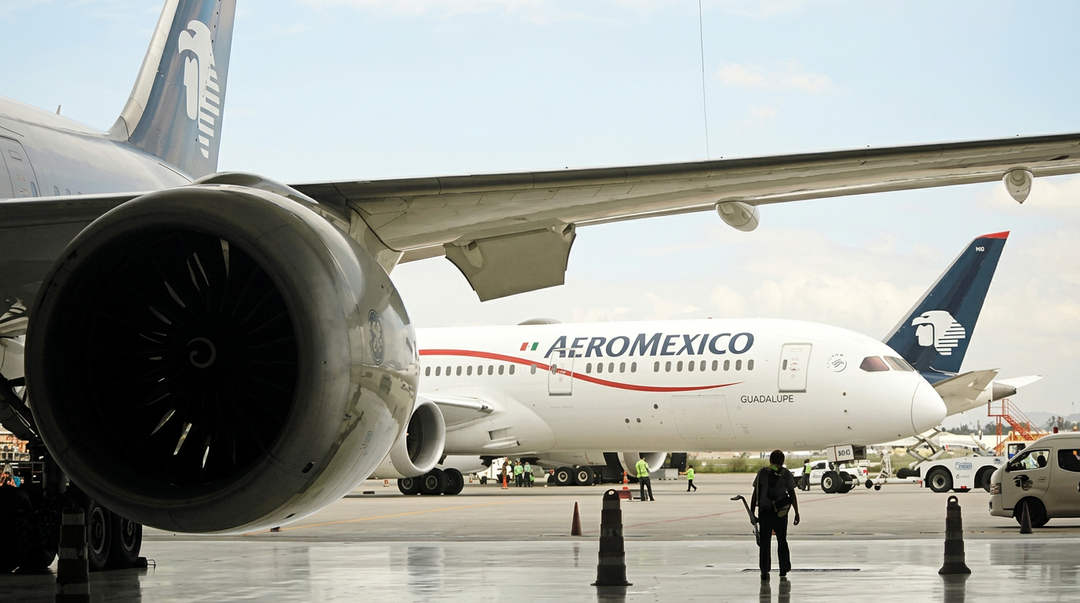
President Claudia Sheinbaum told her Thursday morning briefing that Aeroméxico pulled its Tulum flights over the cost of jet fuel rather than insecurity, and that international carriers will begin returning on October 24.
Her account puts the decision on a fuel invoice rather than on a crime rate.
The distinction carries more weight here than it does in Mexico City. Aeroméxico flew its last Tulum flight on September 30, and Volaris has told the market it will stop on January 7, 2027, both of which fall within the weeks the town had been counting on for its winter recovery. How the story travels, as a security story or a cost story, follows the destination into the places where people decide where to spend January, which is why the question of whether Tulum is safe keeps arriving attached to airline schedules.
The president calls the insecurity version false
Asked about the drop in tourism and the versions tying the route cancellations to violence, Sheinbaum said airlines make commercial decisions. "It is false that Aeroméxico withdrew over security problems," she said, rejecting profitability as the reason as well.
Carriers adjust to jet fuel prices, she added, while the tourism outlook across the southeast holds. Tulum still receives visitors in her account, and the archaeological zone stands to recover once the question of free entry to Parque del Jaguar is settled.

Ricardo Flores González, director general of Grupo Mundo Maya, the army-administered company that operates the Tulum airport, gave the same explanation from the operator's side. Aeroméxico, he said, notified the group that it was temporarily withdrawing its flights "because of the high cost of fuel, as a matter of its business strategy."
What Aeroméxico and Volaris said about their Tulum flights
The airlines put it differently in their own statements, and fuel was one item on a longer list.
Aeroméxico described a temporary suspension, based on current market conditions that have affected several carriers, said it would continue monitoring demand, and operated its final Tulum service on September 30. Volaris was more specific about the arithmetic. At the start of October, it named the non-resident tax, the airport use fees announced by various terminals, fuel, and air navigation charges among the cost increases facing the industry, and said it had reviewed route profitability and would temporarily suspend "flights with lower load factors," Tulum included, from January 7, 2027. Ticket sales beyond that date were to close within days.
One gap between the two accounts went unaddressed on Thursday. Flores said Volaris is restricting only its Guadalajara to Tulum service and keeping the rest of its flights, while the airline itself announced the suspension of its operations to and from Tulum from that January date.
October 24, and three Canadian carriers
What the government offers in response to those departures is a calendar.
Sheinbaum said international airlines will return from October 24 with more flights, with three Canadian carriers resuming service and Delta, United, and American doubling their operations. The Canadian market grew over the season, she said. Mexicana de Aviación, which has maintained daily service to Tulum throughout the retreat, adds 24 flights across December and part of January, and Flores expects international operations at the airport to climb by 93 percent. Cancún gets five new routes and 15 additional weekly frequencies.
That return date sits one day ahead of the winter program the state already published. As The Tulum Times reported in September, Quintana Roo tourism secretary Bernardo Cueto put the season at 13 destinations served by 10 airlines between October 25 and March 27, with Air Canada, Air Transat, WestJet, and United confirmed. The high season itself was described twice on Thursday at two different lengths. The president put it from November to April 2027. Flores put it from November to March.
Arrivals fell 33.6 percent from January to August
Official figures reported at the start of October put visitor arrivals to Tulum 33.6 percent below the same eight months of 2025, with Cancún down 6.3 percent. International passenger volume at Felipe Carrillo Puerto airport fell 34 percent in the first quarter, and daily international departures dropped from 10 to three over the past year as Avianca, Copa Airlines, JetBlue, and Volaris Costa Rica suspended service. Industry accounts have tied the decline to sargassum on beaches and to rising costs for travelers and airlines.
The companies reporting on Thursday brought their own numbers. Grupo Mundo Maya counted more than 2.5 million passengers across its terminals in nearly 70,000 operations to September 30, an average increase of 8.14 percent against 2025, and said it expects to break even between 2027 and 2028. Mexicana reported more than 1.27 million passengers, 31 percent above last year, a fleet now at 10 aircraft, and 847 direct jobs. Sheinbaum said each of the companies the Defense Ministry coordinates is operating at its break-even point and needs no additional budget support.
Hotels say the rooms are already booked
The demand side of this winter reads better than the route map.
Confirmed reservations put hotel occupancy in Tulum at 80 to 85 percent across November and December, according to Claudio Cortés Méndez, the CROC commissioner in town, as reported by this publication in August. He placed October above 60 percent, the level he has described as the one that keeps a hotel's full payroll intact.
Two dates now carry the season. International flights are due back on October 24, and Volaris is scheduled to leave on January 7. Neither the airport nor the state has published weekly frequencies for any of the returning routes.
Do you read the thinner schedule at Tulum airport as a cost problem or a security problem? Join the conversation and share your perspective with us on Instagram and Facebook at @thetulumtimes.

The Tulum Times · Newsletter
The story continues in your inbox.
Essential Tulum news and local insight, a few times a week. Free.
No spam. Unsubscribe anytime.
Flights to Tulum and Live Arrival Updates
Live arrivals, departures, route updates, and air connectivity coverage for Tulum and the Mexican Caribbean.

“The best journalists reporting from paradise, highlighting the heroes that keep Tulum the most beautiful place in the world! THANK YOU!”


