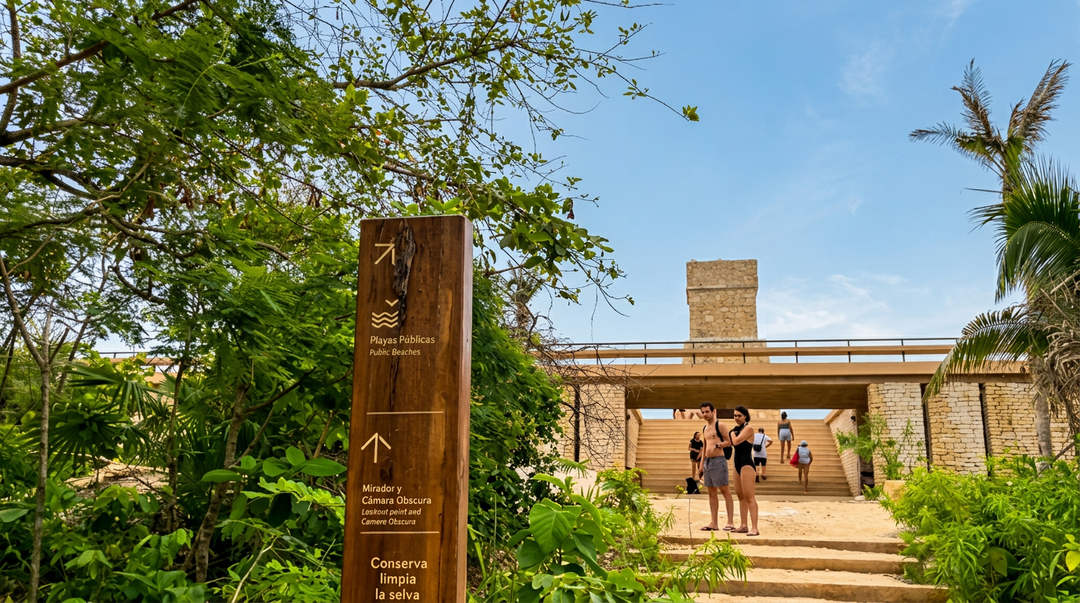

The Tulum museum inside Parque del Jaguar asks nothing at its door. Reaching that door is a separate charge, and since July 20, it costs a foreign visitor 100 pesos.
Governor Mara Lezama Espinosa has been presenting the Museo Regional de la Costa Oriental as a meeting point for visitors and residents of Quintana Roo, pointing to a collection of more than 300 pieces of Maya archaeology and to what her office described as completely free access, Tuesday through Sunday, from 9 a.m. to 5 p.m. She walked the halls with Margarito Molina, who heads the INAH center in Quintana Roo. The account released by the state government carries no date for the visit.
Two details in that description need a footnote. Entry to the museum itself costs nothing, but INAH has made it clear that because the building sits inside Parque del Jaguar, visitors must pay the park's access fees to reach it. And the museum is not new. It opened on September 7, 2024, the same day as the park around it.
Free at the door, 100 pesos at the gate
The arithmetic changed in July. A decree signed by President Claudia Sheinbaum, published in the Diario Oficial de la Federación and in force since July 20, sets general admission to Parque del Jaguar at 0 pesos for Mexican visitors and 100 pesos for foreign visitors. Gafsacomm, the state-owned airport and railway operator, is sectorized under the Defense Ministry and collects it.
Anyone who also wants the Parque Nacional Tulum and the archaeological zone pays a second, unified charge on top of that. Mexican visitors pay 80 pesos from Monday to Saturday; foreign visitors pay 165 pesos. Residents of the municipality of Tulum enter at no cost. On Sundays, Mexican visitors do not pay for the national park, and Mexicans and foreigners with residency in Mexico enter the ruins free. Our breakdown of the 2026 fees sets out the full table.
Stacked together, the two charges produce the 265 pesos the federal tourism ministry announced in July for a foreign visitor who wants everything. For a foreign traveler who only wants the museum, the sum is shorter. One hundred pesos at the park gate, nothing at the museum desk. For a Mexican visitor, the governor's description now holds without qualification, whereas it did not a year ago. The rates run through the 2026 and 2027 fiscal years.
A Late Classic lobster plate in Sala 2
The building houses 1,200 square meters of exhibition space, making it the largest cultural venue along the Maya Train route and the largest in Quintana Roo. Three permanent halls, an immersion room with curved high-definition screens, four audiovisual stations, eight electronic labels, five dioramas and a scale model of the Tulum archaeological zone.
The figure the governor cited, more than 300 pieces, comes from INAH and covers archaeological and ethnographic objects pulled from several of the institute's collections. Fifty reproductions sit alongside them, 25 in the halls and 25 outdoors.

The story those halls tell begins long before the Maya. It opens in the Late Pleistocene, between 40,000 and 10,000 years before the current era, then moves through the Maya past, the arrival of Europeans, the resistance that followed and the peninsula's communities today.
INAH points to a tetrapod plate depicting a lobster, from the Late Classic period between 600 and 900 A.D., as one of the emblematic objects. It sits in Sala 2. The state government's account mentioned a figure from Maya tradition, worked in full, without naming the piece or placing it in a period.
The Tulum museum drew 98,400 visitors in its first year
INAH counted 98,400 people through the doors between the opening in September 2024 and the first anniversary a year later.
Set that against the site next door. The archaeological zone of Tulum receives more than 3,000 visitors a day, according to the institute's own figures, and ranks third among the most visited pre-Hispanic sites in the country, behind Chichén Itzá and Teotihuacan. The museum's entire first year is roughly what the ruins absorb in a month.
Part of the gap is the clock. The park runs from 8 a.m. to 7 p.m. with last entry at 5. The ruins open at 8 and close at 5, with the last ticket sold at 3:30. The museum keeps the shortest schedule of the three, 9 to 5, and it closes on Mondays. Price was the other barrier. We profiled the museum in 2025, when Gafsacomm's published list put the park fee for a foreign visitor at 295 pesos, according to La Jornada Maya.
Embroiderers, film screenings and children's workshops
The programming is where the museum has done most of its work with the people who live here. The state's account lists conferences, film screenings, workshops for children, cultural performances and the participation of bordadoras, the embroiderers who carry Maya design into clothing people still wear.
INAH's summary of that first year lists exhibitions, workshops, and talks designed for students, tourist guides, and nearby communities. Temporary installations have moved through painting, sculpture and photography. The building was designed for that. Alongside the permanent halls, it has a room for temporary shows and dedicated space for workshops, conferences and the film club.
September 7 marks two years
The second anniversary falls on September 7. Last year INAH marked the first with a free program on Saturday, September 13, which opened with a ceremony asking permission of the original guardians of the territory and continued with the Ballet Folclórico DanzArte and a mariachi group, both from the Tulum school EducArte.
Neither INAH nor the state government has published a program for this year. For anyone weighing a visit before then, nothing on the practical side has moved. Tuesday to Sunday, 9 to 5; no charge at the museum desk; 100 pesos at the park gate if the passport is foreign.
Have you made it inside the Museo Regional de la Costa Oriental, or does the park gate keep you out? Join the conversation and share your perspective with us on Instagram and Facebook at @thetulumtimes.
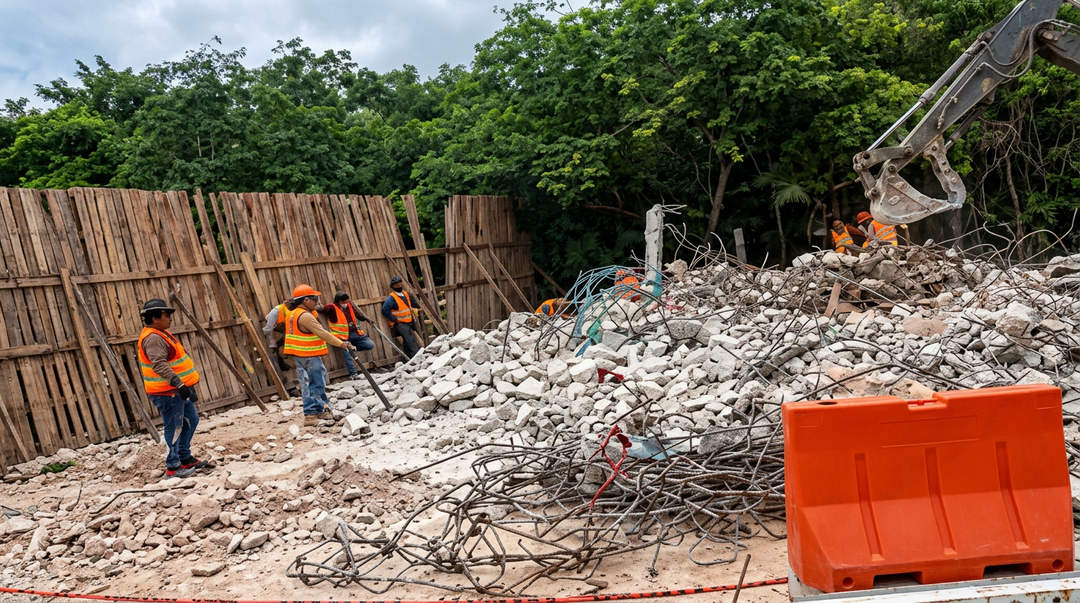
This image was generated or enhanced using artificial intelligence to improve its quality.

The Tulum Times · Newsletter
The story continues in your inbox.
Essential Tulum news and local insight, a few times a week. Free.
No spam. Unsubscribe anytime.
Tulum Cenotes, Ruins, and Practical Visitor Guides
Guides, access updates, regulations, and practical planning around cenotes and the Tulum archaeological zone.

“The best journalists reporting from paradise, highlighting the heroes that keep Tulum the most beautiful place in the world! THANK YOU!”