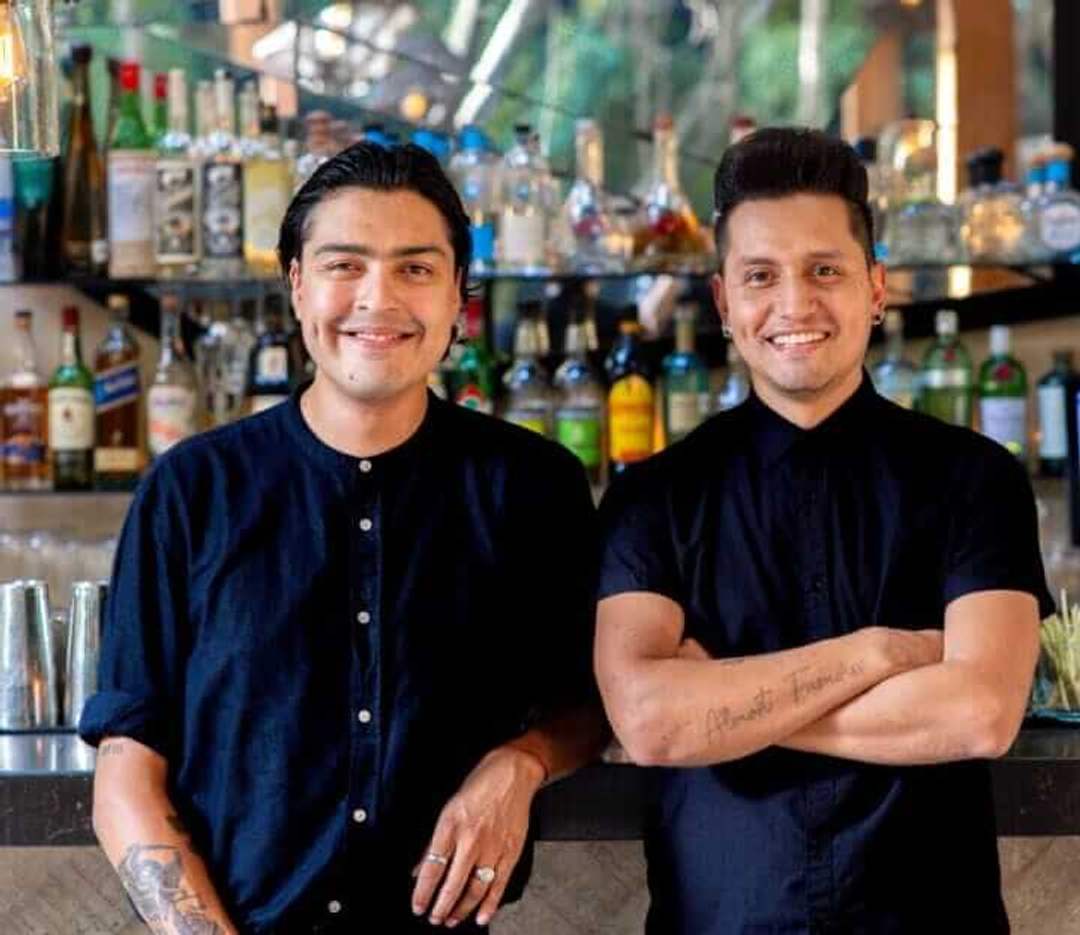
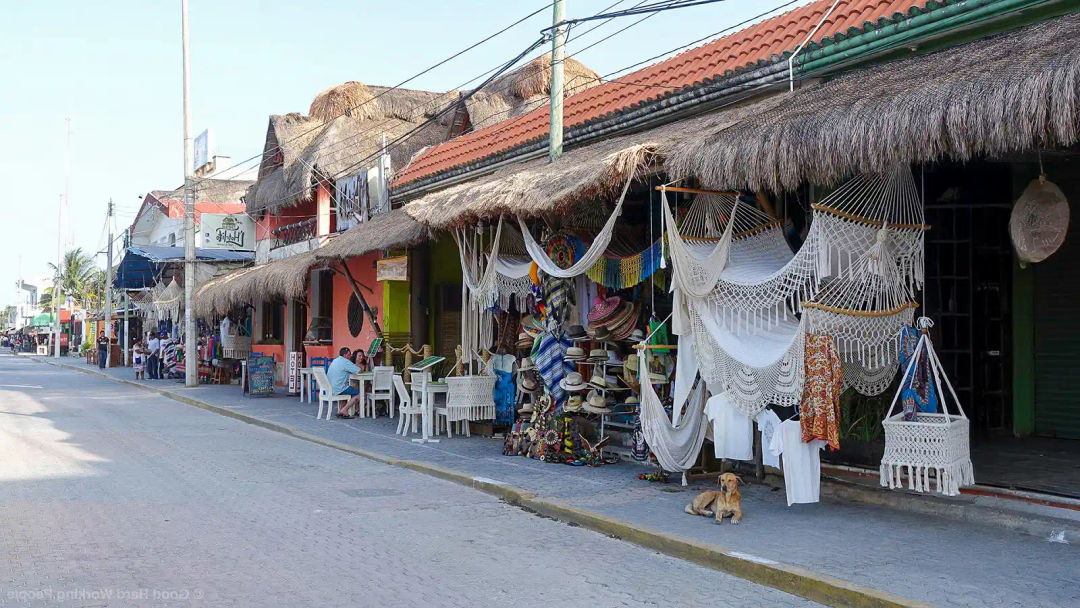
Guillermo Fernández has run a restaurant in Tulum for 15 years. He watched the town go from a backpacker stop to a global destination, adjusted to every boom and every slow season, and built a business that survived all of it. What he is facing now, he says, is different. "The repunte lasted only a few weeks and then the decline came back," he said. Sales in his establishment have fallen by up to 60% compared to previous years. Several of his peers have already shut their doors.
Fernández is not an outlier. Across Tulum's food and beverage sector, from the taco stands in the pueblo to the beach-zone restaurants that once commanded $20 cocktails and full tables on a Tuesday night, the story in 2026 is the same: fewer customers, fixed costs, and a municipal government that has offered no relief. According to data from the Quintana Roo Commerce Council, the destination saw a 15% reduction in long-standing local businesses over the 18 months preceding May 2025. Fernández estimates that between eight and 15 known establishments have closed in recent months specifically due to economic pressure. No official municipal tally has been published.
The cost structure that does not adjust when revenue disappears
Running a restaurant in Tulum during a tourism contraction means operating inside a cost structure built for boom conditions. Municipal operating licenses alone run approximately 40,000 pesos annually, a figure Fernández says has not been discounted, deferred, or offset by any government support program despite the prolonged downturn. Rent along the hotel zone and pueblo corridors was negotiated during years of record occupancy. Supply costs have not fallen. Staff still need to be paid.
What has changed is the revenue side. Mexico's Tourism Secretariat reported that the country received 8 million international visitors in January 2026, an 8.5% increase from the previous year. Tulum received none of that growth. Hotel occupancy in the coastal zone fell to 49.2% in September 2025, compared to 66.7% during the same month in 2024, a drop of 17.5 percentage points. Town-center occupancy reached as low as 15% during the summer months. A restaurant that calibrated its fixed costs to 70% hotel occupancy cannot break even at 15%.

The CROC union, which represents workers across Tulum's tourism sector, acknowledged in April 2026 that business closures were continuing even as visitor flow recovered above 80%. Claudio Cortéz Méndez, the union's local leader, described an economy that was improving in arrivals but had not yet restored job certainty or broader commercial stability. For the workers behind those closed shutters, the distinction between a recovering destination and one that has not yet stopped contracting is not abstract.
Who is to blame, and the answer depends on who you ask
The collapse of Tulum's gastronomy sector did not arrive without warning, and the people who lived through the boom years do not agree on what caused the bust. What they share is the conviction that the crisis was not inevitable.
Rodolfo Loeza, a longtime Tulum resident, offered a diagnosis that was specific and uncomfortable: "Police, waiters, overcharging, excessive sargassum, taxi drivers, shady deals, bad public servants, and a complacent population. The goose that laid the golden egg is gone." His list is not a polemic. It maps onto documented findings. In November 2025, Mexico's consumer protection agency Profeco conducted a special operation in Tulum and found tacos priced at 400 pesos, guacamole at 280 pesos, and hotel rooms exceeding 10,000 pesos per night in the main hotel corridor. The operation resulted in the suspension of more than a dozen commercial establishments for price violations.
José Luis, another resident, pointed directly at municipal governance: "The police and traffic officers have scared away tourism, and Mayor Castañón has no authority." The security dimension carries documented weight. In March 2025, Tulum's Municipal Security Secretary was murdered, an attack attributed to organized crime. The killing raised international concern about the safety of the destination and drew scrutiny to the relationship between local government and criminal organizations operating in the area. Visitor complaints about police extortion circulated widely on social media throughout 2025, with documented accounts of tourists being stopped at checkpoints and having cash and phones confiscated without legal basis.

Diego Liévano, a local businessman, framed the crisis as a market correction that Tulum brought on itself: "Tourists left because the town kept charging exorbitant prices in all sectors. Now they complain after milking the golden goose." Pablo Z. added an external dimension: "The economic crisis in the United States, inflation in Europe, and partial blockades in Asia contributed, in addition to poor municipal management." Both readings contain facts. International tourism flows to Mexico were disrupted by macroeconomic conditions in key source markets. They were also disrupted by a destination that priced itself out of repeat visits.
The self-inflicted dimension of the crisis
Tulum's price structure became a liability the moment demand softened. Average nightly hotel rates reached $450 in 2025, a 25% increase from 2023, even as occupancy collapsed. Beach clubs that required minimum consumption of 500 to 800 pesos per person to access the sand operated normally during the boom and became a reason not to return when travelers started comparing alternatives. Taxi fares that visitors accepted as a quirk of paradise became reasons to post warnings on travel forums.
Eduart Montejos, a local voice in the ongoing public debate about Tulum's decline, put the structural problem directly: "The real culprit is the government. They charge you for everything and haven't regulated prices. They thought tourists would put up with the abuse forever." His framing lands somewhere close to what Profeco documented: a market where pricing had become disconnected from value, and where the regulatory environment had not kept pace with the growth it enabled.
The point is not that every restaurant in Tulum overcharged, or that every business contributed equally to the perception problem. Many of the establishments now closing were not the luxury outliers that charged $20 cocktails. They were mid-range and local operators who absorbed a reputation crisis they did not create and are now absorbing an economic contraction they cannot reverse alone.
What the hotel sector says the future requires
David Ortiz Mena, president of the Mexican Caribbean Hotel Council and a representative of Tulum's hotel sector, offered a framework at a Mexico City panel in May 2026 that contrasted sharply with the daily reality on the ground. "The most successful destinations of the future will not necessarily be those that grow the most, but those that best preserve their value, identity, and environment," he said. He argued that Tulum's identity was built on nature, wellness, authenticity, and environmental connection, and that the risk for any destination is not just growing too much but losing what made it special. "No marketing campaign," he added, "can replace a well-managed territory."
The analysis is accurate. It is also delivered from the vantage point of a sector that, at its upper end, survived the 2025 contraction with luxury rate cuts and partial occupancy, while the mid-range and local commercial layer underneath it thinned out. The hotels that cut rates by 35% to maintain some occupancy are still open. The taquería that could not cut its 40,000-peso license fee by a single peso is not.
The municipal government's silence
Fernández says there have been no official outreach efforts from the Tulum municipal government to facilitate permits, reduce costs, or create relief mechanisms for the food and beverage sector during the crisis. The municipal budget for 2025 includes a program called Impulsa Tulum, described as a capacity-building initiative for local entrepreneurs, and a separate program for tourism sustainability. Neither has been publicly linked to emergency relief for businesses facing closure due to the tourism contraction. The municipal government did not respond to requests for comment on the state of the gastronomy sector.
The silence matters because the food and beverage sector is not a peripheral part of Tulum's tourism economy. It is one of its primary reasons to visit. Travelers do not fly to Tulum exclusively for the ruins or the beach clubs. They come for an experience that includes eating. When the restaurants that built a destination's culinary identity close one by one, the destination loses something that a new hotel or a repaired beach cannot replace.
Pedro's 23 years, and what they add up to
Pedro S., who has lived in Tulum for 23 years and watched the full arc of its transformation, offered the assessment that no official report contains. "Tulum is no more. I've been here 23 years, watched it grow and then fall so badly. It's sad that we let Tulum die. Now everything is ruined, we've all destroyed it. Now we have to eat beans and be content with little."
The verdict is harsh, and it is one that Tulum's institutional recovery narrative actively resists. The Tulum Renace plan, the Profeco operations, the beach access agreements, the airport incentives: all of them are premised on the idea that the destination can be rebuilt. The question that Pedro's 23 years of observation raises is whether the specific thing that made Tulum worth rebuilding, its identity as a place where the experience justified the price, can be recovered without first being honest about how completely it was surrendered.
Fernández is not waiting for that answer. He is watching his costs, counting his covers, and hoping the summer brings enough tourists to keep the lights on through another slow season. He has done it before. Whether the town around him has the institutional capacity to help him do it again is a question the empty tables at his neighbors' restaurants have already started to answer.
If you own or work in a Tulum restaurant, bar, or food business, what has this crisis looked like from inside? Join the conversation and share your perspective with us on Instagram and Facebook at @thetulumtimes.

The Tulum Times · Newsletter
The story continues in your inbox.
Essential Tulum news and local insight, a few times a week. Free.
No spam. Unsubscribe anytime.
Transportation in Tulum: Taxi, Bus, Transfers, and Mobility
Taxi fares, buses, transfers, road changes, mobility updates, and practical transport guidance for Tulum.

“The best journalists reporting from paradise, highlighting the heroes that keep Tulum the most beautiful place in the world! THANK YOU!”