

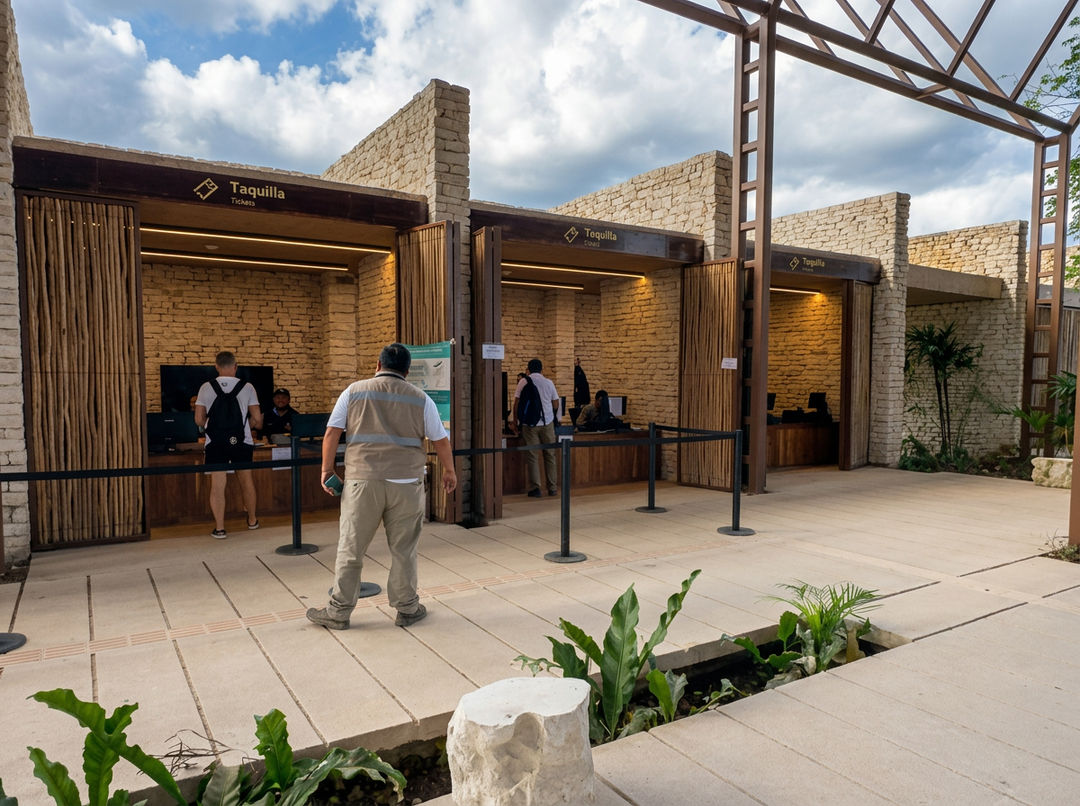
Tourism businesses in Tulum are pushing to negotiate promotional packages with Parque del Jaguar, the archaeological and beach park managed by Grupo Mundo Maya, in an effort to reduce entry costs and bring more visitors through its gates during a difficult stretch for the local tourism economy.
The effort reflects a broader anxiety in Tulum's hospitality sector. Occupancy and visitor numbers have fallen short of expectations in recent months, and local operators are looking for ways to make the destination more competitive without waiting for outside intervention. The Jaguar Park negotiations are one piece of a larger picture that also includes an unusually subdued forecast for the upcoming World Cup season.
Hotels Seek Alliance With Jaguar Park
Pamela Galicia, sales director at Holiday Inn Tulum, confirmed that the hotel is in active talks with park management and other tourism businesses to create joint offers for guests. She described the process as relationship-building, not yet a closed deal.
"We are working on approaching Parque del Jaguar and other types of companies. We are doing the work of bringing people in. If we can convince them that together we can achieve more, this can work better," Galicia said.
On the question of entry prices, Galicia acknowledged that some guests mention the cost, but said the overall response to the park experience has been positive. She noted that the site's combination of an archaeological zone, beachfront access, a museum, and ancillary services distinguishes it from a typical attraction.
"It is an archaeological zone right on the beach, with a museum and various services. I have not really heard that what they pay is not worth it. Prices may be a little high, but that is not in our hands," she said.
She added that for visitors with limited budgets, other archaeological sites in the region exist as alternatives, though she maintained that no guest has told her the Jaguar Park experience falls short.
A Blunter Assessment From Another Corner of the Sector
Not everyone in the industry is willing to soften the critique. Alonso Rivas, manager of Hotel Kukulcán, called current entry fees excessive and said they are a direct contributor to what he described as Tulum's tourism decline.
Under the current fee structure, Mexican nationals pay 255 pesos to enter Parque del Jaguar, while foreign visitors pay 415 pesos. On top of those charges, access to the archaeological zone itself carries additional fees ranging from 100 to 200 pesos, depending on the visitor's profile and the applicable rate tier.
"What is charged is excessive, and that has led Tulum into a tourism decline and, as a result, an economic one," Rivas said.
His position reflects a calculation that some operators share: when the total cost of a single attraction begins to feel prohibitive relative to the overall trip budget, visitors skip it. Enough skipped visits, the argument goes, and the destination loses its appeal.

Jaguar Park Fees and the Broader Tourism Picture
Parque del Jaguar opened in 2022 as a signature element of the Tulum waterfront, positioned to anchor the area's cultural tourism offer around the Tulum archaeological ruins. Grupo Mundo Maya, the private operator managing the site under a government concession, built out beach facilities, a museum, and food and services infrastructure around the existing ruins.
The pricing tension is not new, but it has become more visible as Tulum's tourism sector navigates a difficult period. Visitor volumes have not recovered to the levels the industry expected following the pandemic, and competition from other Caribbean destinations has intensified. In that context, any friction in the visitor experience, including a price point that feels steep for a single attraction, draws sharper scrutiny from local operators who depend on tourist traffic to sustain their businesses.
The promotional package model being discussed by Galicia and others would not change the park's listed prices. It would instead create bundled offers, potentially including hotel stays, that absorb part of the cost or position the park visit as an added value rather than an additional line item for budget-conscious travelers.
World Cup 2026 Will Not Move Tulum Hotel Rates
On a separate but related front, the local hotel industry is managing expectations around the FIFA World Cup 2026, scheduled to take place across the United States, Canada, and Mexico this summer. Several Mexican host cities, including Guadalajara, Monterrey, and Mexico City, have seen sharp hotel rate increases tied to the tournament.
Tulum is not among the host cities, and David Ortiz Mena, president of the Tulum Hotel Association, said the market dynamics here are fundamentally different from those in cities hosting matches.
"Regarding rates in Tulum, compared to the host cities, we do not see prices tripling or rates increasing. On the contrary, this summer season coincides with the lowest rate period of the year," Ortiz Mena said.
He attributed the stability to Tulum's highly competitive accommodation market. The destination has an unusually large inventory of both hotel rooms and short-term rental units listed on platforms such as Airbnb, which keeps pricing pressure in check regardless of external demand signals. The sheer volume of available inventory makes coordinated or widespread rate increases unlikely, he said.
Ortiz Mena also noted that Tulum's organized hotel sector has no plans to adjust rates in connection with the World Cup, since the tournament is not expected to drive meaningful incremental demand to the destination. The economic logic of Tulum's tourism, he explained, responds to factors specific to the local market, not to events unfolding in distant host cities.
Stability as a Signal, Not a Solution
Taken together, the two stories that emerged from recent conversations with sector leaders paint a picture of an industry managing expectations carefully. On the access side, businesses are working to make the destination's signature attraction more financially approachable. On the pricing side, they are reassuring visitors that Tulum will not price-gouge during the World Cup window.
Whether the Jaguar Park negotiations produce a concrete promotional agreement remains to be seen. Grupo Mundo Maya has not yet announced any partnership arrangements with the hotel sector, and no timeline for an agreement has been made public. What is clear is that local operators believe the path forward runs through collaboration, not through waiting for visitor numbers to recover on their own.
The summer season, historically the softest period for Tulum tourism, will serve as an early indicator of whether the sector's cautious optimism is warranted.
Do you think lower Jaguar Park entry fees would bring more visitors to Tulum, or does the destination need a different strategy? Join the conversation and share your perspective with us on Instagram and Facebook at @thetulumtimes.
This image was generated or enhanced using artificial intelligence to improve its quality.

The Tulum Times · Newsletter
The story continues in your inbox.
Essential Tulum news and local insight, a few times a week. Free.
No spam. Unsubscribe anytime.
Parque del Jaguar Access, Fees, and Rules in Tulum
Coverage and practical guidance around Parque del Jaguar, public access rules, entry fees, closures, and the changing shoreline experience in Tulum.

“The best journalists reporting from paradise, highlighting the heroes that keep Tulum the most beautiful place in the world! THANK YOU!”


