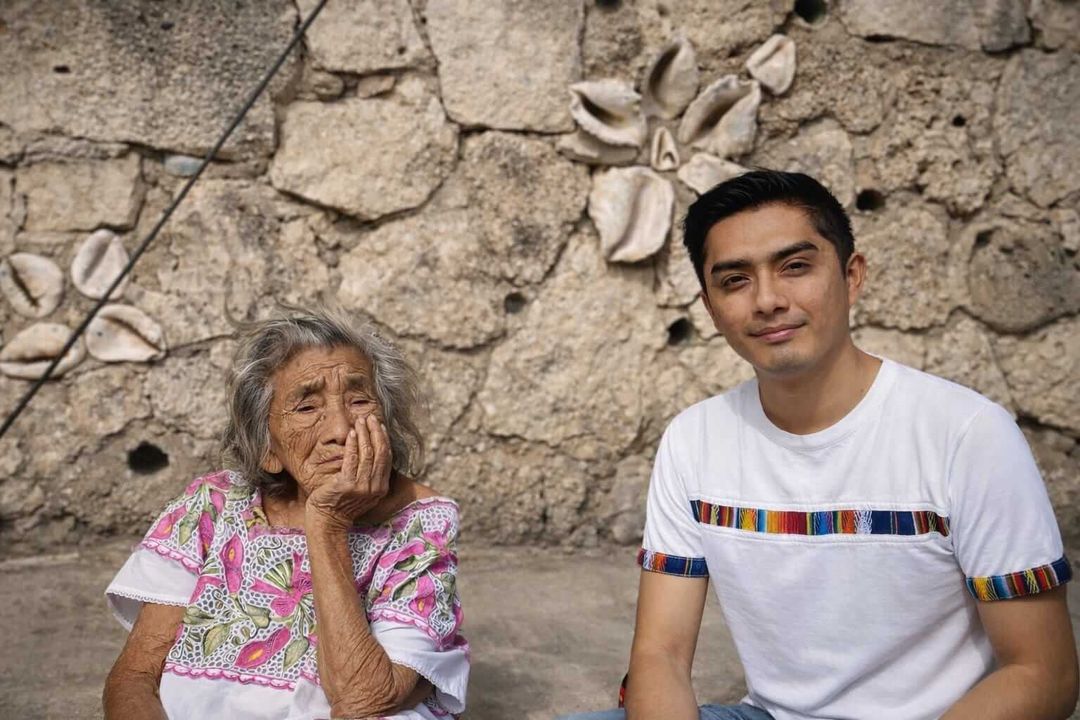
Maria Addy Mas Tah, known across Tulum as Tía Addy or Doña Addy, spent decades helping mothers and newborns as a traditional midwife, building a legacy that still lives in the families she served. Her story, shared by Tulum resident David Fili Tah Balam and now reflected in a public mural by artist Emma Rubens, traces a life shaped by Maya traditions, community service, and the growth of Tulum itself from a small settlement into the town it is today.
Born on May 5, 1937, in Chemax, Yucatán, Doña Addy was taken as a newborn to Rancho Viejo, at kilometer 12 on the road to Macario Gómez. There, surrounded by nature and Maya customs, she grew up in an environment that would define her values and her understanding of communal life. She was the daughter of Julián Más Chan, a chiclero and foreman, and Magdalena Tah, and from an early age she learned the importance of work, family, and ancestral knowledge.
More than 60 years ago, she settled in central Tulum, in the Cancha Maya neighborhood, becoming part of the early families that helped form and strengthen the community when the destination was still a small village. Her personal history is closely tied to the town’s own development, not as a separate narrative, but as part of the everyday life that sustained Tulum long before its rapid growth.
A life rooted in Maya knowledge
Doña Addy is a proud Maya language speaker, and at age 35 she began working as a traditional midwife. According to the account shared by David Fili Tah Balam, her practice was guided by knowledge passed down through her family, by intuition, and by a deep understanding of medicinal herbs.

That combination placed her within a long tradition of women whose work connected health, trust, and cultural continuity. Over the years, she attended births, performed traditional sobadas, and prepared natural remedies, accompanying mothers and newborns through moments of uncertainty, recovery, and change.
Her home became a place where many families found support. For many people in Tulum, her work was not an abstract cultural reference, but direct help at some of the most important moments in family life.
How one woman shaped generations
Doña Addy helped bring numerous generations of Tulum residents into the world. Her work reached beyond a single household or a limited period. It extended across decades, linking grandparents, parents, and children through lived experience.
Today, at age 88 and nearing 89, she is the mother of seven children, grandmother to around 30 grandchildren, and great-grandmother to approximately 28 great-grandchildren. Those family numbers reflect one side of her legacy. The other is the wider community network built through the families she accompanied as a midwife.

Her story remains relevant not only to her relatives and the families she assisted, but also to Maya-speaking residents who see their traditions reflected in her life and to younger generations in Tulum who risk losing touch with the people who shaped the town’s earliest years. Her life also reflects how Tulum’s social foundations were sustained by people whose work was local, practical, and often informal, yet deeply consequential.
As Tulum continues to change, stories like hers return attention to the human structure beneath that transformation. They point to the people who sustained everyday life through care, memory, and community service.
A mural connected to a broader portrait project
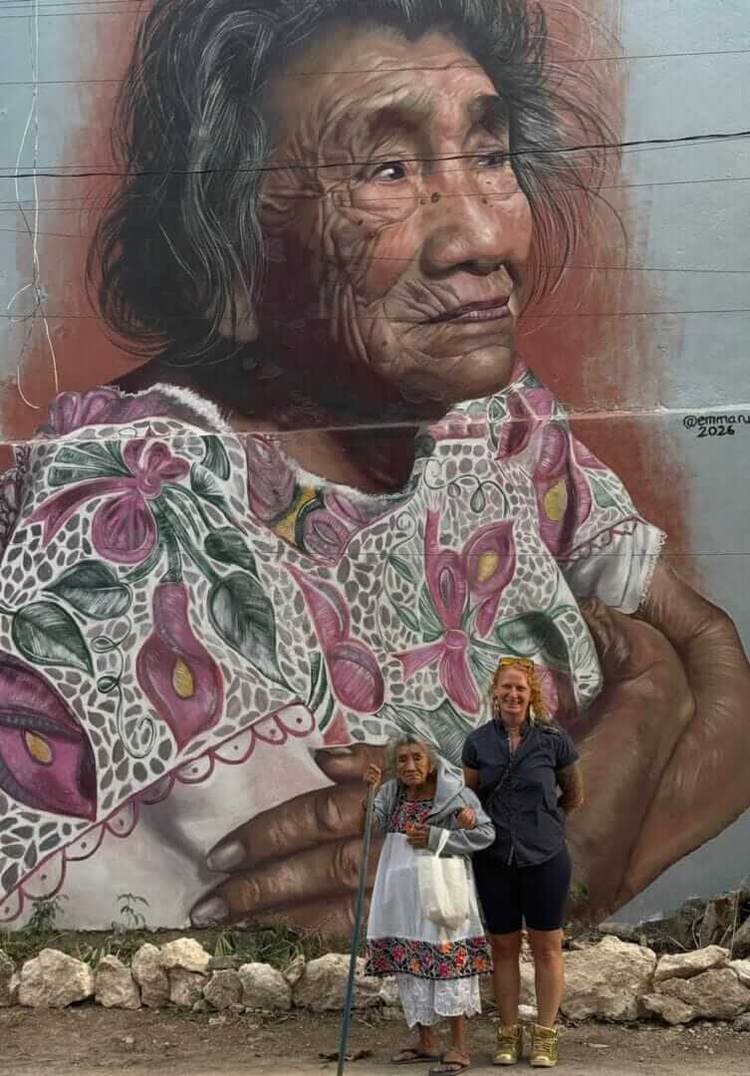
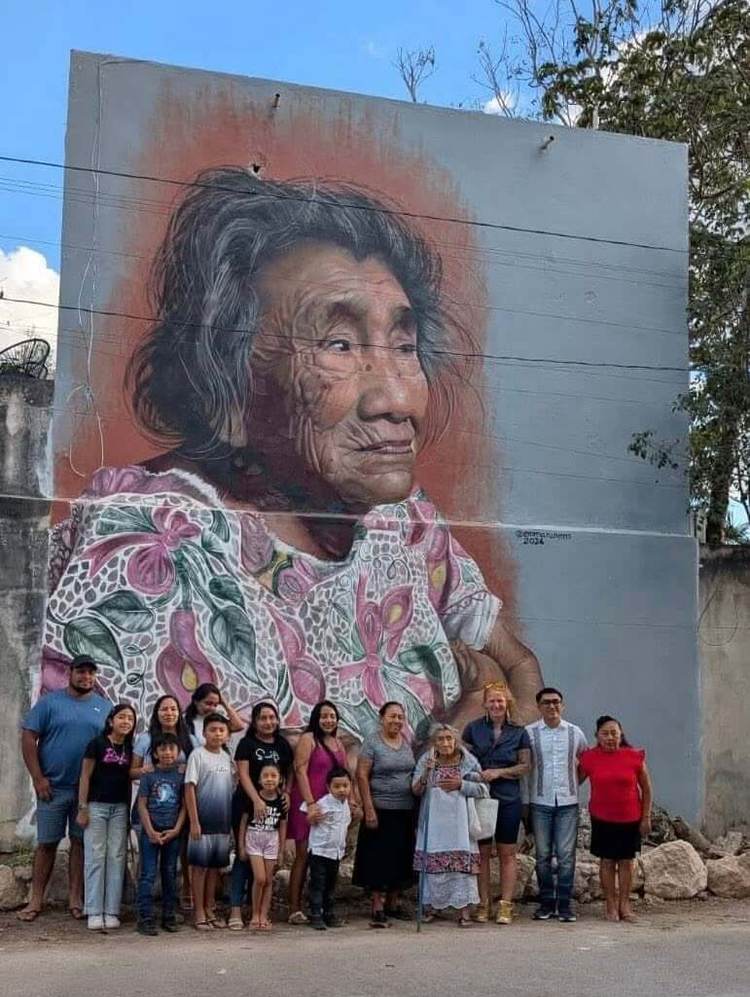
The mural honoring Doña Addy was created by artist Emma Rubens as part of a broader portrait project documenting the Mayan elders of Tulum through painted portraits and recorded interviews. According to Rubens, the goal of the project is to preserve and share the stories of some of the original families who settled in Tulum and helped shape the town.
The portraits and interviews are expected to eventually be presented in an exhibition at El Museo Regional de la Costa Oriental, also known as the Tulum Museum, alongside a book with the published interviews. In that context, the mural of Doña Addy was conceived as a public extension of the project, bringing part of that memory into the streets.
Rubens explained that the street mural emerged after filmmaker Hector Barrios asked whether she would be painting in public again while he was working on a short documentary on street art in Tulum. She said she saw it as an opportunity to share a fragment of these stories directly with the community through public space.
To create the portrait, Rubens contacted David Fili Tah Balam, Doña Addy’s great-nephew, who helped introduce her to the family and request permission to paint the mural. Since Doña Addy mainly speaks Maya, that connection was important to the process. David also shared reflections on her importance to the community, while her family helped formulate the biographical information used as the basis for the piece.
What her story means for Tulum now
The mural gives Doña Addy’s legacy a visible public form. It places her story in shared view and helps connect family memory, community history, and contemporary cultural expression in Tulum.
For Tulum, this matters because local memory can easily narrow around development, tourism, and the speed of recent change. Stories such as Doña Addy’s return attention to the people who sustained everyday life before the town became widely known. They also center Maya knowledge and community care in a place where both have long existed, even when they were not always the most visible part of the public conversation.
Her life, as described by her family and those close to her, stands at the intersection of family history and town history. She was born in Yucatán, raised within Maya traditions, became one of the early residents of central Tulum, and dedicated years of service to mothers and newborns through traditional midwifery, sobadas, and natural remedies. Now, through Emma Rubens’ broader portrait project and its mural extension, that legacy has been placed back into the public eye.
Maria Addy Mas Tah now has a public tribute that may help preserve her place in the community’s memory, while also drawing attention to the wider cultural value of traditional midwifery and the stories of Tulum’s elders. How should Tulum continue honoring the people whose lives helped shape the town?
Editor's Pick: Read more about The Faces of Tulum gives voice to the town’s Mayan elders.
Editor's Pick: Read more about The Faces of Tulum gives voice to the town’s Mayan elders.

The Tulum Times · Newsletter
The story continues in your inbox.
Essential Tulum news and local insight, a few times a week. Free.
No spam. Unsubscribe anytime.

“The best journalists reporting from paradise, highlighting the heroes that keep Tulum the most beautiful place in the world! THANK YOU!”