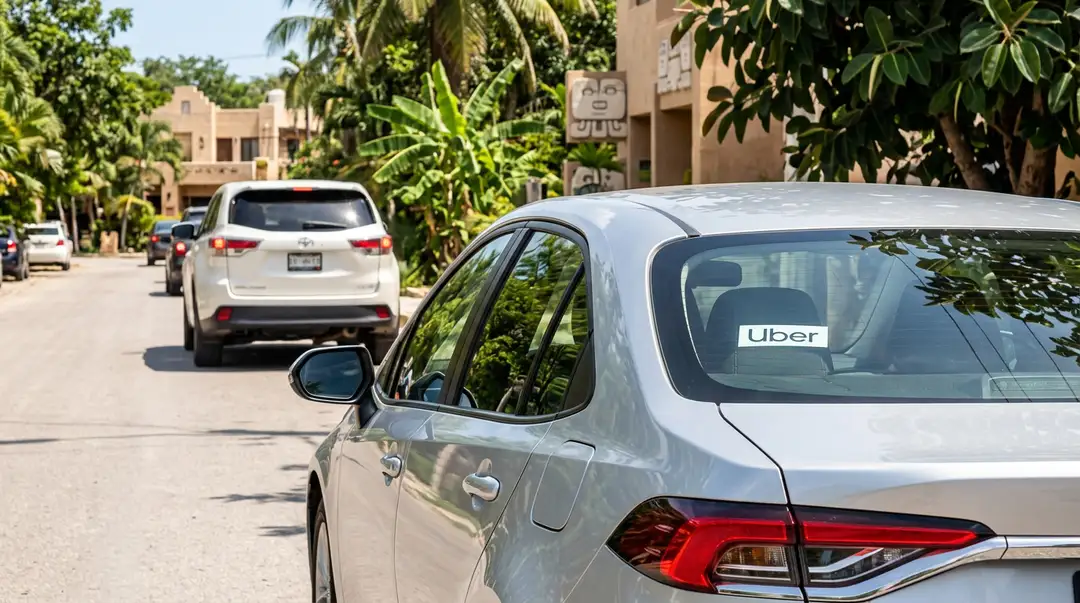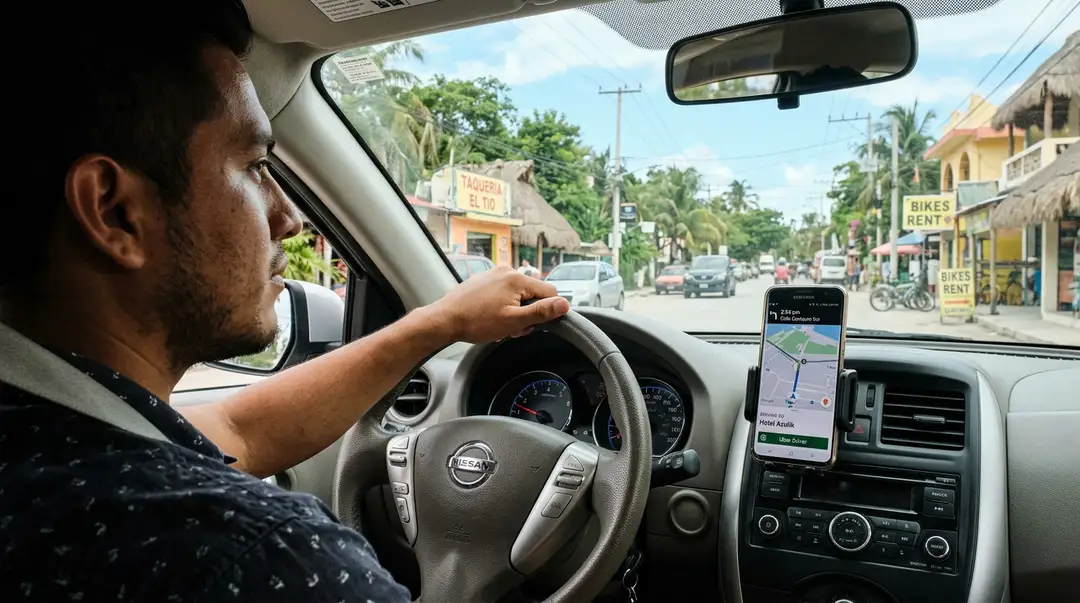
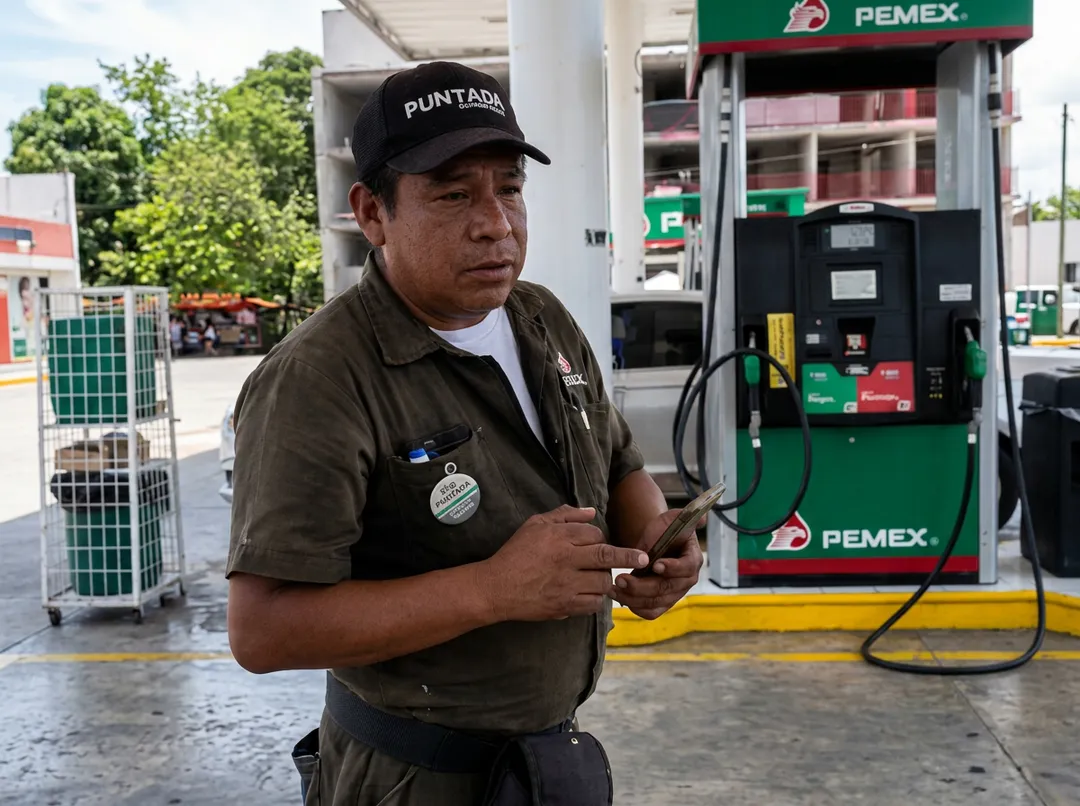
Greed became one of Tulum's most exported reputations. Long before the overcrowded roads, the collapsed sewage infrastructure, and the noise complaints that now define the destination's crisis narrative, visitors were leaving with a different kind of story: the restaurant that charged four times the posted price, the taxi that invented a flat rate on the spot, the hotel that added fees that appeared nowhere in the original booking. That reputation traveled. It shaped reviews, deterred repeat visitors, and seeded a distrust that no marketing campaign has managed to fully reverse. What fewer people discuss is that the same dynamic reached the gas station on the corner.
A tourist refueling a scooter at a gas station on the corner of Géminis Norte and Avenida Tulum was charged for 12 liters of gasoline on May 17 after pumping only four. When the attendant realized the exchange was being recorded, he returned the money without argument.
The incident was witnessed and filmed by a local resident who had stopped at the same station. The footage shows the moment the attendant, apparently unaware he was on camera, attempted to collect payment for fuel that had never been dispensed. The mechanism behind the fraud is a common one: the pump counter is not reset to zero before a new customer begins fueling, so the total displayed includes gasoline from a previous transaction.
The tourist disputed the charge immediately. The attendant backed down only after noticing the recording.

A Known Practice at Tulum Gas Stations
The counter-reset scheme is not new. Travelers and residents have reported variations of it at stations across Quintana Roo for years. The pump displays a figure that has nothing to do with what the current customer actually received, and the attendant collects accordingly, counting on the customer not noticing or not pushing back.
Tourists are disproportionately vulnerable. Unfamiliar with local prices, distracted by travel logistics, and often reluctant to escalate a confrontation in a foreign country, many pay without questioning the number on the display.
The station at Géminis Norte and Avenida Tulum had no immediate comment. No representative of the franchise or of Pemex responded to a request for information before publication.
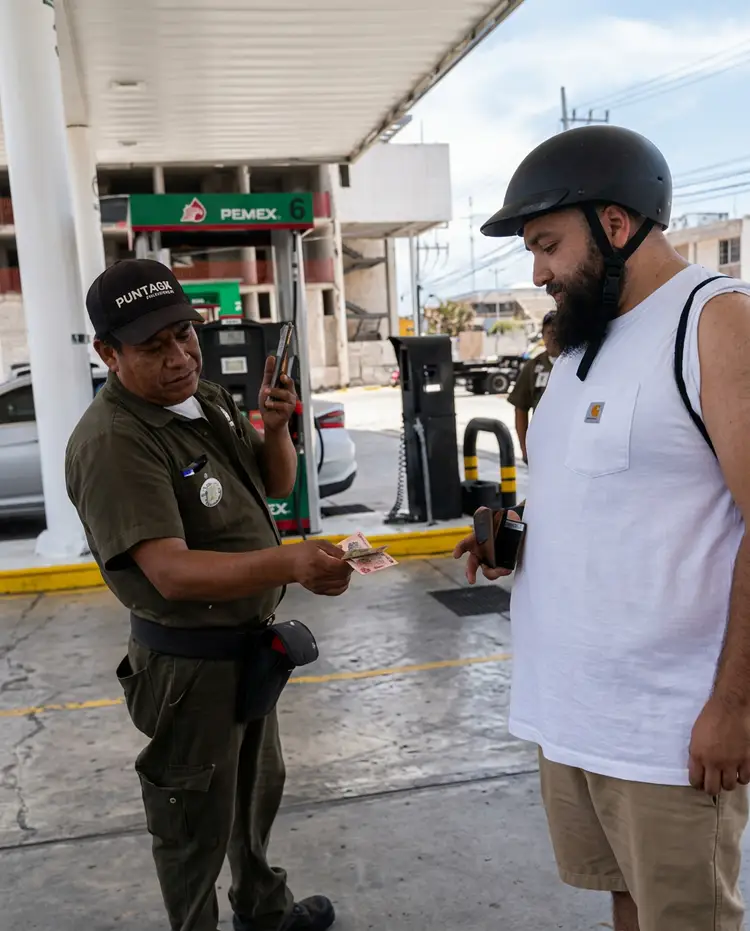
Card Fraud at the Pump
Overcharging on the counter is one method. Card skimming at gas stations is another, and it has been documented repeatedly in the Riviera Maya.
The most common scheme involves a point-of-sale terminal that appears to fail mid-transaction. The attendant tells the customer the machine has no internet connection and requests cash instead. Days later, the original card charge appears on the customer's statement anyway, effectively doubling the payment.
In other cases, card data is copied during the transaction and used later for unauthorized purchases. Travelers who pay by card at gas stations in the region have reported discovering fraudulent charges weeks after leaving Mexico, by which time disputing them requires navigating international banking processes from abroad.
What Tourists and Visitors Should Do at Every Stop
The incidents are preventable. A few specific habits, applied consistently, eliminate most of the exposure.
Check the counter before the attendant starts pumping. The display must read 0.00 before fuel begins to flow. If it does not, ask the attendant to reset it. If they resist or claim it is unnecessary, do not proceed. Move to a different pump or a different station.
Watch the pump throughout the transaction. Do not look at your phone. Do not step away. Keep your eyes on the counter from the first liter to the last.
Pay in cash when possible. Cash eliminates the risk of card skimming and the double-charge scheme entirely. Bring small bills. Disputes over change are far easier to resolve than fraudulent card charges filed from another country.
If you pay by card, photograph the terminal receipt immediately. Confirm the amount matches what was displayed on the pump before you put your wallet away.
Record if something feels wrong. As the May 17 incident demonstrated, a phone camera changes the dynamic. Attendants aware they are being filmed behave differently. You do not need to announce it.
Know the approximate price per liter before you stop. In Quintana Roo, regular gasoline typically runs close to the national reference price published by the Energy Regulatory Commission. A figure that seems high relative to that reference is a signal worth questioning before you pay.
The Broader Cost of These Incidents
Each incident like this one travels further than the station where it happened. Tourists share experiences, post reviews, and make decisions about return visits based on exactly this kind of encounter. A destination that cannot guarantee basic transactional honesty at a gas pump signals something broader about the environment visitors can expect.
Tulum's tourism economy depends on visitors who feel safe spending money here. Every fraud that goes unchallenged, or that only stops because someone happened to be recording, erodes that confidence incrementally. The attendant at Géminis Norte returned the money when the camera appeared. The question is what happens to the customers who are not filming.
Have you experienced overcharging or card fraud at a gas station in Tulum or the Riviera Maya? Join the conversation and share your perspective with us on Instagram and Facebook at @thetulumtimes .

The Tulum Times · Newsletter
The story continues in your inbox.
Essential Tulum news and local insight, a few times a week. Free.
No spam. Unsubscribe anytime.
Transportation in Tulum: Taxi, Bus, Transfers, and Mobility
Taxi fares, buses, transfers, road changes, mobility updates, and practical transport guidance for Tulum.

“The best journalists reporting from paradise, highlighting the heroes that keep Tulum the most beautiful place in the world! THANK YOU!”