

La llegada de sargazo a lo largo de la costa de Tulum alcanzó niveles críticos en 2026, con más de 2.600 toneladas ya retiradas de las playas locales y especialistas instando a las autoridades a declarar una contingencia ambiental formal.
El volumen de este año ha superado los totales registrados la temporada anterior, que ya había sido una de las más altas de la historia. Para una región cuya economía depende de playas limpias y cuyo litoral alberga parte del sistema de arrecifes del Caribe, la llegada de estos animales se sitúa ahora en el centro de una creciente controversia sobre cómo deben responder los gobiernos.
El sargazo es un alga marina flotante que se acumula en grandes masas a lo largo del Atlántico y, arrastrada por las corrientes oceánicas y las condiciones climáticas, llega a las costas del Caribe en oleadas estacionales. Su reciente crecimiento se debe a varios factores interrelacionados: el aumento de los niveles de nutrientes en el océano, los cambios en las corrientes marinas, el calentamiento del agua y las alteraciones vinculadas al cambio climático.
Los especialistas afirman que el volumen justifica una contingencia medioambiental.
Iván Penié, miembro de Ecoprotección Akumal AC y coordinador de investigación en Oceanus International, afirmó que la magnitud del fenómeno da a las autoridades motivos suficientes para declarar una contingencia ambiental.
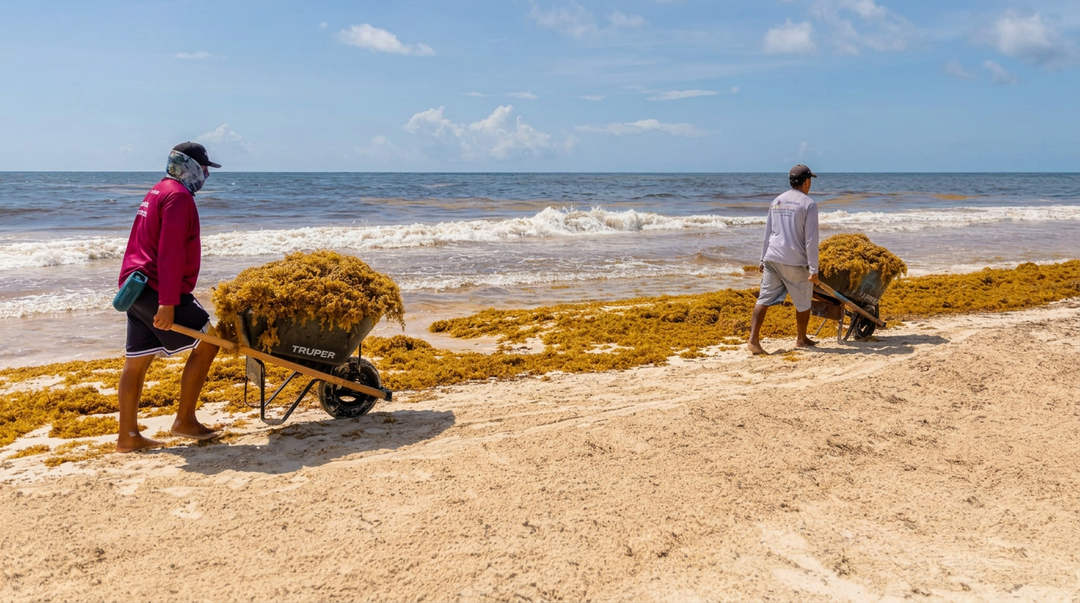
Explicó que la cantidad de sargazo que llega a la costa supera con creces la capacidad de recogida y manipulación de la que disponen tanto los organismos públicos como las empresas privadas.
Los investigadores señalan una preocupante brecha. Según los especialistas citados, México cuenta con cientos de estudios científicos sobre el problema, pero muchas de las soluciones propuestas por dichos estudios nunca se aplicaron debido a la insuficiente inversión y la falta de planificación a largo plazo.
Esa brecha ha reavivado un debate recurrente en las políticas costeras. La limpieza de las playas después de que las algas ya se han acumulado no es suficiente por sí sola. Según los investigadores, la prevención y el monitoreo oceánico son lo que realmente cambia el rumbo.
Los equipos retiran 2.600 toneladas mientras las playas se vuelven a llenar en cuestión de horas.
Los funcionarios de la Zona Federal Marítimo Terrestre de Tulum, conocida como Zofemat, reconocieron la gravedad de la situación.

David Buchanan García, director del organismo municipal, afirmó que los equipos de limpieza trabajan a diario, pero que el volumen de sargazo supera su capacidad operativa. A estas alturas de 2026, los equipos habían retirado más de 2600 toneladas de material en el municipio, el doble de la cifra registrada en el mismo periodo del año anterior. Aun así, la arena desaparece bajo una nueva capa poco después de finalizar cada operación.
El resultado es una carrera contra la corriente. Las autoridades retiran toneladas de algas mientras nuevas masas siguen llegando desde mar abierto, y el ritmo deja poco margen para ponerse al día antes de la siguiente llegada.
Los daños afectan a los arrecifes, las praderas marinas y las especies costeras.
Quintana Roo depende en gran medida del turismo, y la presencia constante de sargazo en la costa perjudica la imagen internacional del Caribe mexicano. Esta mala reputación tiene consecuencias directas: cancelaciones, pérdida de ingresos e inestabilidad laboral para quienes trabajan en hoteles, restaurantes, excursiones y otros servicios turísticos.
El impacto ecológico va de la mano del económico. A medida que las algas se acumulan y se descomponen, liberan gases, consumen el oxígeno del agua y ejercen presión sobre los organismos marinos que dependen de unas condiciones costeras saludables.
Los arrecifes de coral, las praderas marinas y las especies que habitan la zona costera están expuestas a la materia orgánica en descomposición. La barrera de arrecifes del Caribe se encuentra entre los ecosistemas más importantes del planeta y lleva años sufriendo las consecuencias del calentamiento del agua, las enfermedades de los corales y la contaminación. El sargazo agrava aún más la situación de un ecosistema ya debilitado.
Por qué la limpieza por sí sola ya no resuelve el problema del sargazo en Tulum
La experiencia de Tulum refleja un patrón que ahora se observa en todo el Caribe. El sargazo ha dejado de ser un fenómeno aislado y se ha convertido en un desafío ambiental permanente, que reaparece periódicamente y se agrava con cada año que pasa.
El debate actual ya no se centra únicamente en la eliminación de algas de la arena. Se enfoca en la construcción de una estrategia integral que combine la investigación científica, la prevención, la protección de los ecosistemas y la adaptación al cambio climático. Para los especialistas y grupos ambientalistas que insisten en este punto, una declaración formal de emergencia al menos estaría a la altura de la respuesta oficial ante la verdadera magnitud del problema.
Por ahora, la costa de Quintana Roo sigue recibiendo toneladas de sargazo, y la decisión de intensificar las medidas recae en las autoridades. Cada playa limpia que desaparece al anochecer confirma lo que los investigadores están denunciando.
¿Debería Quintana Roo declarar una emergencia formal por sargazo, o basta con la limpieza diaria de las playas para la temporada de 2026? Únete a la conversación y comparte tu opinión con nosotros en Instagram y Facebook en @thetulumtimes .

The Tulum Times · Newsletter
La nota sigue en tu correo.
Lo esencial de Tulum y contexto local, un par de veces por semana. Gratis.
Sin spam. Cancelá cuando quieras.
Tulum Sargassum Updates and Beach Conditions
Live seaweed conditions, cleanup updates, forecasts, and practical beach planning across Tulum and the Riviera Maya.

“The best journalists reporting from paradise, highlighting the heroes that keep Tulum the most beautiful place in the world! THANK YOU!”