

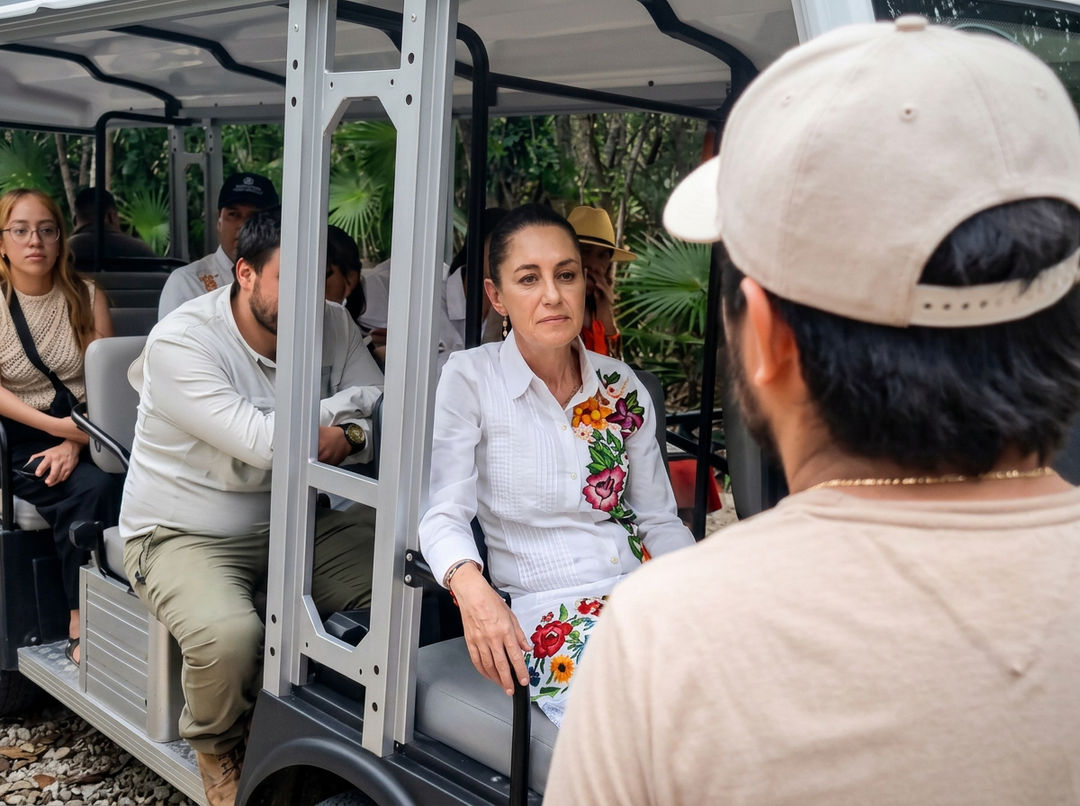
La visita de Sheinbaum a Tulum esta semana redujo las tarifas en las playas y ruinas y prometió un plan federal para el sargazo, pero las quejas que los comerciantes locales consideran más perjudiciales nunca llegaron a su agenda.
La visita de dos días se presentó como un rescate para un destino turístico en evidente declive, con menos visitantes, una reputación dañada y negocios presionados por múltiples frentes. Lo que la presidenta decidió anunciar, y lo que omitió, revela a residentes y visitantes cuáles de los problemas de Tulum está dispuesto a asumir el gobierno federal y cuáles, por ahora, siguen siendo responsabilidad de otros.
Lo que la visita de Sheinbaum a Tulum dejó constancia de ello.
Las medidas fueron concretas y, en su mayoría, bien recibidas. La entrada al Parque del Jaguar será gratuita para los visitantes mexicanos y costará 100 pesos para los extranjeros. La zona arqueológica baja a 50 pesos, frente a los 265 pesos que costaba para los extranjeros. El Parque Nacional de Tulum tiene una tarifa de 65 pesos para extranjeros y 30 para nacionales. El gobierno habilitó 10 puntos de acceso público gratuito a las playas y anunció un sistema de transporte eléctrico dentro del parque por 20 pesos, además de una nueva entrada arqueada y estacionamiento en el lado sur.
Sheinbaum viajó con la gobernadora Mara Lezama, la secretaria de Turismo Josefina Rodríguez Zamora y miembros del gabinete de seguridad federal, entre ellos Omar García Harfuch. El gabinete informó que el promedio diario de homicidios intencionales en Quintana Roo disminuyó aproximadamente un 85 por ciento entre septiembre de 2024 y junio de 2026, y que cerca de 3,800 personas fueron detenidas por delitos de alto impacto durante un período similar. En teoría, se trataba de un paquete sólido para el turismo y para la seguridad del estado.

El alcalde que nunca entró en escena
Una figura clave faltaba en todo esto. Diego Castañón Trejo, presidente municipal de Tulum, no apareció junto a Sheinbaum en las imágenes de la gira, ni en las inspecciones de playa, ni en la rueda de prensa del viernes. La cobertura registró al gobernador Lezama recibiendo al presidente. El alcalde de la ciudad que fue el centro de la visita no figuraba en las fotografías.
Los medios locales llevan meses describiendo a Castañón como un alcalde ausente, y ha recibido críticas por cuestiones de seguridad y por su gestión del sargazo. En este contexto, su ausencia en una visita federal de alto perfil parece menos un problema de agenda y más un mensaje. Cuando un presidente visita un municipio y su alcalde no está presente, la omisión tiene un peso político considerable, independientemente de quién la haya organizado.
Extorsión, el podio no lo mencionó
La queja más frecuente de los comerciantes no se mencionó en absoluto. Los dueños de negocios en Tulum llevan meses denunciando la extorsión por parte de personal municipal y miembros de la policía municipal, un patrón documentado durante el primer semestre de 2026 por medios regionales y nacionales. Algunos relatos describen a inspectores y oficiales presionando a los comerciantes para que paguen. Otros describen a oficiales deteniendo directamente a turistas, y medios de Quintana Roo informaron este año que oficiales fueron detenidos por extorsionar a visitantes extranjeros.
Alberto Pool Cocom, propietario de un negocio en Tulum, declaró a los medios locales que los agentes que extorsionan a los turistas perjudican la recuperación de la ciudad, porque "los visitantes son los que nos traen el dinero, y si los extorsionan, no regresan".
Se trata de denuncias y casos reportados, no de un registro cerrado, y están en manos de las autoridades locales, no del gobierno federal. Quizás por eso no comparecieron ante el tribunal. Las cifras de seguridad que presentó el gabinete medían los homicidios, no las extorsiones diarias que deciden si un comercio sobrevive o si un turista regresa.

Tarifas sin límite máximo
El cobro excesivo de taxis es otra queja cotidiana que la visita no abordó. Los pasajeros han reportado tarifas desproporcionadas a la distancia, incluyendo un cobro de 1500 pesos ampliamente difundido y, más recientemente, un intento de cobrar 350 pesos por un trayecto corto cerca del Parque de los Jaguares. Más de un año después de que las autoridades prometieran transparencia en las tarifas, los taxistas siguen operando sin mostrar los precios.
Las reducciones anunciadas por el presidente se aplican al acceso a los parques y sitios arqueológicos, no a los taxis que transportan a los visitantes entre ellos. Ahora una familia puede llegar a la playa gratis y aun así pagar más por el trayecto que por un día en las ruinas.
Se nombró a Sargassum; el alivio no fue
El sargazo no pasó desapercibido. Fue el motivo declarado del viaje. Sheinbaum atribuyó el aumento al alza de la temperatura del océano, afirmó que el gobierno realizó un primer diagnóstico y describió un plan para recolectar las algas en el mar y reciclarlas, cuya estrategia detallada se prometió en una conferencia de prensa el domingo en Puerto Morelos.
Lo que no anunció fue apoyo directo para los hoteles y negocios frente al mar que absorben las pérdidas mientras la arena permanece enterrada. Tal como se presentó, la respuesta federal fue una promesa y un diagnóstico, no una ayuda que llegue a las nóminas. A nivel municipal, la gestión ha provocado burlas abiertas, y los medios locales acusan a Castañón de simular acciones contra el sargazo en lugar de limpiarlo. Los turistas que observan cómo llega la marea marrón se ven obligados a sopesar los anuncios frente a la costa que tienen delante.
Una visita que se mide por sus omisiones.
Los anuncios eran reales y la mayoría de ellos ayudan. Además, comparten una característica: entradas más baratas, acceso gratuito a la playa, un parque más verde y accesible, y una disminución en las cifras de homicidios. Todos estos aspectos son visibles, controlados a nivel federal y fáciles de fotografiar. Los problemas que quedaron fuera de la agenda comparten una característica diferente: la extorsión, el abuso de tarifas y las pérdidas acumuladas durante la temporada de sargazo son problemas locales y complejos que afectan a las autoridades más cercanas al terreno.
Esto no significa que la visita haya fracasado. Se trata de la finalidad de una visita. Abrir las playas sirve de poco cuando lo que permanece cerrado es la confianza. Un turista que paga gratis para llegar a la arena y luego pierde la tarde por una tarifa inflada o una estafa no se va con una peor opinión del gobierno federal. Se va con una peor opinión de Tulum.
La siguiente prueba se acerca rápidamente. La conferencia del domingo en Puerto Morelos tiene como objetivo concretar el plan contra el sargazo, y los residentes estarán atentos a la financiación y a un cronograma, más que a un nuevo diagnóstico. La prueba más difícil será si el estado y el municipio toman medidas respecto a la extorsión y las tarifas que el presidente, durante dos días, prefirió no mencionar.
¿Qué problemas de Tulum debería priorizarse en la próxima visita oficial: los de la playa o los de la administración? Únete a la conversación y comparte tu opinión con nosotros en Instagram y Facebook en @thetulumtimes .
This image was generated or enhanced using artificial intelligence to improve its quality.

The Tulum Times · Newsletter
La nota sigue en tu correo.
Lo esencial de Tulum y contexto local, un par de veces por semana. Gratis.
Sin spam. Cancelá cuando quieras.
Transportation in Tulum: Taxi, Bus, Transfers, and Mobility
Taxi fares, buses, transfers, road changes, mobility updates, and practical transport guidance for Tulum.

“The best journalists reporting from paradise, highlighting the heroes that keep Tulum the most beautiful place in the world! THANK YOU!”


