With the 2026 sargassum season underway, travelers in Cancun keep asking why the Hotel Zone cannot use the floating seaweed nets seen in Playa del Carmen and Tulum. Officials say the coast is too exposed.
Mayor Ana Paty Peralta has said local authorities reviewed technical studies on the Hotel Zone shoreline and concluded that anti sargassum barriers are not physically viable in the area. The issue is not budget or intent. The problem, officials argue, is the combination of open water wave energy and strong currents along Cancun's most visited stretch of beach.
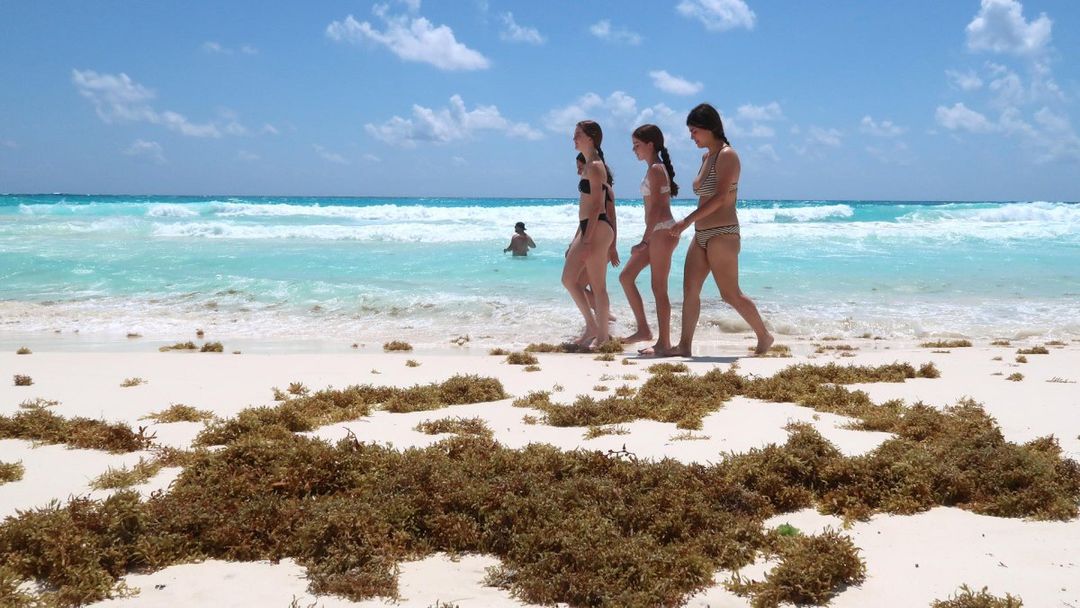
That conclusion matters because when sargassum cannot be intercepted offshore, the seaweed lands directly on the sand. The cleanup then becomes a daily race against decomposition and odor, and it also creates a less visible cost: every pass of heavy equipment risks taking away part of the beach itself.
Why Barriers Fail in the Hotel Zone
Floating barriers work best when they can hold a line near shore long enough for collection teams to remove the material before it reaches the beach. In the Hotel Zone, officials say the sea conditions make that containment unreliable.

According to the city's assessment, aggressive wave action would wash incoming sargassum over the top of any nets anchored offshore, effectively bypassing the barrier. Strong currents would also add constant stress to mooring points and the floating line, turning a simple looking solution into a maintenance problem that still does not stop landings.
Authorities have identified one geographic exception. In Puerto Cancun, where the water is more naturally sheltered, containment nets can function because the sea state is calmer and the current profile is different. In other words, the same barrier that can work in a protected pocket becomes far less effective on an exposed coastline.
The distinction is easy to miss from the beach. Visitors often see miles of floating nets in other municipalities and assume they can be copied in front of any resort. Officials argue the engineering is not portable. A barrier is only useful if it can hold position, keep material contained at the surface, and allow removal crews to collect the seaweed before it spills past the line. In rougher conditions, the seaweed can ride over the top, slip around edges, or pile up in a way that forces the system to be pulled and reset.
The Hidden Cost of Beach Cleanup
When sargassum reaches the shoreline, the most visible response is mechanical removal. But wet seaweed is heavy, and it tends to trap and mix with sand. Each time a tractor, front loader, or raking equipment scoops a large pile, it is difficult to avoid collecting sand along with the algae.

Over time, repeated removal can contribute to erosion, gradually stripping beaches of the sand that protects the coast and supports tourism. Officials have framed this as a sustainability issue, not only an operational inconvenience, and it is one reason they consider offshore interception the most effective option when conditions allow it.
Offshore Collection Becomes the Priority
With barriers off the table in the Hotel Zone, authorities say they are emphasizing collection before sargassum reaches land. The Secretariat of the Navy, known as Semar, and state environmental departments are prioritizing offshore operations using specialized boats designed to scoop and remove seaweed directly from the water.
That offshore approach is meant to reduce the volume that arrives on the sand and to limit the need for repeated heavy equipment passes on public beaches. It does not eliminate the need for shoreline cleanup, but it is intended to shift the center of gravity away from constant sand disturbance.
Officials have also described a practical timing problem on land. Once sargassum sits on the shoreline and heats up, it begins to break down. That makes the work harder for crews and more disruptive for visitors. The stated goal of offshore collection is to catch the seaweed while it is still floating, before it becomes a daily problem on the sand.
Playa Delfines Takes the Hardest Hit
Even with offshore collection, some sargassum slips through. In Cancun, Playa Delfines has been among the hardest hit areas this season, and local officials have attributed the concentration to winter cold fronts and shifting spring winds that funnel seaweed toward the southern portion of the municipality.
City figures cited by local authorities show 269 tons of sargassum were removed from that beach area in March alone. The response has been continuous. Crews from the Federal Maritime Terrestrial Zone, known as Zofemat, and Public Services have been running early morning cleaning operations using a mix of heavy machinery and hand tools, aiming to clear the sand before midday heat accelerates decomposition.
For visitors, the practical takeaway is that beach conditions can vary sharply within the same city, and daily cleanup capacity can be as important as the sea itself. Officials say Cancun will keep leaning on offshore collection where possible, while maintaining intensive sand operations in the beaches that receive the highest volumes.
Should Cancun expand offshore sargassum collection to reduce beach erosion risks? Join the conversation and share your perspective with us on Instagram and Facebook at @TulumTimes.

The Tulum Times · Newsletter
The story continues in your inbox.
Essential Tulum news and local insight, a few times a week. Free.
No spam. Unsubscribe anytime.
Tulum Sargassum Updates and Beach Conditions
Live seaweed conditions, cleanup updates, forecasts, and practical beach planning across Tulum and the Riviera Maya.

“The best journalists reporting from paradise, highlighting the heroes that keep Tulum the most beautiful place in the world! THANK YOU!”