


Three levels of government, tourism operators, and citizen organizations met this weekend in Tulum to debate the future of Parque del Jaguar, producing three competing restructuring proposals as the destination grapples with a tourism slowdown tied to international factors, including pressure on the airline industry.
The meeting, convened at the instruction of Quintana Roo Governor Mara Lezama, established a new working body called the Mesa Territorial Tulum. Its mandate is to translate the proposals into concrete policy before the sector's situation deteriorates further.
Three Models, One Unresolved Question
The sharpest outcome of the summit was the formal presentation of three administrative models for Jaguar Park, each reflecting a different philosophy about who should control and fund one of Tulum's most contested public spaces.
Option A would place the park under federal government subsidy, administered by sections and overseen by a consultative council that includes federal, state, and municipal authorities alongside citizen representatives. Option B moves toward partial financial self-sufficiency through complementary funding mechanisms while preserving free public access. Option C combines elements of both and introduces a general admission fee directed exclusively toward maintenance, cleaning, security, and environmental conservation.
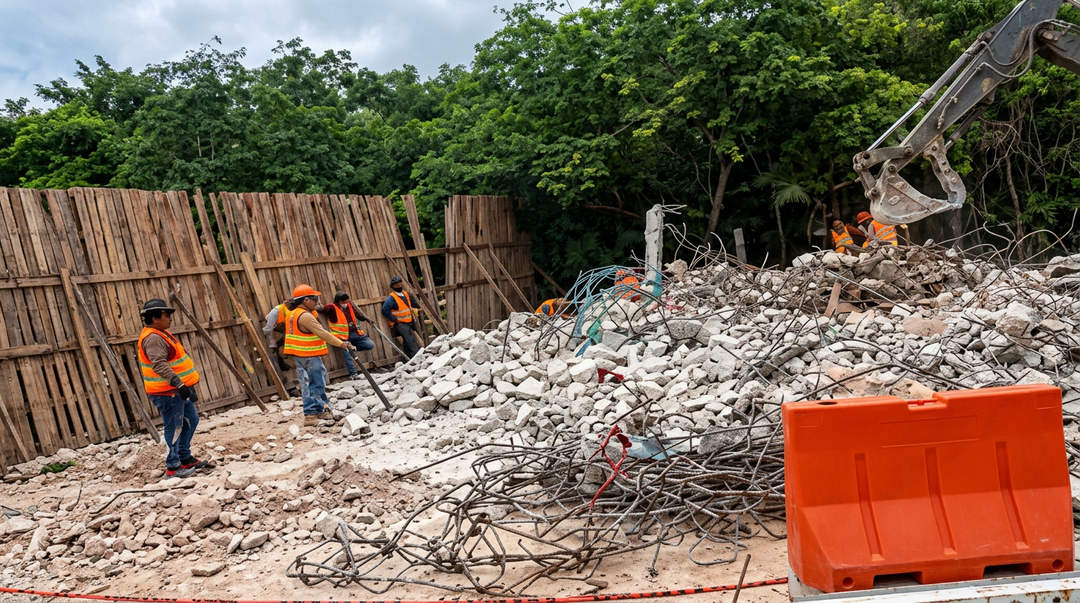
The fee question is politically sensitive. Free beach and park access has been a defining demand of Movimiento Playas Libres, the citizen organization that has led public advocacy around Jaguar Park for months. The group confirmed that its formal proposals were recognized as priority items and will be analyzed within the new Mesa Territorial framework, but stopped short of endorsing any specific model.
What Playas Libres Put on the Table
Among the advances the organization cited, several address day-to-day friction points that have long frustrated visitors and residents alike.
A 50-peso daily mobility fee for electric carts or an eco-train within the park would be optional, not mandatory. Residency-based access tiers were also proposed: free entry for Tulum residents, discounts for Quintana Roo residents generally, and full exemptions for Maya and indigenous communities.
The organization also pushed for clearer signage at all public access points and the installation of official tourist information modules throughout the park, addressing a persistent gap that has left many visitors unaware of which areas are free and which are not. On a related front, ticket booths and payment stations would be relocated to eliminate the confusion that currently leads some visitors to pay for access they were never required to purchase.

Vendor regulation was also on the agenda. Playas Libres called for a formal registry of vendors and touts operating inside and around the park, replacing the current unregulated environment with an official system that protects both visitors and legitimate operators.
Sargassum cleanup was addressed directly. The organization called for year-round cleanup brigades, specialized equipment acquisition, and stronger institutional coordination, reflecting ongoing frustration with the reactive, seasonal approach that has defined sargassum management across the Riviera Maya.
Accessibility and Cultural Use Also Addressed
Participants raised the question of cultural programming, asking that the park's management plan be reviewed to allow Maya ceremonies, cultural events, and sustainable sporting activities under defined environmental criteria. Accessible infrastructure, including functional restrooms and drinking water stations at low or no cost, was flagged as a priority for people with disabilities, older adults, and families.
Quintana Roo Tourism Secretary Bernardo Cueto Riestra framed the meeting as part of a coordinated federal and state effort. "Working together, the three levels of government, civil society, associations, and tourism operators, we can give a strong response so that tourists keep choosing Tulum," he said.
A Complex Tourism Season in the Background
The summit did not take place in a vacuum. Cueto Riestra acknowledged that the sector is navigating a difficult season driven by international factors, specifically naming airline-related pressures without elaborating further. Tulum, like much of the Riviera Maya, has seen tourism demand soften in 2025, intensifying pressure on local operators who depend on consistent visitor flows through areas like Jaguar Park.
Playas Libres reaffirmed its nonpartisan, independent status and said its focus remains on free beach access, environmental protection, and building proposals that benefit the broader community. The group expressed cautious confidence in the process while making clear that transparency and genuine public participation are conditions it will continue to monitor.
The next steps depend on whether the Mesa Territorial Tulum moves from dialogue to decision. The three restructuring models still require analysis, stakeholder input, and ultimately a choice, none of which has a confirmed timeline.
Should Tulum's Jaguar Park charge a general admission fee to fund its own maintenance, or should free public access remain non-negotiable? Join the conversation and share your perspective with us on Instagram and Facebook at @thetulumtimes.
This image was generated or enhanced using artificial intelligence to improve its quality.

The Tulum Times · Newsletter
The story continues in your inbox.
Essential Tulum news and local insight, a few times a week. Free.
No spam. Unsubscribe anytime.
Beach Access, Public Shoreline, and Coastal Rules in Tulum
Coverage of public beach access, coastal restrictions, closures, and the balance between tourism and public space.

“The best journalists reporting from paradise, highlighting the heroes that keep Tulum the most beautiful place in the world! THANK YOU!”


