
The artisan market at the Tulum archaeological zone has shed nearly three-quarters of its active vendors in what merchants describe as a slow commercial collapse driven by falling tourist arrivals, rising operating costs, and an administrative burden that small businesses say they can no longer absorb.
Rufino Hernández Jiménez, a member of the Centro Artesanal Tulum, put the numbers plainly: the complex once held 71 occupied stalls. Today, around 18 remain open. The rest have closed, one by one, as weekly revenues fell below the cost of keeping the lights on.
"Today there are few of us left working," Hernández Jiménez said. "Many have had to close because there are no tourists and sales are no longer enough to cover expenses."
A market priced for a boom that didn't arrive
The clearest signal of how far conditions have deteriorated is the rental market. Stalls that commanded close to 25,000 pesos per month at their peak are now being offered for between 7,000 and 10,000 pesos. That is a drop of more than 60 percent, and landlords still cannot find takers.

The price collapse matters because it reflects not just weaker demand but a structural shift in how commercially viable the zone is perceived to be. When even discounted rents sit empty, it signals that vendors are not waiting for better terms. They are leaving the sector entirely.
Hernández Jiménez said the reduction in tourist flow had produced a "progressive deterioration" in commercial activity, pushing vendor after vendor to give up their space once it became clear that fixed costs could not be met.
Tulum ruins visitor numbers and the ripple effect on local commerce
The archaeological zone at Tulum is the most-visited ruin site in Mexico by some measures, drawing hundreds of thousands of tourists annually in strong years. That volume made the Centro Artesanal a reliable commercial destination for handcrafted goods, clothing, and regional products.
When visitor counts fall, the effect on vendors is immediate. Unlike larger retailers, artisans and small stall operators have almost no buffer. There are no savings to draw on, no second location to shift inventory to, and no negotiating leverage with suppliers or landlords. A slow month is a crisis. Several slow months in a row force a decision.

The merchants interviewed did not provide specific visitor data from INAH or the Quintana Roo Tourism Secretariat, but their accounts align with broader concerns raised by tourism-sector stakeholders across Tulum over recent months.
Bureaucratic costs compound the pressure
Beyond the drop in foot traffic, vendors flagged a second layer of pressure: administrative costs. Taxes, permits, licenses, and recurring compliance requirements add up in ways that are manageable when sales are strong and debilitating when they are not.
Merchants called on authorities to simplify administrative processes and reduce the bureaucratic load on small operators and entrepreneurs. The ask is specific: fewer steps, lower fees, faster processing for the kinds of small commercial permits that define day-to-day operations at a market like this one.
The argument is not that regulations should disappear. It is that the current system was designed, or at least functions, as though the vendors it regulates have the margins of a mid-size business. Most of them do not.
What vendors say would slow the decline
The merchants remaining at the Centro Artesanal are not predicting a recovery on their own. Their position is that without intervention on two fronts, more closures are coming.
The first front is tourism recovery. Visitor numbers to the ruins need to climb back toward the levels that made the market commercially viable. That is partly a question of national and international travel trends, partly a question of how Tulum is marketed and managed as a destination, and partly a question of what happens to pricing and infrastructure across the region.
The second front is operational relief. Vendors say that even a partial recovery in foot traffic will not be enough to reopen closed stalls if the cost structure makes survival difficult in the short term. They want the municipality to act on permits and fees before more vendors make the decision to walk away permanently.
The concern underneath both requests is the same. Once a vendor closes and moves on, the stall does not automatically reopen when conditions improve. The knowledge, the supplier relationships, the craft itself, travel with the person. What looks like a temporary commercial vacancy can become a permanent one.
As of now, 18 vendors are holding on. They are not waiting for the situation to resolve itself.
Have you noticed fewer vendors or visitors around the Tulum ruins recently? Join the conversation and share your perspective with us on Instagram and Facebook at @thetulumtimes.
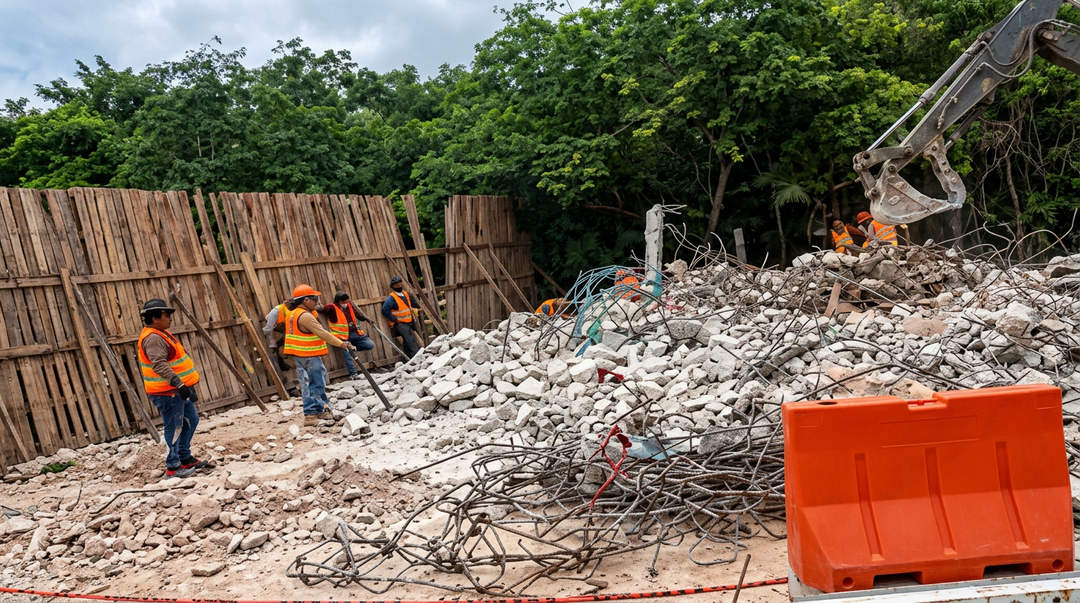
This image was generated or enhanced using artificial intelligence to improve its quality.

The Tulum Times · Newsletter
The story continues in your inbox.
Essential Tulum news and local insight, a few times a week. Free.
No spam. Unsubscribe anytime.
Tulum Cenotes, Ruins, and Practical Visitor Guides
Guides, access updates, regulations, and practical planning around cenotes and the Tulum archaeological zone.

“The best journalists reporting from paradise, highlighting the heroes that keep Tulum the most beautiful place in the world! THANK YOU!”