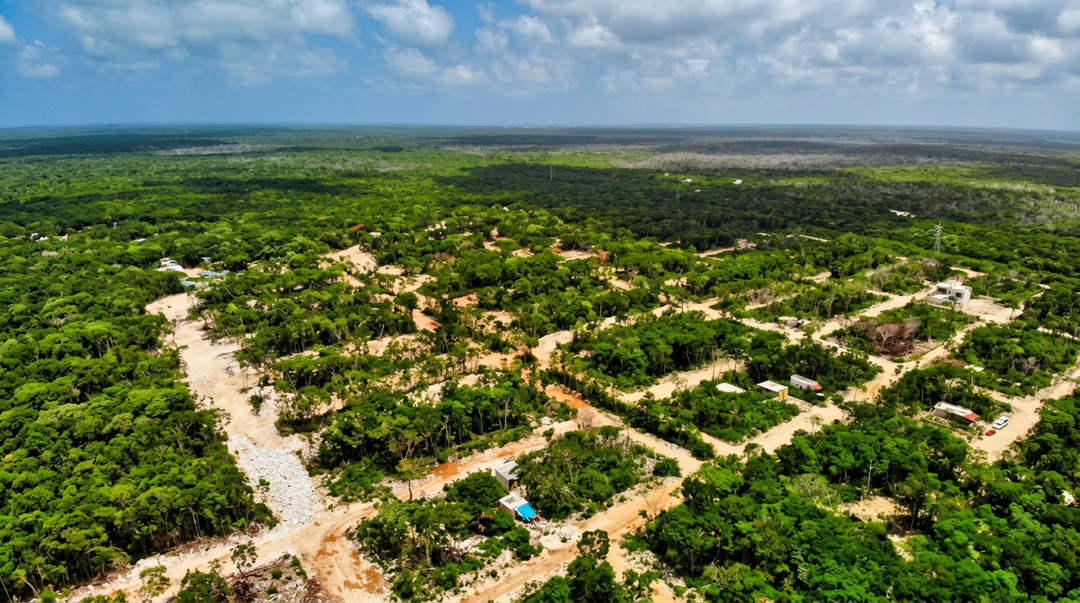

The Tulum tourism crisis reached a point where the president of Mexico, not the town's own mayor, led the rescue, and the gap between those two facts is where the real story sits.
What happened on July 17 is settled. Why it happened is not, and it invites more than one political reading. This analysis separates the confirmed record from the interpretations it makes possible, and lays out four ways to understand how a municipal responsibility became a presidential one.
The confirmed record behind the Tulum tourism crisis
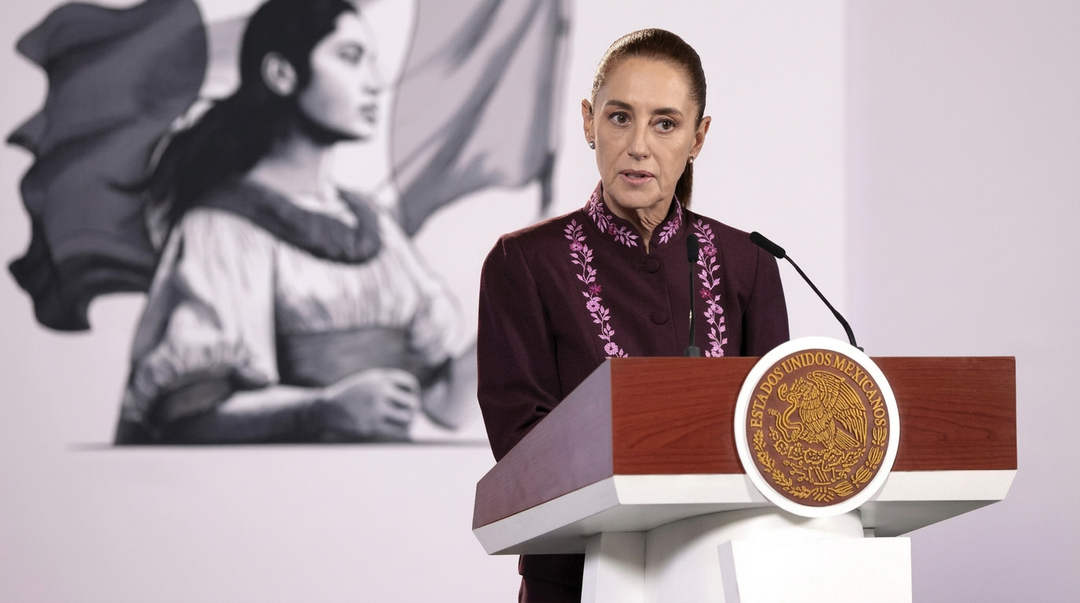
Start with what is not in dispute. President Claudia Sheinbaum presented a ten-action recovery plan for Tulum on July 17, accompanied by Governor Mara Lezama and federal Tourism Secretary Josefina Rodríguez Zamora. Diego Castañón, the municipal president, attended none of the presidential events, and no official explanation was given for his absence.
The destination she came to rescue was measurably weakened. Hotel occupancy sat at 49.2 percent in late September 2025, below both Cancún and the Riviera Maya average, according to industry figures reported at the time. In the final week of that month, only 24 international and 38 domestic flights reached the airport that opened in 2023 with far greater ambitions. Tulum's crime rate climbed to 529 offenses per 100,000 residents in August 2025, up from 393 a year earlier, according to security data cited in national press. Sargassum landings neared 85,000 tons across the season.
There was also friction on the record. In October 2025, Sheinbaum publicly called restrictions on beach access tied to the municipal government illegal. Regional reporting has linked further tension to the abrogation of Tulum's urban development plan, a document coordinated with federal agencies and then shelved after repeated delays. On the municipal side, Castañón had presented Blindaje Tulum in October 2024, a security strategy that added patrol vehicles, 70 officers, and 600 surveillance cameras.
Those are the facts. What follows is interpretation, offered as competing readings rather than conclusions.
Reading one, a disciplinary message
The most widely reported explanation treats the absence as a punishment. In this reading, the federal government sidelined Castañón to send a public signal of displeasure, chiefly over the shelved urban development plan and the beach restrictions the president had already branded illegal.
The evidence for it is circumstantial but consistent. The disputes were real, documented, and recent, and the exclusion followed them rather than preceding them. What the reading cannot prove is intent. No official confirmed a decision to exclude him, and a disciplinary motive remains inference, not established fact. It explains the timing well. It rests on reading a silence.

Reading two, a quarrel inside Morena
A second reading reframes the whole episode as internal, not partisan. Sheinbaum, Lezama, and Castañón belong to the same movement. This is not an opposition mayor being punished by a rival party. It is a governing party managing one of its own.
Seen this way, the message runs inward. His reported distance from other Morena figures, a recurring theme in state political commentary, points to an alignment problem inside the movement rather than a policy fight between institutions. The reading gains weight ahead of coming electoral cycles, where party discipline and control of a valuable municipality carry obvious stakes. Its limit is that intra-party tension is easy to assert and hard to verify, and much of it lives in commentary rather than in the public record.
Reading three, protecting the Tulum brand
A third reading sets politics aside and looks at optics. Tulum is a national asset, and its collapse is a national embarrassment. Placing the president at the center of the recovery reassures the tourism industry, investors, and international visitors that the federation itself is behind the destination's future.
Under this logic, the mayor's presence was a liability to the message, not to the plan. A leader tied to the very disputes that damaged the destination, and to low public confidence, would have muddied the choreography or risked a public scene on a day designed to project control. The reading explains the staging more than the substance. It says less about blame and more about narrative management.
Reading four, the pull of recentralization
The fourth reading is the least personal and, for that reason, the most durable. The tools that can actually revive Tulum are federal. The airport, the Maya Train, the national parks, the archaeological zone, and the security forces answer to the federation, not to city hall. Power concentrated where the levers already were.
In this view, the story is not about one mayor at all. It is about how the current federal project governs strategic destinations, drawing decisions upward and leaving municipal authority thinner than the map suggests. It explains why the plan never ran through the local government, with or without Castañón in the room. Its weakness is the opposite of the others. It explains the structure so well that it can understate the specific, personal friction that clearly existed.
What the four readings share
These explanations do not cancel each other. They stack. A disciplinary intent, an internal party calculation, a branding decision, and a structural drift toward the center can all be true at once, in different measures.
What they share is more revealing than what separates them. Every reading describes a municipality that lost the initiative and a federation ready to occupy the space it left. The open questions are whether this was a one-time correction or a template for how Tulum will be run, and whether three levels of government can rebuild enough coordination to make the recovery hold. The plan will be judged on beaches, prices, and occupancy. The politics behind it will be judged on whether the empty chair was an exception or a preview.
Of these four readings, which one best explains why the president had to lead Tulum's rescue while its mayor stayed away? Join the conversation and share your perspective with us on Instagram and Facebook at @thetulumtimes .
This image was generated or enhanced using artificial intelligence to improve its quality.

The Tulum Times · Newsletter
The story continues in your inbox.
Essential Tulum news and local insight, a few times a week. Free.
No spam. Unsubscribe anytime.
Tulum Safety, Crime Context, and Traveler Risk
Context-driven reporting and practical safety coverage for residents, travelers, transport, nightlife, and public alerts.

“The best journalists reporting from paradise, highlighting the heroes that keep Tulum the most beautiful place in the world! THANK YOU!”