


This editorial was written after hearing the concerns of a great many people in our community and after experiencing, firsthand, as people who live in Tulum, what is happening around us every day. It comes from listening to residents, workers, neighbors, and readers who move through the city and recognize the same growing contradiction: Tulum continues to expand, but the basic conditions of daily life are not keeping pace.
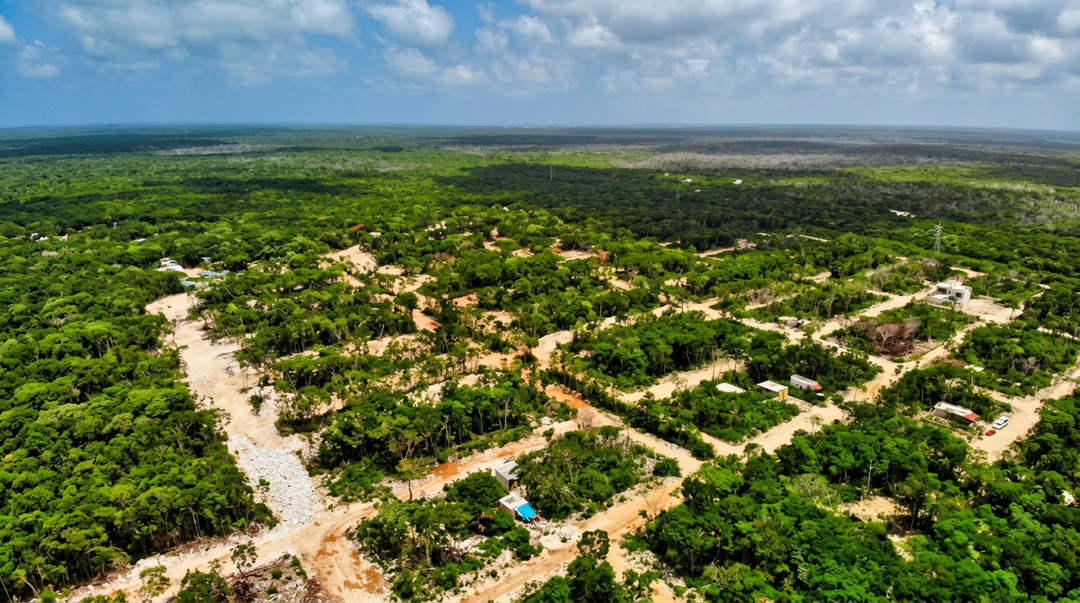
Tulum has entered a stage of growth that is no longer possible to describe as temporary or incidental. What was once a small town defined above all by its natural appeal has become a destination under constant urban, tourism, and commercial expansion. Investment has arrived. Development has accelerated. International visibility has grown. And with it, so has the sense that Tulum now occupies a far larger place in the regional and global imagination than it did only a few years ago.
But another reality has been growing alongside that expansion, and it is becoming harder to look away from. Tulum is continuing to grow without having resolved the most basic conditions needed for a city to function with safety, order, and dignity.
That is not a technical concern. It is a daily one. It affects the way people move, the way they work, the way they return home, and the way they experience the place they live in. It also affects the people who arrive expecting a destination that matches the image Tulum projects to the world.
Walking here still means exposure
In much of Tulum, walking remains an activity marked by risk. The lack of sidewalks across large parts of the city forces pedestrians into the street, where they must share space with cars, motorcycles, bicycles, vans, cargo trucks, and public transportation. It is a scene repeated so often that it can begin to seem routine. But there is nothing routine about a city where people still do not have a safe place to walk.
This is not limited to one group. It affects residents who have lived here for years, workers crossing town every day, families moving with children, older adults navigating broken surfaces, and visitors trying to get from one point to another on foot. There are stretches where the pedestrian has no option but to walk along the edge of the pavement, avoiding traffic, mud, puddles, uneven ground, and potholes, with no real protection at all.
At night, the strain becomes sharper. Poor lighting turns ordinary routes into uncertain ones. A walk home can become an exercise in vigilance. A simple trip can demand constant attention to where the road drops, where the pavement breaks, and where a vehicle may appear too close. That kind of tension accumulates. It changes how a city feels from the inside.
Roads reveal a deeper imbalance
The condition of the roads only intensifies that reality. Deep potholes, irregular surfaces, deteriorated pavement, flooded sections after rain, and roads that seem detached from any visible maintenance plan are not isolated inconveniences. They shape movement across the city every day.

This affects drivers, motorcyclists, cyclists, and pedestrians alike. But it also says something more profound about the stage Tulum is in. A city can grow fast on paper. It can add projects, attract money, and gain attention. Yet the condition of its streets often tells the more honest story. In Tulum, those streets suggest a place whose expansion has moved ahead faster than its ability to sustain itself.
That contrast becomes more striking in the hotel zone, one of the most visible parts of the destination and one of the areas most exposed to international scrutiny. Even there, road conditions have long stood in tension with the image Tulum seeks to maintain. The result is not just a visual contradiction. It is a practical one. A destination that presents itself with refinement and ambition still asks many people to navigate damaged roads, confusion, and risk as part of ordinary life.
Mobility without clear order
The problem does not end with missing sidewalks and deteriorated streets. Tulum also shows a widespread lack of signage and traffic organization. Many streets do not have visible names. There is limited orientation, too few clear references, little pavement marking, and not enough infrastructure to order circulation. The number of traffic lights remains minimal for the volume of traffic the city now carries.
The effect is immediate and visible. Mobility becomes a disorderly mix of instinct, habit, and reaction. Motorcycles pass where they can. Bicycles move against traffic. Cars stop at conflict points. Heavy transport crosses reduced spaces. Pedestrians walk between lanes. Visitors often do not know whether they are heading the right way or whether the road ahead even leads anywhere.
This is not simply a disorder in the abstract. It produces confusion, stress, and accidents. And over time, it produces something less visible but equally serious: exhaustion. A city does not wear people down only through dramatic breakdowns. It also does so through the relentless repetition of problems that should already have been resolved.
Garbage and neglect become part of the scene
The visible problems of waste collection and urban cleanliness add another layer to that burden. In different parts of Tulum, garbage accumulates on streets, corners, lots, and open areas. The weakness or absence of collection services does more than damage the urban image. It creates a persistent feeling of disorder that settles over everyday life.
A city growing at a sustained pace needs a waste system with consistency, coverage, and real response capacity. When that does not exist, the consequences spread quickly. The surroundings deteriorate. Public health concerns deepen. The visitor’s perception changes. And for residents, something more intimate begins to erode as well: the emotional bond with their own environment.
That may be one of the most painful dimensions of what is happening. When deterioration becomes constant, people begin adapting to what should never have become normal. They learn routes around danger. They lower expectations. They move more carefully, more defensively, more tired. The city continues to expand, but daily life narrows.
Growth without proportional infrastructure
The underlying problem is increasingly difficult to ignore. Tulum’s real estate and commercial growth has not been matched by proportional public infrastructure. New projects, new zones, new construction, new investment. But the networks and basic services that sustain urban life do not appear to have expanded at the same pace.
Pressure on potable water, drainage, and other essential systems has become more evident. Some areas of Tulum still do not have adequate access to drinking water. Even the hotel zone continues to carry significant limitations in this regard. That matters because it reveals a city still expanding while the foundations of daily life remain incomplete.
And that is why the continued advance of large commercial developments, supermarkets, hypermarkets, and other major projects causes such unease. The question is not whether Tulum should grow. Nor is it whether investment should arrive. The question is what should come first.
A city must decide its priorities
What does a city need before it adds more? Safe places to walk. Streets that can be used without fear of damage or injury. Orderly circulation. Basic cleanliness. Sufficient essential services. Conditions that allow daily life to function without forcing residents, workers, and visitors into constant adaptation.
The social concern surrounding new large-scale projects comes from that contradiction. People can see, with increasing clarity, that Tulum first needs structure, planning, maintenance, order, and minimum conditions of habitability. Yet the impression persists that attention remains fixed on adding more construction, more commercial activity, and more square meters before resolving what most directly shapes quality of life.
This is not an argument against development. It is a call to look at development more honestly. Tulum is not only receiving tourists. It is forming a city. And a city cannot rely indefinitely on image, momentum, or promise. It needs functioning systems. It needs services that keep pace. It needs an urban logic that protects the people who live within it.
The Tulum Times has followed many aspects of the destination’s transformation, but this may be one of the most immediate because it touches the body before it reaches the debate. It is felt in the walk home, in the pothole avoided at the last second, in the dark stretch with too little lighting, in the road without signs, in the garbage left too long, in the water service that still falls short. This is where growth becomes tangible. And this is where its weaknesses become impossible to disguise.
Consolidation can no longer wait
Tulum still has time to correct course. But that will require listening more carefully to what its streets have been showing for years. It will require treating these deficiencies not as background noise, but as the central test of whether this growth can become a durable urban reality.
Because while sidewalks remain missing, roads continue to deteriorate, garbage accumulates, signage stays absent, traffic operates through improvisation, and basic services remain insufficient in important parts of the city, Tulum will keep moving forward with a fragility that is already visible.
Tulum growth is no longer only about expansion. It is now about whether the city can consolidate before the distance between what it projects and what it provides becomes harder to close. We’d love to hear your thoughts. Join the conversation on The Tulum Times’ social media. What should Tulum fix first before asking residents to adapt any further?

The Tulum Times · Newsletter
The story continues in your inbox.
Essential Tulum news and local insight, a few times a week. Free.
No spam. Unsubscribe anytime.
Transportation in Tulum: Taxi, Bus, Transfers, and Mobility
Taxi fares, buses, transfers, road changes, mobility updates, and practical transport guidance for Tulum.

“The best journalists reporting from paradise, highlighting the heroes that keep Tulum the most beautiful place in the world! THANK YOU!”


