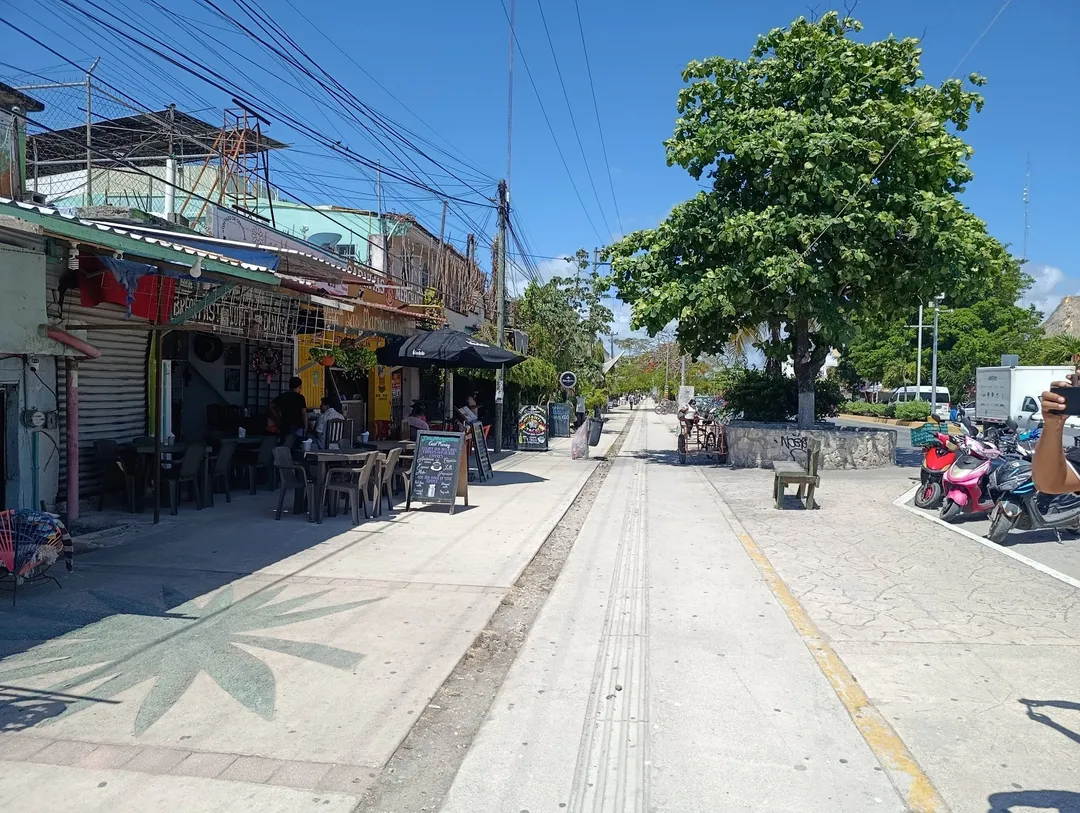
Established merchants on Avenida Tulum are reporting one to three sales per day, describing conditions that some say are no longer sustainable. The double pressure of a prolonged low tourist season and the recurring installation of street markets and events in the city's central park has pushed what was once the municipality's busiest commercial corridor into what several vendors describe as a slow collapse.
The situation, according to those working along the avenue near the ADO bus terminal, is not a recent development. Vendors say the deterioration began roughly two years ago and has worsened steadily since.
Sales at a Standstill on Avenida Tulum
"Everything is dead. People walk by, but they don't buy," said Elberto, an artisan merchant who works near the terminal. He placed the start of the downturn at approximately two years ago, describing a gradual drop in foot traffic that has never recovered.
For businesses entirely dependent on tourist spending, one to three transactions per day is not a slow period. It is, as several merchants described it, a crisis. Rent, utilities, employee wages, and municipal fees do not pause during low season. The income does.
Some businesses have already closed. Others are holding on through what several merchants described as a month-to-month calculation: whether this week's sales cover next week's fixed costs. For many, the answer is no longer clear.
Informal Markets and the Cost of Operating Formally
Bartolo Pool, another merchant on the avenue, identified a second pressure running parallel to the tourism slump: competition from temporary markets installed in Tulum's main park.
These tianguis, as they are locally called, sell artisanry, food, and beverages in the same commercial zone where formal businesses operate. The difference, Pool argues, is structural. Vendors in the temporary markets do not carry the fixed costs that registered businesses do: no rent, no property taxes, no municipal waste fees, no operating permits.
"We do pay taxes and fixed costs, while they sell cheaper because they don't have those expenses," Pool said.

The merchants are not disputing the right of informal vendors to operate. Their concern is the location. Placing temporary commercial events directly in front of established businesses, they argue, draws the already limited customer flow away from stores that carry the full cost of formality.
Tax Notices Arriving as Revenue Disappears
Several merchants noted that fiscal notifications from municipal authorities have continued to arrive despite what they describe as near-zero income during the current low season. The combination of mandatory payments and absent revenue has accelerated closures and pushed some owners to cover operating costs from personal savings.
The avenue near the ADO terminal, historically one of the more active commercial stretches in Tulum's downtown, now sees extended stretches without a single transaction at some stalls, according to vendors who spoke on the condition that their full business names not be published.
Merchants Ask Authorities to Relocate Street Markets
The merchants' request to local government is specific. They are asking authorities to stop authorizing tianguis and public events in the city's central square and first commercial block, and to redirect those activities to residential neighborhoods or peripheral zones where they would not directly compete with established businesses.
They are not asking for the markets to disappear. They are asking for a different geography.
Whether municipal authorities will respond, and how quickly, remains unclear. No official position from the Tulum municipal government had been issued in response to the merchants' complaints at the time this article was published.
For now, the merchants on Avenida Tulum are waiting out a low season that, several said, no longer feels temporary.
Should the Tulum municipal government establish clearer boundaries between informal street markets and the city's established commercial zones? Join the conversation and share your perspective with us on Instagram and Facebook at Related: d03e11e5-2502-465a-8314-5f4151097286