

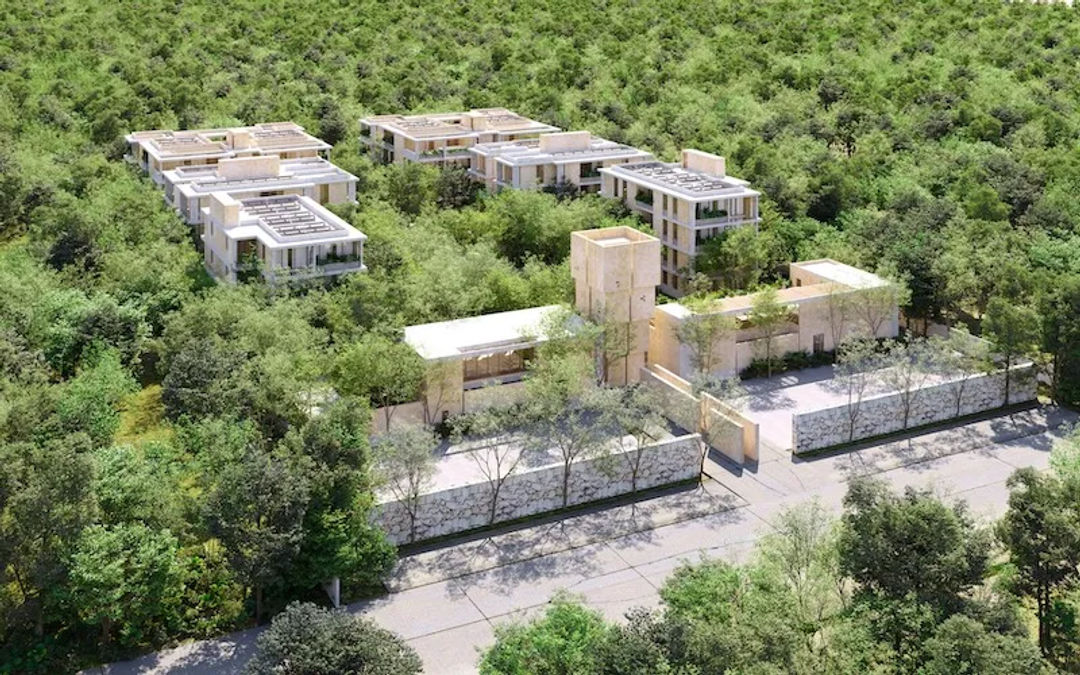
Quintana Roo's urban development agency has told buyers to stay away from Mayab Tulum, a preconstruction development still on the market, saying it holds none of the permits state law requires.
The Secretaría de Desarrollo Territorial Urbano Sustentable, known as SEDETUS, published the warning in an official bulletin that named both the project and its promoter, LOAM Desarrollos, S.A. de C.V. The agency asked residents and investors not to enter into any purchase, sale, promise of sale, or rental agreement tied to the development.
The warning lands while units are still being advertised. SEDETUS said the project continues to be offered and promoted despite being subject to judicial and administrative proceedings, which the bulletin did not itemize. For anyone holding a presale contract, or weighing one, that combination is the story.
A 46-unit project on Calle 12 Sur
SEDETUS placed the development precisely: Region 012, block 930, lot 004, on Calle 12 Sur between Avenida 35 Sur and Avenida 30 Sur, inside the municipality of Tulum. That is roughly a kilometer inland from the town center, in the grid where most of Tulum's mid-rise condominium construction has concentrated over the past five years.
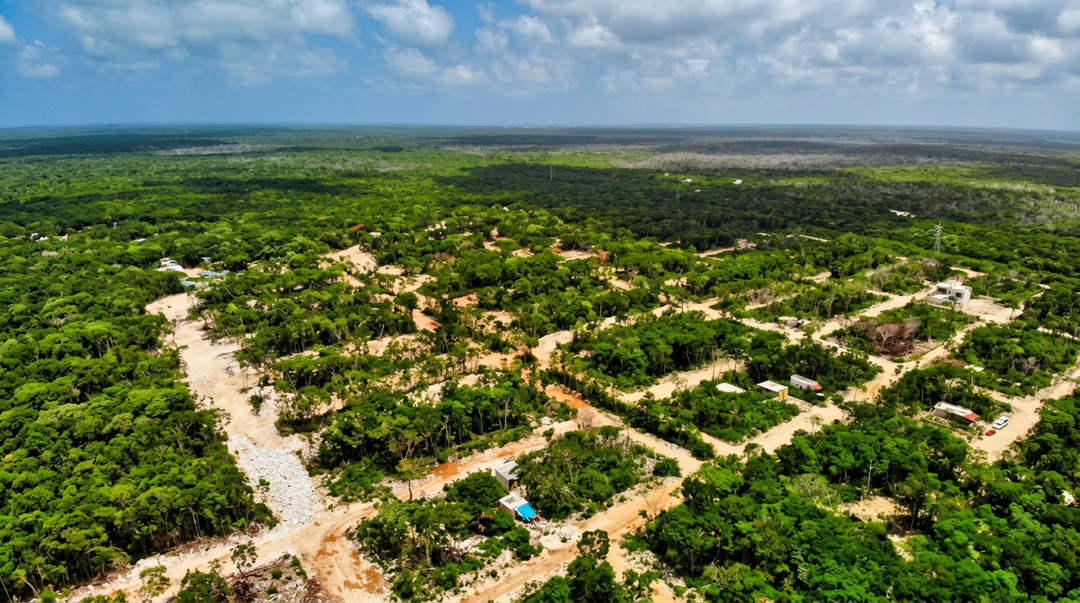
On its own website, LOAM Desarrollos markets Mayab Tulum as 46 residences of one, two, and three bedrooms, including duplexes and penthouses, designed by the Guadalajara studio Elías Rizo Arquitectos. The company describes more than 6,000 square meters of landscaped area, a cenote-style pool, a gym, and an amphitheater, and lists the project as currently under construction. Third-party listing sites have advertised delivery for December 2026, with prices starting near 3.45 million pesos. LOAM also promotes a second Tulum project, 525 Tulum.
SEDETUS lists the permits Mayab Tulum does not hold
According to the bulletin, the project lacks the rulings, certificates, permits, and authorizations required under state legislation covering human settlements, urban works, condominium property, territorial planning, and urban development. That is not a single missing document. It is the full stack of state and municipal clearances a condominium project is supposed to accumulate before it sells a unit.
In comparable Tulum cases, the state instrument at the center of the dispute has been the constancia de congruencia urbanística, the certificate SEDETUS issues confirming a project fits the applicable urban plan. Court reporting on other developments has shown that the certificate can be revoked after the fact, and that a municipal construction license issued without a federal environmental authorization can be voided along with it.
SEDETUS did not name the courts hearing the proceedings it referenced, the case numbers, or the parties involved.

Criminal exposure, according to the bulletin
The agency went further than a consumer alert. Taking part in transactions tied to the development, it warned, could contribute to the commission of crimes against urban development, in addition to compromising the buyer's assets. SEDETUS did not state that charges have been filed against LOAM Desarrollos, any of its officers, or any buyer, and no such filing has been publicly confirmed.
For foreign buyers, the exposure is layered. LOAM's own guidance page explains that non-Mexican purchasers within 50 kilometers of the coast must acquire property through a bank trust, a fideicomiso, and that the process runs from a promise-of-sale contract through physical delivery to registration of the deed. Each of those steps assumes the underlying project can eventually be deeded. A development without condominium authorization cannot produce individual titles, which leaves presale money sitting against a contract rather than a registered property.
In Bahía Solimán, a judge ordered a demolition
Tulum already has a case showing where these files can end. In 2025, the Juzgado Quinto de Distrito in Cancún granted an amparo brought by the civil association Defendiendo el Derecho a un Medio Ambiente Sano in file 952/2024, with the principal effect of ordering the demolition of the Maiim development on the coast at Bahía Solimán, built without environmental impact authorization. SEDETUS subsequently withdrew the urban congruency certificate it had granted the project. The developer, Promotora de Incentivos México, appealed, and the case moved to a collegiate circuit court.
Mayab Tulum is not the first project the state has publicly named. SEDETUS released alert lists during 2025 identifying Tulum developments operating without the required clearances, and the counts reported by regional outlets varied from thirteen projects to twenty-six. Antonella Vázquez Cavedón, founder of DMAS, argued at the time that publication alone changes nothing, pointing to a listed development that kept building after its name appeared. Her position was that the agency's obligation is closure, not disclosure.
LOAM has not answered
LOAM Desarrollos had issued no public response to the bulletin as of publication, and its marketing pages for Mayab Tulum remained live and unchanged. SEDETUS said it stays available to advise anyone seeking to invest in the sector with legal certainty, and in earlier alerts it directed the public to atencion@sedetus.gob.mx.
What the bulletin does not say is what happens next on the lot. A warning is not a closure order, and nothing SEDETUS published on July 28 stops work on Calle 12 Sur. Whether inspectors follow the paper with a seal, and whether the 46 units keep selling in the meantime, are the two open questions the agency left on the table.
Should the state be able to halt construction on a development it has publicly named, or is a printed warning enough? Join the conversation and share your perspective with us on Instagram and Facebook at @thetulumtimes.

The Tulum Times · Newsletter
The story continues in your inbox.
Essential Tulum news and local insight, a few times a week. Free.
No spam. Unsubscribe anytime.
Tulum Development, Permits, and Construction Watch
Reporting on permits, construction, regulation, and major development decisions shaping Tulum’s urban growth and investment climate.

“The best journalists reporting from paradise, highlighting the heroes that keep Tulum the most beautiful place in the world! THANK YOU!”


