


La recolección de sargazo en las playas de Tulum alcanzó 2,458 toneladas esta temporada, un incremento del 78.3 por ciento comparado con el mismo período en 2025, lo que llevó al gobierno de Quintana Roo a entregar al municipio maquinaria nueva para mantener el ritmo de los arribos.
El momento es crítico. Los desembarques más abundantes de sargazo en el Caribe mexicano suelen concentrarse entre junio y septiembre, lo que significa que lo peor de la temporada aún podría estar por venir para un destino cuya economía descansa casi en su totalidad en su litoral.
La recolección casi se duplicó respecto al año pasado
La magnitud de la temporada se refleja en las cifras oficiales. Las cuadrillas han removido 2,458 toneladas de sargazo de la costa de Tulum hasta ahora, comparado con 1,378 toneladas durante el mismo período en 2025. El incremento del 78.3 por ciento confirma un año atípico y apunta a meses difíciles para los destinos de sol y playa que impulsan la economía regional.
Tulum no enfrenta esto solo. En Cancún, la dirección de limpieza de playas reportó más de 15,000 toneladas recolectadas durante 2026, con mayo representando casi 6,800 toneladas por sí solo. El patrón en toda Quintana Roo es el mismo: más alga, llegando más temprano y permaneciendo más tiempo en la arena.

Lo que el equipo nuevo puede alcanzar
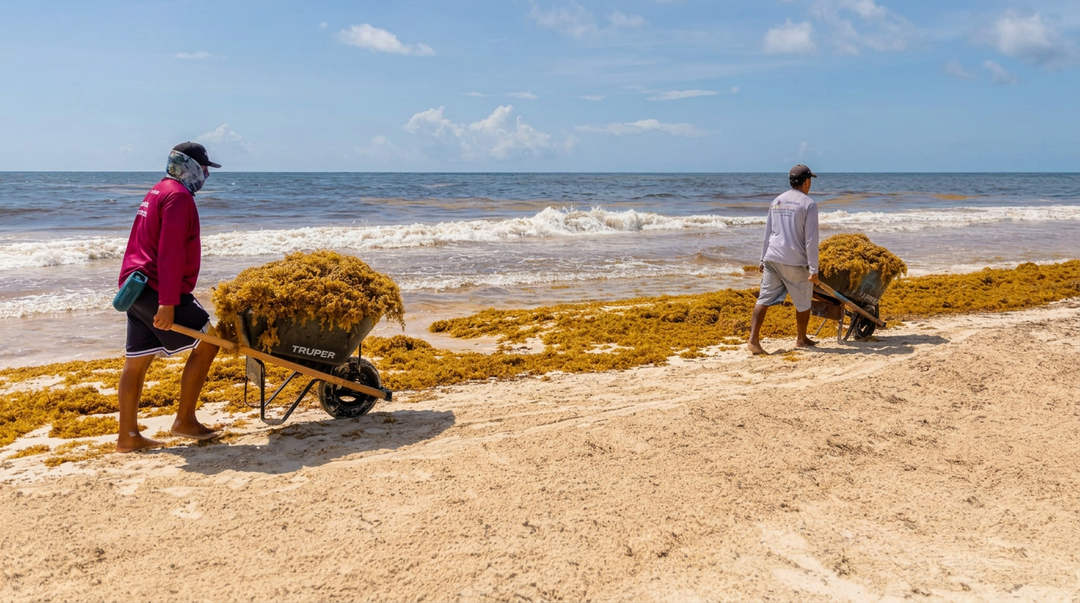
La respuesta estatal se centró en expandir las brigadas que retiran la macroalga de la playa. El nuevo paquete incluye cuatro motocicletas con remolques, dos tractores equipados con barredoras y tres camiones volquete. Las autoridades municipales dicen que las unidades permitirán a las cuadrillas trabajar en zonas donde el acceso es difícil para vehículos convencionales, acelerando el trabajo en puntos críticos de la costa.
La entrega cubre toda la cadena de la operación: recolectar el alga, trasladarla y desecharla. El sargazo recogido en el litoral es transportado en camión a un sitio final de disposición revestido con geomembrana, donde se seca antes de que las cuadrillas recuperen la mayor cantidad de arena posible.
Por qué el sargazo de Tulum duele más que la vista
La presión sobre las playas turísticas ha convertido al sargazo en un problema económico tanto como ambiental. Las grandes acumulaciones dañan la imagen del destino, crean fricción para visitantes y prestadores de servicios, y alteran los ecosistemas costeros que sostienen gran parte de la actividad turística en Quintana Roo.
El daño no es solo cosmético. Conforme el sargazo se descompone en la orilla, reduce los niveles de oxígeno en el agua y libera sulfuro de hidrógeno, el gas responsable de su olor a huevo podrido. Los arrecifes, lechos de pastos marinos y especies marinas absorben las consecuencias, y el olor refuerza la percepción de una playa que no es segura para disfrutar.
El presidente municipal Diego Castañón Trejo reconoció que la temporada actual ha superado los niveles de años recientes e hizo hincapié en la necesidad de coordinación permanente con el gobierno estatal para responder a los arribos masivos que siguen registrándose en toda la jurisdicción municipal. El presidente municipal ha enmarcado los problemas recientes de Tulum como una mezcla del aumento de sargazo y lo que llamó una campaña de imagen negativa contra el destino.
Cuadrillas en la arena antes del amanecer
Gran parte del peso operacional recae en los trabajadores de la Zona Federal Marítimo Terrestre, conocida por sus siglas en español como Zofemat. Bajo la dirección de David Buchanan, esas cuadrillas comienzan antes del amanecer para remover el alga antes de que se descomponga en la arena y cause mayor daño tanto al ambiente natural como a la experiencia del visitante.
Su exposición ha atraído la atención científica. Investigadores de la Universidad Nacional Autónoma de México ahora estudian a los recolectores de sargazo en Quintana Roo para determinar cómo el contacto prolongado con los gases liberados durante la descomposición puede afectar su salud, una señal de cómo la limpieza ha crecido de una molestia estacional a una cuestión laboral y de salud pública durante todo el año.
Convirtiendo el alga en concreto
Conforme se intensifica la limpieza, Tulum también prueba formas de darle uso al sargazo. Entre los proyectos que avanzan en el municipio está una planta diseñada para producir concreto hecho parcialmente con la macroalga, un material conocido como "sargacreto". La idea es convertir una carga costera en un insumo productivo, aprovechando la investigación que ha unido equipos de ingeniería con el flujo de residuos local.
Este enfoque no cambiará el volumen que llega a la orilla. Pero ofrece un uso para material que de otra forma se queda en sitios de disposición, y se ajusta a una búsqueda regional más amplia de qué hacer con cientos de miles de toneladas de alga cada año.
Se esperan arribos máximos hasta septiembre
El panorama general explica la urgencia. Los grupos de monitoreo en Quintana Roo, incluyendo la red de monitoreo de sargazo del estado liderada por Esteban Amaro, han descrito 2026 como una de las temporadas más intensas registradas, con estimaciones satelitales colocando decenas de millones de toneladas de biomasa derivando a través del Atlántico hacia el Caribe. Los especialistas esperan que los desembarques críticos continúen durante los próximos dos o tres meses.
A nivel estatal, las autoridades están considerando infraestructura más grande, incluyendo la propuesta Gran Barrera Oceánica entre Cozumel y Tulum, diseñada para interceptar sargazo en aguas profundas antes de que se fragmente cerca de la orilla. Por ahora, la defensa de Tulum descansa en tractores, camiones y cuadrillas trabajando la playa a mano.
Más maquinaria no resuelve el origen del fenómeno, ni garantiza playas limpias para el resto de la temporada. Las autoridades locales están apostando a que una base operacional más fuerte al menos les permitirá responder más rápido a los desembarques masivos aún por venir, y proteger una de las principales fuentes de ingresos del estado durante los meses cuando el alga llega con mayor intensidad.
¿Debe Tulum seguir gastando en maquinaria de limpieza, o la verdadera solución es una barrera en alta mar que detenga el sargazo antes de que llegue a la arena? Únete a la conversación y comparte tu perspectiva con nosotros en Instagram y Facebook en @thetulumtimes.
This image was generated or enhanced using artificial intelligence to improve its quality.

The Tulum Times · Newsletter
La nota sigue en tu correo.
Lo esencial de Tulum y contexto local, un par de veces por semana. Gratis.
Sin spam. Cancelá cuando quieras.
Tulum Sargassum Updates and Beach Conditions
Live seaweed conditions, cleanup updates, forecasts, and practical beach planning across Tulum and the Riviera Maya.

“The best journalists reporting from paradise, highlighting the heroes that keep Tulum the most beautiful place in the world! THANK YOU!”


