


Grupo Dakatso abrirá una planta de concreto con sargazo en Tulum este viernes 3 de julio, apostando a que un material que llama sargacreto puede convertir el mayor problema ambiental de la región en pavimento, bloques prefabricados y obras públicas.
La ciencia está establecida. El sargazo puede convertirse en material de construcción, y Dakatso ya lo ha hecho. Lo que sigue abierto es la pregunta sobre la escala, si una planta industrial puede absorber una parte significativa del alga que llegó a Quintana Roo en volúmenes récord este año, o si el sargacreto se queda como un producto de nicho para compradores dispuestos a pagar aproximadamente diez por ciento más.
La inauguración, anunciada inicialmente para finales de junio, ahora está programada para las 10 a.m. del viernes en la planta ubicada en la carretera Tulum a Playa del Carmen, cerca del cenote Dos Ojos.
Del desperdicio de playa a material de construcción
El sargacreto reemplaza parte del cemento en una mezcla de concreto estándar con biocarbón hecho de sargazo a través de pirólisis, un proceso que calienta el alga sin oxígeno. Grupo Dakatso, la empresa detrás del proyecto, dice que el resultado tiene las mismas propiedades estructurales que el concreto convencional y una vida útil medida en siglos.
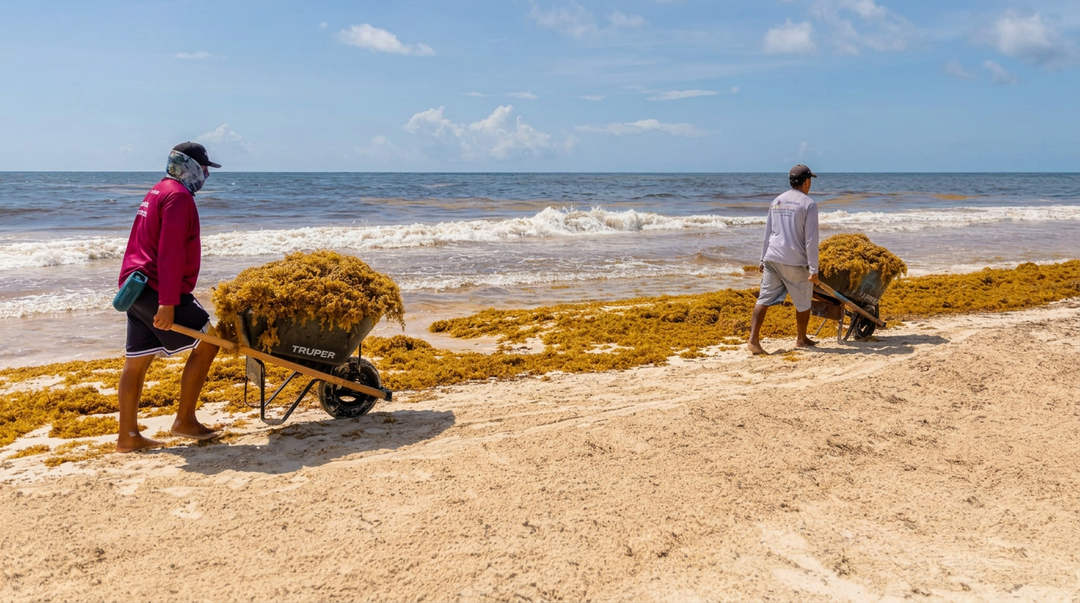
David Jáuregui, socio de Grupo Dakatso y el arquitecto responsable de la planta, ha dicho que la empresa pasó cinco años investigando, probando y certificando el material antes de considerarlo comercialmente viable. Rastrea el trabajo de la empresa con el alga más de una década atrás, incluyendo contratos públicos tempranos para la gestión del sargazo en Playa del Carmen y Puerto Morelos, y barreras de contención suministradas a la Marina Mexicana en 2019 y 2020.
La compensación que la empresa reconoce es el precio. El sargacreto cuesta aproximadamente diez por ciento más que el concreto tradicional. Su argumento es ambiental. La mezcla usa menos cemento, uno de los materiales más intensivos en carbono en la construcción.
El piso del Tren Maya como prueba de concepto
La evidencia más clara de que el material funciona ya está en Tulum. Según Jáuregui, el piso exterior completo de la estación del Tren Maya en Tulum, aproximadamente 17,000 metros cuadrados, fue construido con sargacreto hace unos dos años. Ha dicho que el trabajo utilizó más de 15,000 toneladas de sargazo para producir alrededor de 1,800 metros cúbicos de concreto.
La empresa señala una segunda instalación en la estación ferroviaria en Campeche. Ambas son públicas, y Jáuregui ha invitado a cualquiera a visitarlas y juzgar la superficie por sí mismo. Ese registro es lo que separa esta inauguración de un discurso de ventas. El producto está en el terreno y soporta carga.

La pregunta de capacidad que enfrenta la planta de concreto con sargazo
Aquí, el panorama se vuelve más difícil de precisar, y es el corazón de la historia. La empresa ha descrito la producción de la nueva planta en cifras que no coinciden limpiamente.
En declaraciones recientes, Jáuregui estableció la producción en hasta 400 metros cúbicos de sargacreto por día, servido por una flota de 15 camiones para trabajo público y privado. En un anuncio de abril vinculado a su acuerdo internacional, él planteó la capacidad de manera diferente, citando un límite de 5,000 metros cúbicos con un objetivo mensual inicial de 2,000. Por su propia proporción, cada metro cúbico requiere aproximadamente dos toneladas de sargazo, así que 2,000 metros cúbicos al mes consumirían aproximadamente 4,000 toneladas.
Esos números describen operaciones muy diferentes, y reconciliarlos importa por lo que está sucediendo en la costa. La temporada de sargazo 2026 de Tulum ha roto récords históricos, un punto que el presidente municipal Diego Castañón planteó este mes cuando el estado entregó nueva maquinaria de recolección al municipio. Contra ese volumen, 4,000 toneladas al mes es una contribución, no una cura. La cifra que vale la pena establecer con claridad en la inauguración del viernes es aquella a la que la empresa se compromete en el récord, con un método claro para medirla.
Una validación de las Naciones Unidas que aún está en progreso
Parte del discurso de la empresa descansa en la credibilidad internacional, y aquí el lenguaje merece cuidado. En abril de 2026, Grupo Dakatso firmó un acuerdo con el Consejo para la Acreditación Internacional de Arquitectura y Diseño, una organización que describe como vinculada a la oficina de las Naciones Unidas en Nueva York, para buscar validación del sargacreto. La empresa ha dicho que una delegación viajaría a Nueva York para avanzar en ese proceso.
Un acuerdo firmado para buscar validación no es lo mismo que un certificado ya emitido. Jáuregui también ha declarado que el sargacreto tiene certificaciones de organismos nacionales e internacionales, cumple con las normas mexicanas aplicables, y permite a los clientes obtener documentación del beneficio ambiental. La empresa reporta colaboración con el Tecnológico de Monterrey y la UNAM para fortalecer el caso científico, una marca registrada con el IMPI, y una patente aún en proceso. Una versión embolsada para uso minorista, marcada como Sargamix, está en desarrollo.
Una afirmación que la inauguración podría aclarar es el panorama completo del carbono, ya que la pirólisis en sí consume energía aunque la mezcla reduzca el cemento. Si una auditoría de carbono de terceros respalda la afirmación ambiental es una pregunta justa que hacer a la empresa.
¿Por qué algunos dicen que la lucha comienza en el mar?
No todos enmarcan el procesamiento en tierra como la respuesta. Ignacio Muñoz, CEO de The Seas We Love, ha argumentado que contener el sargazo tiene que comenzar en aguas abiertas, antes de que llegue a la playa. Por esa lógica, convertir el alga recolectada en concreto es un eslabón final útil en la cadena, no una solución en la fuente.
La distinción no es académica. Una planta que consume sargazo ya en la costa no hace nada para reducir cuánto llega, y el volumen que llega es la parte que abruma las playas de Tulum, sus equipos de Zofemat y su economía de turismo cada verano. El sargacreto responde qué hacer con el alga después de la recolección. Deja intacto el problema más difícil, la llegada en sí.
La inauguración del viernes, una avenida propuesta y un viaje a Nueva York
La prueba más concreta a corto plazo de la demanda es municipal. Grupo Dakatso ha presentado una propuesta para pavimentar o repavimentar la Avenida 7 Sur con sargacreto, un proyecto que Jáuregui cree podría convertir la calle en un corredor comercial comparable a la Quinta Avenida en Playa del Carmen. La empresa estima que el trabajo podría absorber hasta 1,800 toneladas de sargazo. Por ahora, es una propuesta, no un contrato firmado.
El evento del viernes mostrará la planta, el proceso de producción y las piezas prefabricadas de colores que la empresa ha estado promoviendo. Las preguntas que vale la pena traer son las que los anuncios han dejado abiertas. Capacidad mensual confirmada y cómo se mide, de dónde viene el sargazo, quiénes son los compradores comprometidos, y la etapa exacta de la validación de las Naciones Unidas. Si el sargacreto se convierte en el modelo de Tulum para una economía circular o en un nicho de lujo será decidido por esas respuestas, no por el corte de listón.
¿Puede una planta que convierte sargazo en concreto mantenerse al día con una temporada récord, o la verdadera solución tiene que comenzar en el mar? Únete a la conversación y comparte tu perspectiva con nosotros en Instagram y Facebook en @thetulumtimes.
This image was generated or enhanced using artificial intelligence to improve its quality.

The Tulum Times · Newsletter
La nota sigue en tu correo.
Lo esencial de Tulum y contexto local, un par de veces por semana. Gratis.
Sin spam. Cancelá cuando quieras.
Tulum Sargassum Updates and Beach Conditions
Live seaweed conditions, cleanup updates, forecasts, and practical beach planning across Tulum and the Riviera Maya.

“The best journalists reporting from paradise, highlighting the heroes that keep Tulum the most beautiful place in the world! THANK YOU!”


