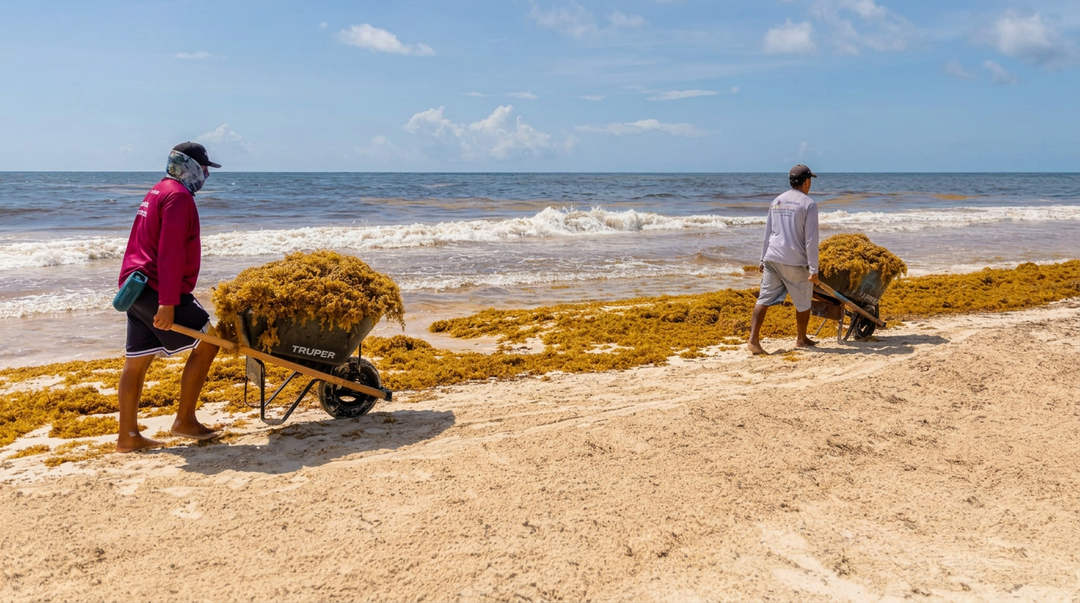

La acumulación récord de sargazo en Tulum ha reactivado una iniciativa de investigación mexicana para convertir las algas en bioasfalto para carreteras, incluso mientras un funcionario local presiona para que se declare un plan de contingencia de emergencia.
Las dos respuestas apuntan en direcciones diferentes: una hacia la reutilización a largo plazo y la otra hacia el alivio inmediato, pero ambas tienen su origen en el mismo problema. La temporada de sargazo de 2026 se encuentra entre las más intensas registradas en el Caribe mexicano, y las playas y el centro de Tulum están absorbiendo gran parte de los daños.
Investigadores estudian el sargazo como bioasfalto para carreteras rurales.
Investigadores del Instituto Mexicano del Transporte (IMT) de México estudian la posibilidad de procesar el sargazo para obtener un bioasfalto que se utilice para reparar baches y pavimentar caminos con poco tráfico. El objetivo es reducir la dependencia de productos sintéticos derivados del petróleo y mejorar el acceso para las comunidades aisladas de Quintana Roo, donde abundan los caminos sin pavimentar y en mal estado.
Este enfoque trata las algas como materia prima en lugar de residuos. Si las mezclas resultan duraderas, cada tonelada destinada a la pavimentación de carreteras es una tonelada que no se pudre en la arena. Los investigadores han planteado este trabajo como una forma de reducir el volumen de sargazo que llega a la costa, a la vez que se obtiene un producto con una utilidad práctica.

Convertir esa idea en kilómetros de asfalto no es sencillo. Estudios mexicanos previos, incluyendo trabajos de laboratorio en el Tecnológico Nacional de México en Ciudad Madero, probaron el sargazo como aditivo para asfalto lavando y secando las algas, moliéndolas hasta convertirlas en partículas finas y mezclándolas con asfalto caliente. Dichas pruebas reportaron mejoras en algunas propiedades, junto con problemas recurrentes de resistencia al calor y reblandecimiento. Pasar de una muestra de laboratorio a una carretera que resista el calor tropical y las fuertes lluvias es el paso que ha resultado más difícil.
Una temporada récord que está transformando la costa.
La urgencia de esta investigación se mide en toneladas. El Laboratorio Nacional de Observación de la Tierra (LANOT) de la UNAM ha proyectado que aproximadamente 40 millones de toneladas de sargazo podrían desplazarse por el Atlántico y el Caribe durante 2026, un volumen que su coordinador, Jorge Prado Molina, ha descrito como el mayor registrado hasta la fecha. El pronóstico abarca una franja que se extiende desde Quintana Roo hacia Belice, Guatemala y Honduras.
Para tener una idea de la magnitud, Quintana Roo recibió aproximadamente 90 000 toneladas en 2025. LANOT monitorea las floraciones mediante imágenes satelitales que se actualizan cada pocos días, combinadas con modelos de corrientes, viento y oleaje para predecir dónde llegarán las algas. Los científicos también han advertido que el sargazo absorbe metales pesados como arsénico, mercurio y cadmio del agua de mar, lo que complica cómo y dónde se puede desechar o reutilizar la masa recolectada.
En tierra, el efecto es contundente. Los aterrizajes bruscos han disuadido a los visitantes, y el olor a algas en descomposición se percibe mucho más allá de la línea de flotación.

Un funcionario de Tulum pide un plan de contingencia.
Jorge Portilla, concejal de Tulum y empresario, propuso declarar una contingencia ambiental y social por el volumen de sargazo que llega a la costa del municipio. Vinculó la solicitud directamente con la economía turística, señalando la disminución de la ocupación hotelera tanto en la zona de playa como en el centro de la ciudad.
Portilla afirmó que la prioridad debería ser encontrar soluciones en lugar de buscar culpables, y argumentó que una declaración formal ayudaría a destinar más recursos al problema. Hizo un llamado a una respuesta coordinada entre los gobiernos estatales y federales, junto con el sector privado y las organizaciones internacionales, con el objetivo de abordar el fenómeno en su origen en mar abierto, en lugar de limitarse a limpiar las playas a posteriori.
Una declaración de contingencia no es un método de saneamiento por sí sola. Es un paso administrativo que puede liberar presupuesto y coordinar agencias. Aún no se ha definido si las autoridades estatales o federales actuarán sobre la propuesta, ni con qué rapidez.
Lo que requeriría el impulso del bioasfalto
Entre el laboratorio y una carretera rural recién pavimentada se esconde una larga lista de incógnitas. Las mezclas deben resistir el mismo calor y la misma humedad que deterioran el pavimento convencional de la región. La recolección, la limpieza, el secado y el fresado consumen energía y dinero, y la rentabilidad solo es viable si el material final compite con el asfalto estándar en costo y durabilidad.
También está la cuestión de la escala. Un lote piloto que soluciona algunos baches es una prueba de concepto, no una cadena de suministro. El sargazo llega en enormes e impredecibles pulsos, y hacer coincidir ese flujo con la demanda constante de construcción de carreteras es un desafío logístico en sí mismo.
Por qué esto es importante para el sargazo en Tulum
Para Tulum, el atractivo de cualquier plan de reutilización es evidente. El pueblo depende de las mismas playas que las algas están cubriendo, y asume el costo de retirar la masa temporada tras temporada. Un método que convierta parte de esa carga en infraestructura cambiaría las cuentas, transformando un gasto recurrente en un recurso.
Por ahora, el proyecto de bioasfalto se mantiene en fase de investigación, y la propuesta de contingencia espera la decisión de las instancias superiores del gobierno. Ambas son respuestas a una temporada que, según el pronóstico actual, aún no ha alcanzado su punto máximo. Lo que Tulum haga con el sargazo que ya se encuentra en sus costas, y lo que prepare para las próximas temporadas, se definirá en los meses siguientes.
¿Apoyarías la idea de convertir el sargazo de Tulum en material para carreteras, o crees que primero debería haber un plan de contingencia de emergencia? Únete a la conversación y comparte tu opinión con nosotros en Instagram y Facebook en @thetulumtimes .
This image was generated or enhanced using artificial intelligence to improve its quality.

The Tulum Times · Newsletter
La nota sigue en tu correo.
Lo esencial de Tulum y contexto local, un par de veces por semana. Gratis.
Sin spam. Cancelá cuando quieras.
Tulum Sargassum Updates and Beach Conditions
Live seaweed conditions, cleanup updates, forecasts, and practical beach planning across Tulum and the Riviera Maya.

“The best journalists reporting from paradise, highlighting the heroes that keep Tulum the most beautiful place in the world! THANK YOU!”