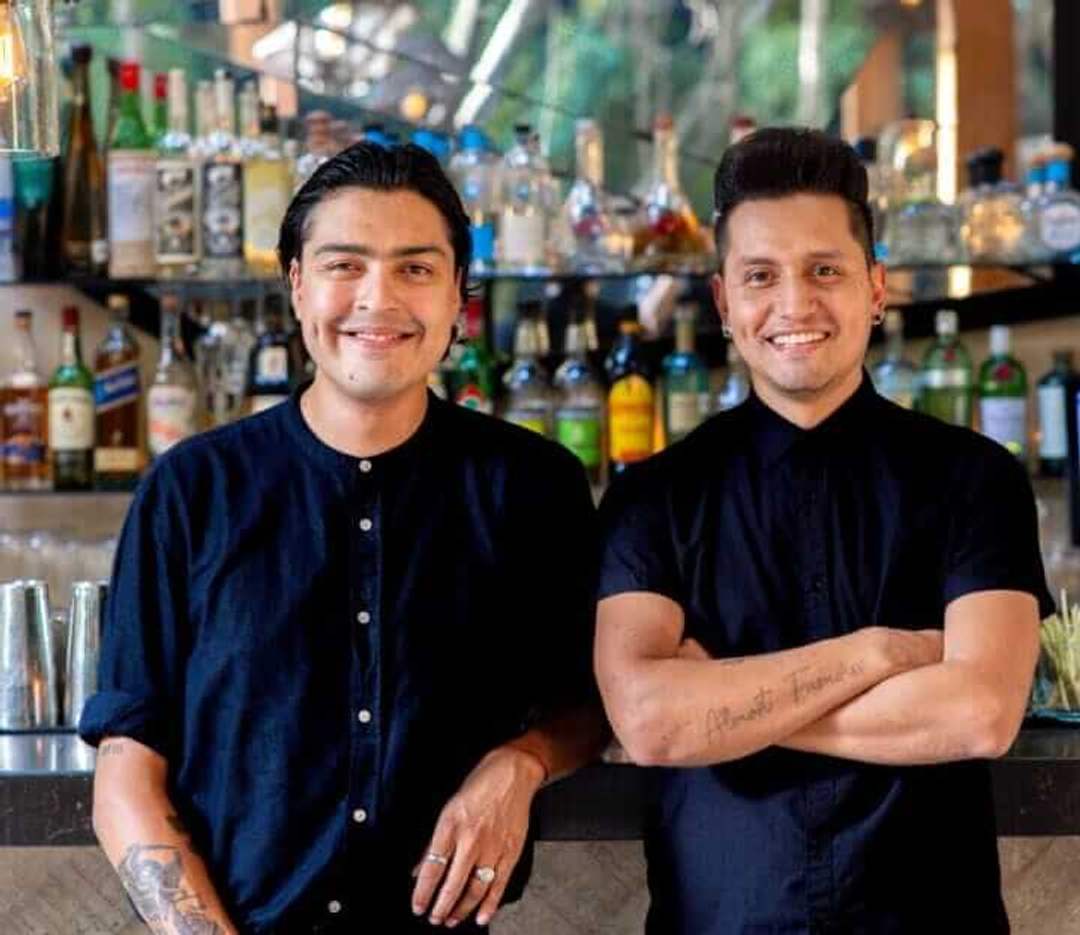
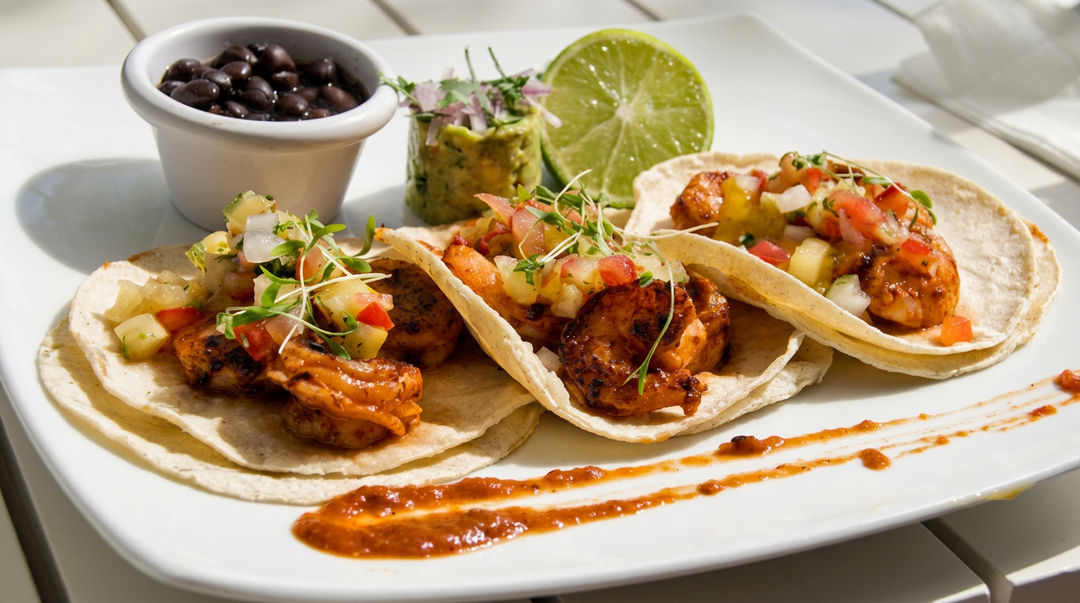
Jesús Ortiz Jiménez's answer to where to eat in Tulum begins at a taquería on Avenida Satélite that opens at 6 a.m. and ends at Arca's open fire on the hotel zone road.
Ortiz Jiménez is the executive chef at Motmot, the restaurant and cenote bar inside the KAN Tulum hotel on Calle 17 Poniente, in La Veleta. The hotel describes his menu as modern Mexican cooking built on organic, regeneratively sourced ingredients.
His route is worth following because of its width. Tulum took eight MICHELIN Guide plaques this year and not one star. Its two Bib Gourmands, the guide's mark for good-value cooking, went to Cetli and Mestixa, and Mestixa is on this chef's street list. A chef who sends visitors to a sidewalk counter and a tasting menu with equal conviction draws a more useful map than any ranking.
Where to eat in Tulum at 6 a.m.
Taquería Honorio, on Satélite Sur in the town center, is the fixed point of the list. Ortiz Jiménez calls it the reference for cochinita pibil, lechón and poc chuc made the traditional way. The cochinita is pork marinated in achiote and sour orange, wrapped in banana leaves and slow-cooked underground in a pib, the Maya pit oven. Honorio has served it since 2004, according to local accounts, and the menu also carries relleno negro with turkey.
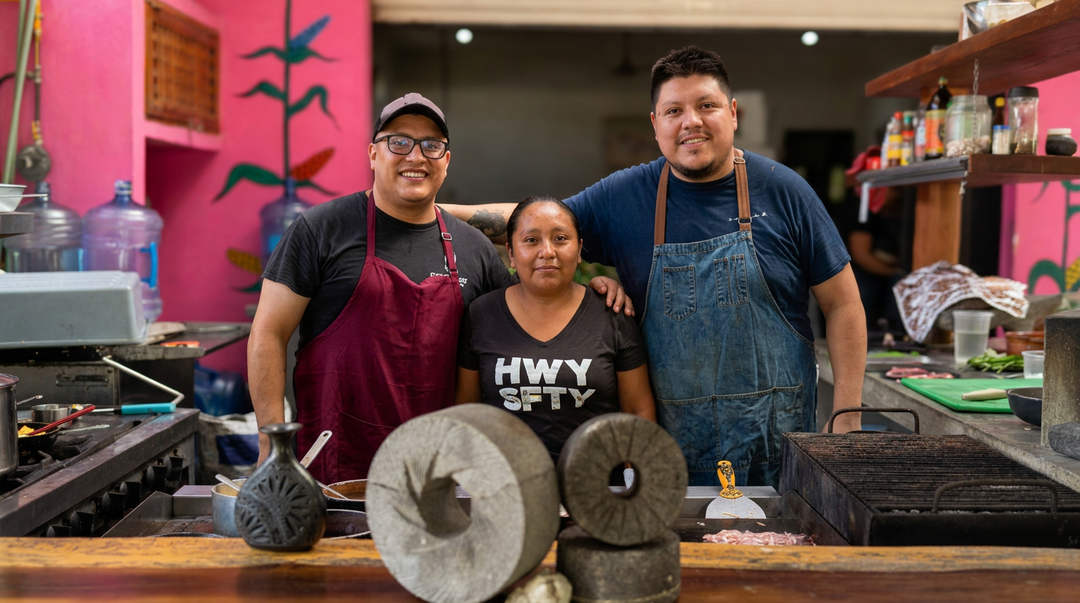
Go early. The counter opens at 6 a.m., closes at 3 p.m., and shuts earlier when the day's meat is gone.
For ordinary tacos with a local identity, he points to Tacos Los Lobitos, a popular, unpretentious stop. Taquería 86, in Aldea Zama, serves local taco recipes in a contemporary room, a fair option for anyone staying on that side of town.
Mestixa, on Calle Satélite, is the one urban-cooking address on this street list. The kitchen crosses Asian flavors with Mexican Caribbean ingredients, a concept from chef José Luis Hinostroza and Cara Maria Michelle, and the MICHELIN Guide México 2026 gave it a Bib Gourmand.
Lighter mornings start at Nimeño, a specialty coffee shop and artisan bakery he recommends for fresh bread.

The pantry behind every stop, from achiote to chaya
Every stop on the route draws from one regional pantry, and the chef treats knowing it as a precondition for cooking with it.
"Traditional cooks are guardians of knowledge passed down through generations. Their work keeps the region's culinary memory alive and reminds us that before we reinterpret a tradition, we first have to understand and respect it," Ortiz Jiménez said in Spanish.
The Yucatán Peninsula's working ingredients are few and specific. Corn and cacao sit at the base. Recados, the handmade spice pastes, and achiote give the stews their color and depth. Chaya, a leafy green, and ground squash seed add freshness and texture, while sour orange and habanero set the acidity and heat that a plate needs in this climate.
Much of that reaches visitors on the street before it reaches a restaurant. Carts across town sell pozol year-round, a cold drink of fermented corn with cacao. Pitahaya and rambutan turn up in season.
A Japanese condiment made from Quintana Roo sour orange
The clearest example of how Ortiz Jiménez works sits in a jar. Yuzukosho is a Japanese paste built on the peel of yuzu, a citrus fruit, with chili and salt. He makes his with the peel of local sour orange, the same fruit that seasons Honorio's cochinita, so a foreign technique ends up carrying a flavor any Yucatecan cook would place immediately.
In his telling, the setting writes the tasting menu. The Caribbean pulls dishes toward lighter, saline notes. The jungle supplies herbs and the heavier recados. Heat forces the whole menu toward acidity and freshness, which is why sour orange and citrus peel keep reappearing.
Seafood follows the calendar. Kitchens that buy directly from local fishermen and cooperatives work around the vedas, the seasonal closures that protect species while they reproduce, so what is on the plate depends on what the sea is allowed to give that month. Water and energy use are daily concerns for a kitchen in a place where the aquifer runs under the dining room.
Arca and Motmot close the route after dark
The other end of the list is fire. Arca, which Hinostroza opened in 2015, cooks over an open flame, with local ingredients at the center of the plate. It sits in the recommended selection of the 2026 MICHELIN Guide, and its bar ranked 27th on the World's 50 Best Bars list in 2025. It is one of the anchors of Tulum's beachfront dining strip.
On the same stretch, he suggests Checkpoint, in the hotel zone, as a relaxed stop for fresh plates in the jungle-and-sea setting of that road.
Then there is his own kitchen. Motmot serves breakfast, lunch, and dinner beside the hotel's cenote, and it is the kitchen where he puts local ingredients and inherited recipes through contemporary techniques.
The route has a built-in order. A table at Arca can be reserved. Honorio's cochinita cannot be booked at all, and a late start is the one mistake on this list that no reservation fixes.
Which Tulum counter or kitchen belongs on a local chef's route, and what should visitors order there? Join the conversation and share your perspective with us on Instagram and Facebook at @thetulumtimes.

The Tulum Times · Newsletter
The story continues in your inbox.
Essential Tulum news and local insight, a few times a week. Free.
No spam. Unsubscribe anytime.
Tulum Restaurants, Beach Clubs, and Nightlife Guide
Food, dining, beach clubs, and nightlife coverage for visitors looking for practical choices, current openings, and the mood of Tulum after dark.

“The best journalists reporting from paradise, highlighting the heroes that keep Tulum the most beautiful place in the world! THANK YOU!”