


A petition demanding the separation of the Jaguar Park from Tulum's archaeological zone has received 3,200 signatures, adding public pressure to a tourism crisis that new INAH figures show is deepening through 2026.
The initiative landed on Change.org on May 26, 2026, under a blunt title that translates as "Tulum is not for sale and not for fencing off." Its author, Valeria del Carmen López Blanco, frames the Jaguar Park's management as the central reason visitors are staying away from one of Mexico's most recognized coastal ruins.
Behind the petition sits a number that local businesses have watched with alarm.
Visitor numbers fall 33 percent as the Tulum tourism crisis deepens
Figures from the Instituto Nacional de Antropología e Historia show the archaeological zone received 257,978 visitors between January and March 2026. In the same quarter of 2025, the site drew 385,879. The gap is 127,901 people, a drop of 33.1 percent in a single year.
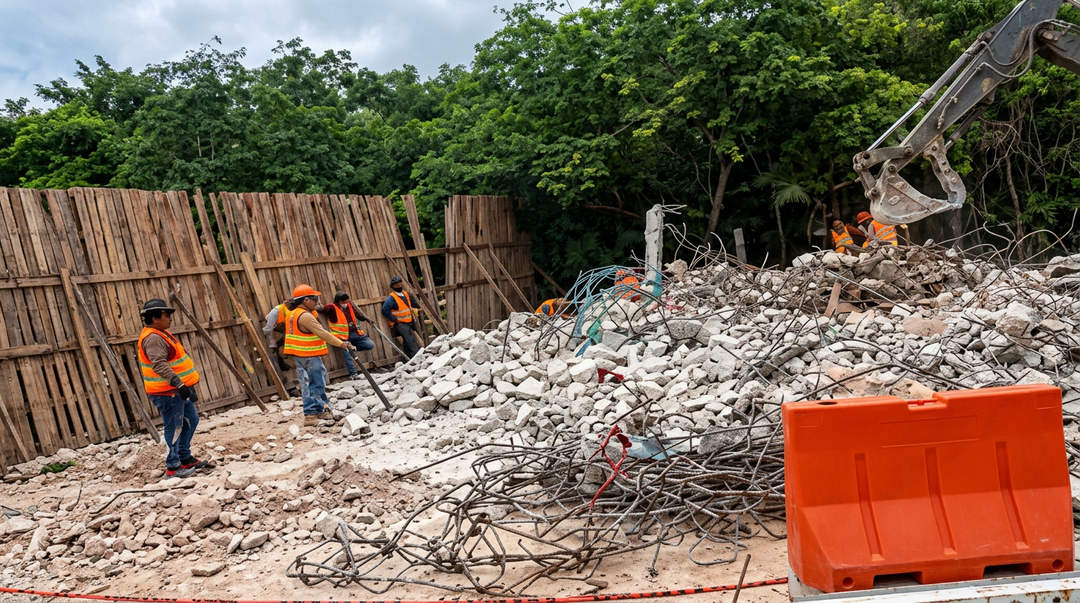
That decline builds on a year that was already the weakest in recent memory. Tulum closed 2025 with 1,031,443 visitors, its lowest annual count in 15 years, surpassed at the bottom only by 2020 and 2021, when the pandemic emptied the country's tourist sites. Even at that reduced level, the ruins remained the third most visited archaeological site in Mexico, which underlines how much traffic the location has historically carried.
The INAH data confirms the scale of the fall. It does not, on its own, assign a cause. That is where the petition and the people behind it step in.
A petition to pull the Jaguar Park off the ruins
The Jaguar Park opened on September 6, 2024, operated by the Secretaría de la Defensa Nacional, known as Sedena, alongside Grupo Mundo Maya. Since then, residents, transport operators, and tourism businesses have argued that the park's access model reshaped how people reach the coastline and the ruins, and not for the better.
The petition's demands are specific. Signers want Grupo Mundo Maya removed from the administration of the zone, and they want the Jaguar Park fully separated from the archaeological site so that the ruins can be reached directly and independently. In the petition's own words, translated from Spanish:

Tulum's history belongs to its people. Tulum's economy should benefit Tulum. And Tulum's future should be decided by its people.
Neither Sedena nor Grupo Mundo Maya has issued a public response to the petition's demands.
Fees, golf carts, and a beach that used to be free
At the center of the complaints are the access charges introduced after the park took over. Foreign visitors pay around 415 pesos, Mexican nationals 255 pesos, and Quintana Roo residents 105 pesos. Those amounts include a mandatory golf cart transfer from the main entrances to points inside the park.
For many residents, the combination of a paid ticket and a required internal vehicle changed the character of the place. A stretch of coast that functioned for years as a free public beach now operates, in their description, as a restricted commercial space. Free entry is allowed on Sundays, and some alternative access points exist, but the petition's supporters say those concessions have not stopped the cancellations or the slowdown.
Part of what fuels the backlash is that the ruins and the surrounding park do not share a single ticket. INAH sets its own admission fee for the archaeological site, while the charges to enter the park's beaches and trails are collected separately. Visitors have reported facing several distinct payments to reach different points, a structure residents say discourages the casual day trips the destination once relied on.
Artisans, drivers, and small shops absorb the loss
The people who feel the contraction first are not the institutions running the park. They are the families, artisans, transport workers, and small businesses whose income depends on a steady stream of visitors walking through Tulum.
When fewer travelers reach the ruins, fewer of them buy crafts, hire rides, eat at local restaurants, or wander into nearby shops. The petition ties the visitor decline directly to lost household income across these groups, presenting the economic damage as the human cost of an access model designed without local input.
That framing remains a claim advanced by residents and the petition, not a finding issued by any authority. What is documented is the drop in visitors and the depth of local frustration, both now large enough to organize around.
Where the pressure goes next
The downturn in Tulum has several moving parts that predate the Jaguar Park, including sargassum on the beaches, concerns about safety, and a reputation for high prices. David Ortiz Mena, who leads the local hotel association, has repeatedly pushed for stronger promotion as the way back, arguing that the destination's image is the central problem to solve.
The petition offers a different diagnosis. It locates the problem in who controls access to the ruins and on what terms, and it asks for a structural change rather than a marketing campaign. With signatures still climbing and the first quarter of 2026 already on record as a sharp decline, the open question is whether federal authorities and Grupo Mundo Maya treat the petition as background noise or as a signal worth answering.
Do you think separating the Jaguar Park from the ruins would bring visitors back to Tulum, or is the destination's slump rooted in something bigger? Join the conversation and share your perspective with us on Instagram and Facebook at @thetulumtimes.
This image was generated or enhanced using artificial intelligence to improve its quality.

The Tulum Times · Newsletter
The story continues in your inbox.
Essential Tulum news and local insight, a few times a week. Free.
No spam. Unsubscribe anytime.
Tulum Cenotes, Ruins, and Practical Visitor Guides
Guides, access updates, regulations, and practical planning around cenotes and the Tulum archaeological zone.

“The best journalists reporting from paradise, highlighting the heroes that keep Tulum the most beautiful place in the world! THANK YOU!”


