

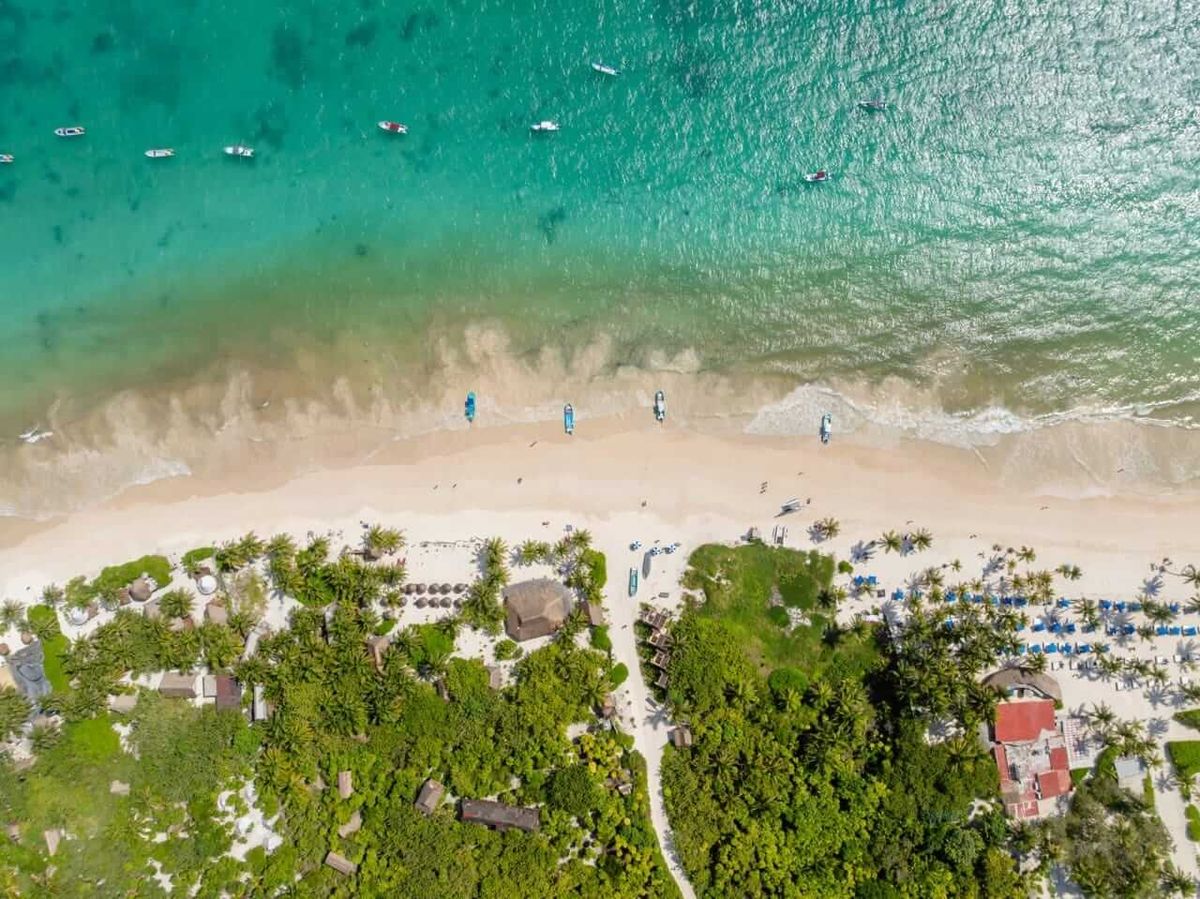
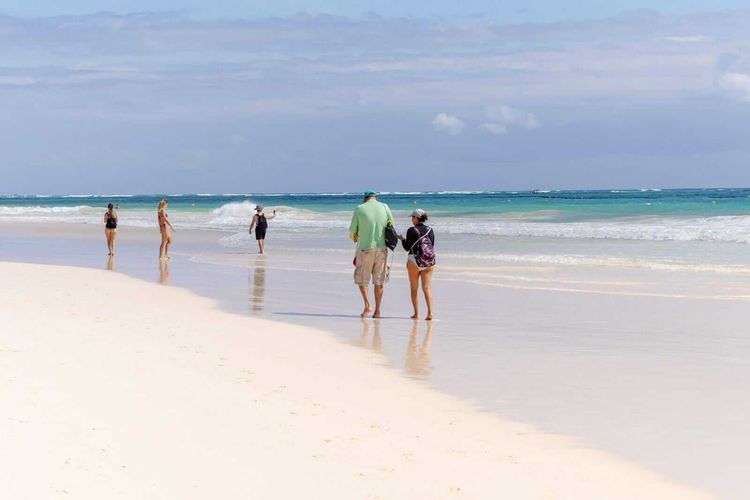
Access to Tulum’s beaches remains uneven for residents and visitors who are not staying at beachfront hotels, even as two free-entry options in the hotel zone offer a simpler route to the coast. The contrast between restricted access, long walks through the jungle, and deteriorating conditions along the coastal highway is shaping how people experience one of Quintana Roo’s main tourism corridors.
In Tulum’s hotel zone, beachgoers generally face three options. Some beaches can only be entered by guests staying at hotels on the shoreline. Others do not charge an entrance fee but limit what visitors can bring in, including food and drinks, and in some cases impose access schedules. A smaller number of places offer fewer restrictions, creating a more direct route to the sand for people who are not lodged nearby.
That difference matters in a destination where the beach remains the main draw, but where reaching a public stretch of coast can still require more than a kilometer of walking, taxi fare, or accepting conditions that limit how long a person can stay and what they can carry. For Tulum, the issue goes beyond convenience. It affects residents, day visitors, workers, and tourists who expect a beach town to have practical public access to its shoreline.
Free access exists, but only at specific points
One of the best-known landmarks in Tulum is the archaeological zone near the sea, including the site commonly associated with the Castillo by the water inside Parque del Jaguar. But while the coast is central to the area’s identity, getting to beaches with free public access is not always straightforward.

As an alternative, two beaches in Tulum currently offer free entry with a more adapted path to the shore: Villa Las Estrellas and Coco Unlimited. Both can be reached through Acceso Playa Tecate, described in the base text as an initiative by the Tecate beer brand of Heineken México in collaboration with consumption centers and the Tulum government.
The setup is designed to make arrival at the beach less difficult. At Coco Unlimited, visitors enter through a path styled with Maya-inspired elements and simulated torches on both sides. The site includes spaces where people can sit, sunbathe, rest, or simply spend time facing the sea. Seating ranges from chairs to cushioned loungers under umbrellas that provide partial shade.
There are also tables placed in a central area so visitors can set down food or drinks instead of carrying them constantly, just a short distance from the shoreline. The site also has mixed-use restrooms and a kiosk where people can buy beer if they run out or forget to bring some. The address provided in the base text is Carretera Tulum-Boca Paila, kilometer 8, 77780, Tulum, Quintana Roo.
According to Tecate, the initiative could open more spaces like these this year in Tulum and in other coastal areas of Mexico, although that depends on public response and on more hotel owners joining the project. That leaves the current free-access points as both a practical solution and a test of whether private and public actors are willing to expand the model.
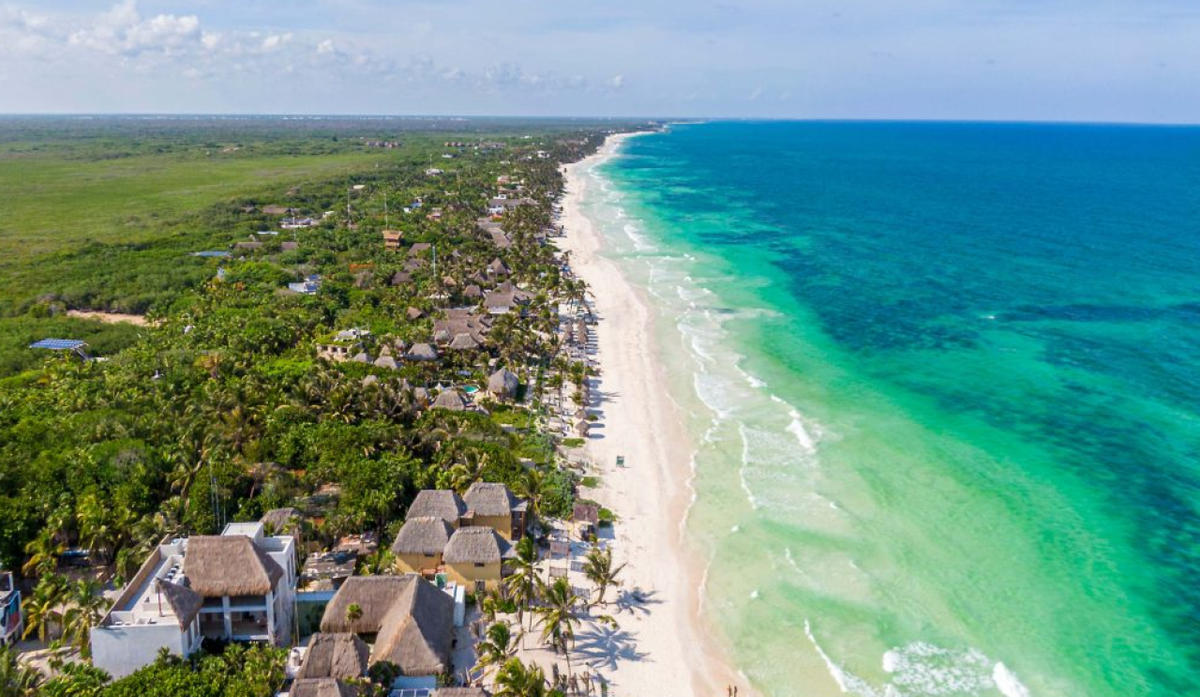
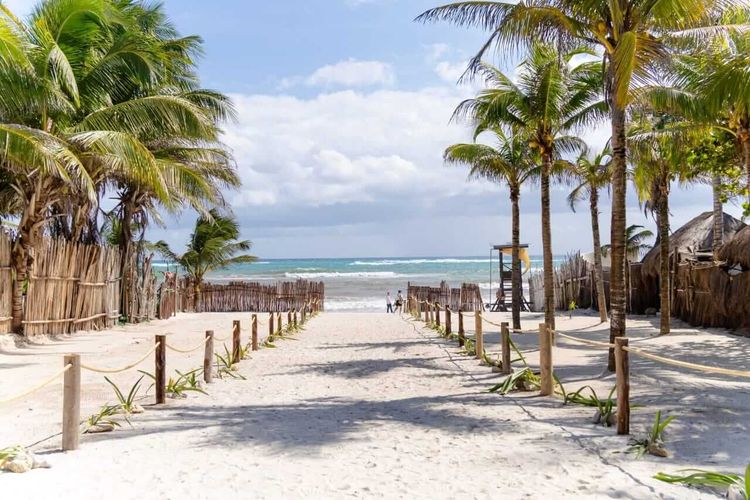
The longer route still defines many public beaches
The existence of those two access points does not change the larger pattern. For many people, reaching a public beach in Tulum still means a long walk, tight schedules, or a controlled entry experience.
The base text describes the route to some free-access beaches as a kind of ordeal. A jungle path may appeal to people planning an intense walk, and it can include detours to viewpoints, but it may also mean at least half an hour on foot, spider webs along the way, and a more limited beach day once visitors arrive.
One example cited is the Acceso Parque Jaguar, which leads to Playa Las Palmas and Punta Piedra. But entry conditions affect how the beach can be used. Visitors cannot count on sunrise there because entry begins at 8:00 a.m. They also cannot remain into the late evening, because access ends at 7:00 p.m. The result is that a public beach may be technically available, but not fully open to the type of flexible use many people associate with the coast.
Restrictions also extend to what people can bring. The base text says backpacks and bags are checked at entry points to prevent food or drinks of any type from being taken in, including non-alcoholic beverages. That means beachgoers may have to buy what they consume on site or go without the typical low-cost option of bringing their own sandwiches, water, or cooler.
For families, local visitors, and workers with limited time or budget, those details are not minor. They define whether a beach outing is viable at all. In practice, Tulum’s public coastline can remain difficult to enjoy even when there is no formal entrance fee.
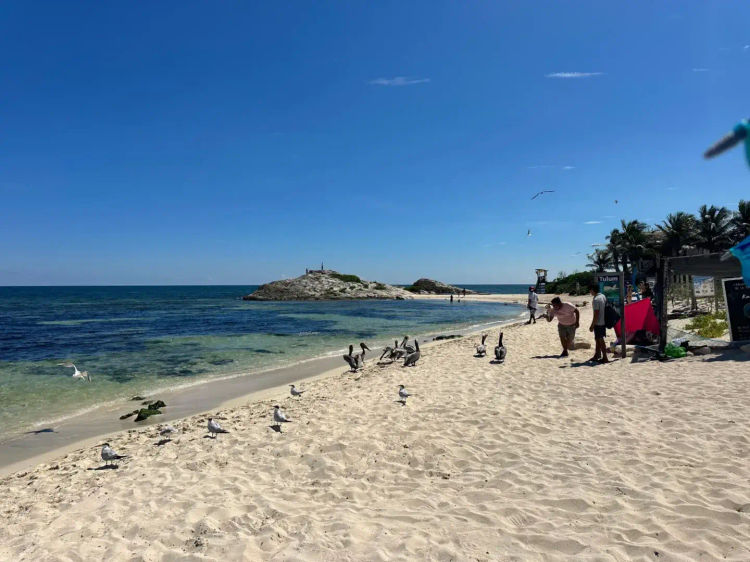
A national shortage is reflected on Tulum’s coast
Heineken and Tecate said in a statement that in Mexico, there is only one public access point for every 100 kilometers of coastline. In the base text, Tecate director Esteban Velasco described the issue as a source of public frustration.
“Existía una frustración de la gente por el difícil acceso a la playa, nos decían ‘no era posible’ (…) las entradas están, pero tenemos el dato de que a veces hay una cada 100 kilómetros. Es un problema de gran magnitud. No solo se trata de denunciarlo, sino de decirlo, solucionarlo y poner un granito de arena”, Velasco said.
His second statement in the base text placed the initiative in broader terms: “Creemos en una visión de largo plazo que promueva el cuidado del entorno y la valorización de los espacios públicos, para que continúen siendo puntos de encuentro y disfrute para las personas y las comunidades, hoy y en el futuro”.
Those remarks point to a wider issue than one branded beach entrance. In Tulum, the debate is not only about whether the coast is beautiful or internationally recognized. It is about whether access to that coastline functions in a way that serves the public as well as the hospitality sector.
That tension is especially visible in a town where the image of open natural beauty can clash with the practical experience on the ground. A beach destination depends not only on what people see when they arrive, but on how easily they can get there and remain there.
Road damage adds another obstacle in the hotel zone
The beach access problem is unfolding alongside complaints about the condition of Tulum’s coastal highway. Numerous potholes on the road are generating complaints from tourists, drivers, and workers in the hotel zone, who say the deteriorating pavement projects a poor image for a destination promoted on a global scale.
Along the hotel strip, drivers and service providers report that circulation has become more difficult because of the road’s poor condition. Potholes and sinkholes force vehicles to slow down or dodge damaged sections, a daily inconvenience that also carries risks for cars and transport services.
Tourists interviewed in the area said they expected stronger road infrastructure when arriving in Tulum, but found a highway whose deterioration shapes the first impression on the way to hotels, restaurants, and beach clubs. Workers and drivers who use the route every day said the problem has worsened in recent months, even after repaving work was carried out on parts of the road.
“Work was recently done on the highway, but in several spots the pavement already has potholes again,” said a driver who provides service in the tourist zone. “That affects both vehicles and the destination’s image.”
Some workers attribute the deterioration to the quality of the work executed by Tulum’s Public Works Department, headed by Cristian Moguel. Based on driver testimony in the base text, the repaving may not have had the expected durability, allowing potholes to reappear in multiple sections. Workers and drivers have called on Mayor Diego Castañón Trejo to review the conditions under which the work was carried out and to improve road infrastructure on one of the municipality’s main tourism corridors.
What changes now for beachgoers and Tulum
For now, the immediate change is limited but tangible. People who are not staying in beachfront hotels have two clearer free-entry options through Acceso Playa Tecate at Villa Las Estrellas and Coco Unlimited. That may reduce one barrier for some visitors and residents.
But the broader situation has not been resolved. Public entry to Tulum’s beaches remains scarce, schedules and bag checks continue to shape the experience in other access points, and the coastal highway’s condition adds another layer of difficulty to reaching the shoreline. The issue directly affects tourists, transport workers, tourism service providers, and local residents seeking practical use of public space.
For Tulum, what is at stake is not only convenience but credibility. A destination known worldwide for its beaches still faces complaints over how people reach them and under what conditions they can stay. Whether more free-access points are opened and whether basic road maintenance improves will help define how public beach access in Tulum functions from here.
We’d love to hear your thoughts. Join the conversation on The Tulum Times’ social media. What should change first in Tulum: beach access rules or the condition of the coastal road?
Loved this story?
There's more where that came from.
Join readers who get Tulum's most essential news and local insights delivered straight to their inbox, with no noise, just the good stuff.
No spam · Unsubscribe anytime · 100% free
Beach Access, Public Shoreline, and Coastal Rules in Tulum
Coverage of public beach access, coastal restrictions, closures, and the balance between tourism and public space.
Support The Tulum Times
Independent journalism takes time and resources. If you found this article valuable, consider supporting our work!
Buy us a taco 🌮“The best journalists reporting from paradise, highlighting the heroes that keep Tulum the most beautiful place in the world! THANK YOU!”


